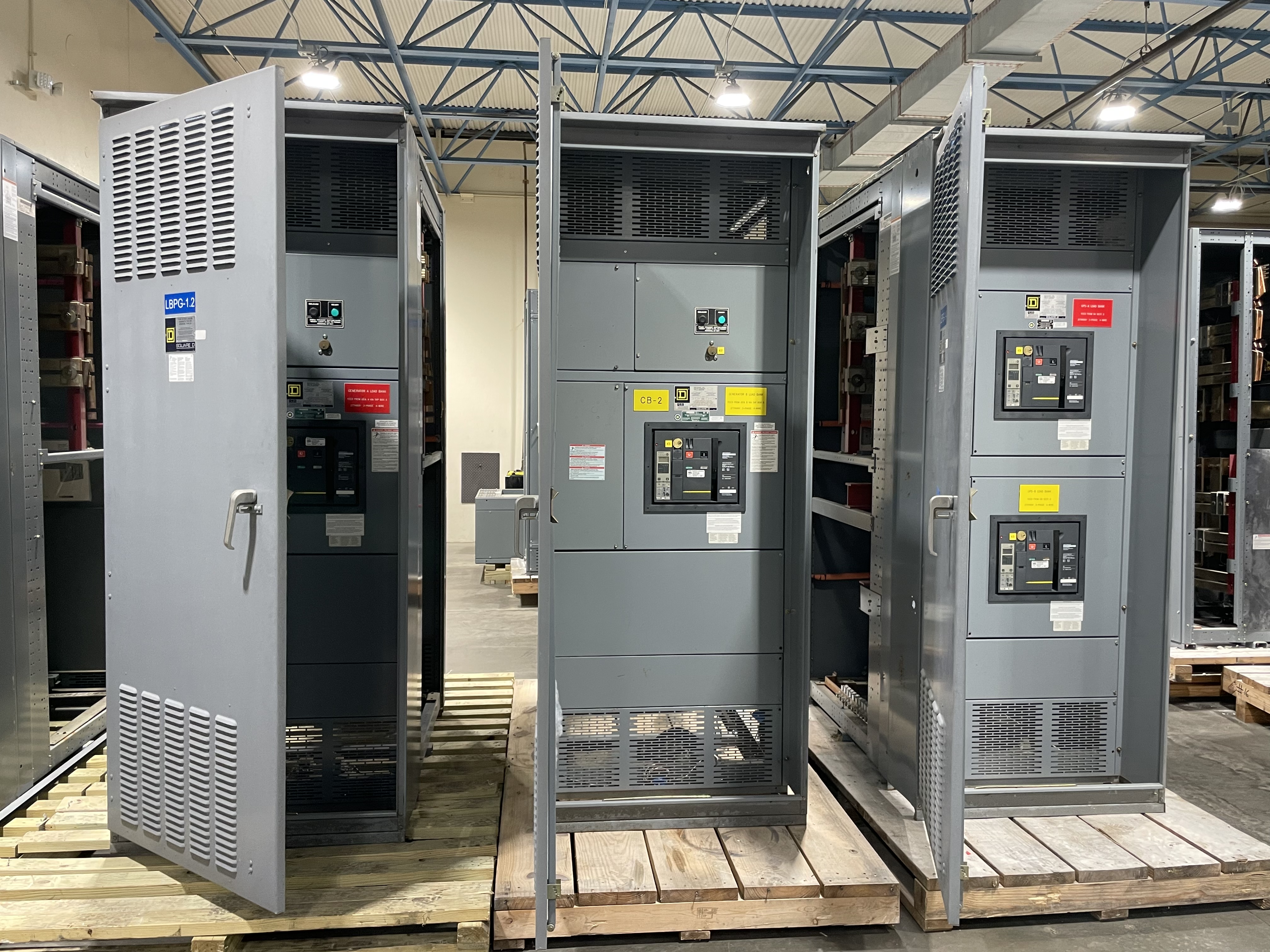
Record the markings as found
Build the inventory around what can be confirmed from existing records and safely accessible exterior labels or nameplates. Record each section’s visible Siemens marking exactly, including punctuation or model text when legible. List the separately stored fitting under its own visible marking, without describing it as compatible, original, matching or interchangeable. Note counts and any clearly documented identification already available. Do not open a cabinet, remove a cover or approach equipment to improve a photo or read a label. If a marking cannot be read safely, report it as unknown rather than guessing. These distinctions help a buyer assess the lot without turning visual resemblance into a technical conclusion.
Use records, and keep ratings distinct
Share records already in hand, such as inventories, purchase documents, drawings or equipment schedules, if available. Report a rating only when a record supports it, and preserve what the value describes: nominal system voltage, busway assembly voltage, continuous current, or a separate device’s frame, trip or interrupting rating. Those values are not interchangeable, and a rating for a breaker or another component does not establish the busway rating. Do not infer specifications from a brand mark or appearance. Gaps are acceptable; identify them plainly. No seller testing, measurements, fabrication or new technical verification is required to request an assessment, and no unsupported value should be supplied to fill a gap.
Fit, completeness and uncertainty
Stored sections may be easier to inventory than installed runs, but storage does not prove condition, completeness or suitability for reuse. Note, from existing records, whether sections are identified individually and whether any fittings are listed separately. Describe visible exterior damage only if it can be observed from an authorized safe position; do not handle parts or inspect interiors. A fitting with another marking should remain a separate line item until evidence establishes more, and the buyer does not assume it fits the Siemens-marked sections. Assessment may also depend on quantity, documentation, condition information and practical removal requirements. It is acceptable to request a review while important details remain unknown.
Send a safe, useful inquiry
Provide the Columbus-area location, an approximate count, storage status and the exact markings available from existing records. If pictures are permitted, use a site-authorized safe position and photograph only safely accessible equipment exteriors and exterior nameplates or labels. Do not open cabinets or photograph inside them. Leave energized or potentially energized equipment undisturbed: never approach, touch, open, operate, test, disconnect, remove, lift, stage or move it. Follow site access restrictions; electrical work, if needed for an approved handover, is for qualified, authorized personnel under site rules. If access or electrical status is uncertain, leave the equipment undisturbed and rely on records instead.
Offer terms and removal responsibilities
For an agreed purchase, the buyer makes a cash offer and pays upfront under the agreed terms. Each proposed purchase is individually assessed; neither acceptance, price nor timing is guaranteed. If the purchase is agreed, the buyer covers the necessary crane, rigging, disconnects, loading, freight and hauling associated with that agreed removal. The seller does not hire or pay a removal crew. Access, responsibilities and timing must be settled for the particular site before work proceeds, with site rules observed and any electrical work performed only by qualified, authorized personnel. An inquiry is not a commitment to accept every section or fitting in a mixed-marking lot.
Scope beyond the busway lot
The buyer considers used, surplus and decommissioned electrical equipment across all voltage classes, including equipment from decommissioned data centers and shut-down power plants. That broad scope does not establish a specific rating, use or fit for this busway. A purchase assessment is limited to equipment the parties agree to include; it is not a promise to undertake unrelated demolition or hazardous-material remediation. Identify any separately documented exclusions and describe the proposed lot clearly, including the differently marked fitting. If the equipment is part of a wider decommissioning, keep site clearance and other contractors’ work separate from the agreed equipment handover. This helps define what is—and is not—being considered.