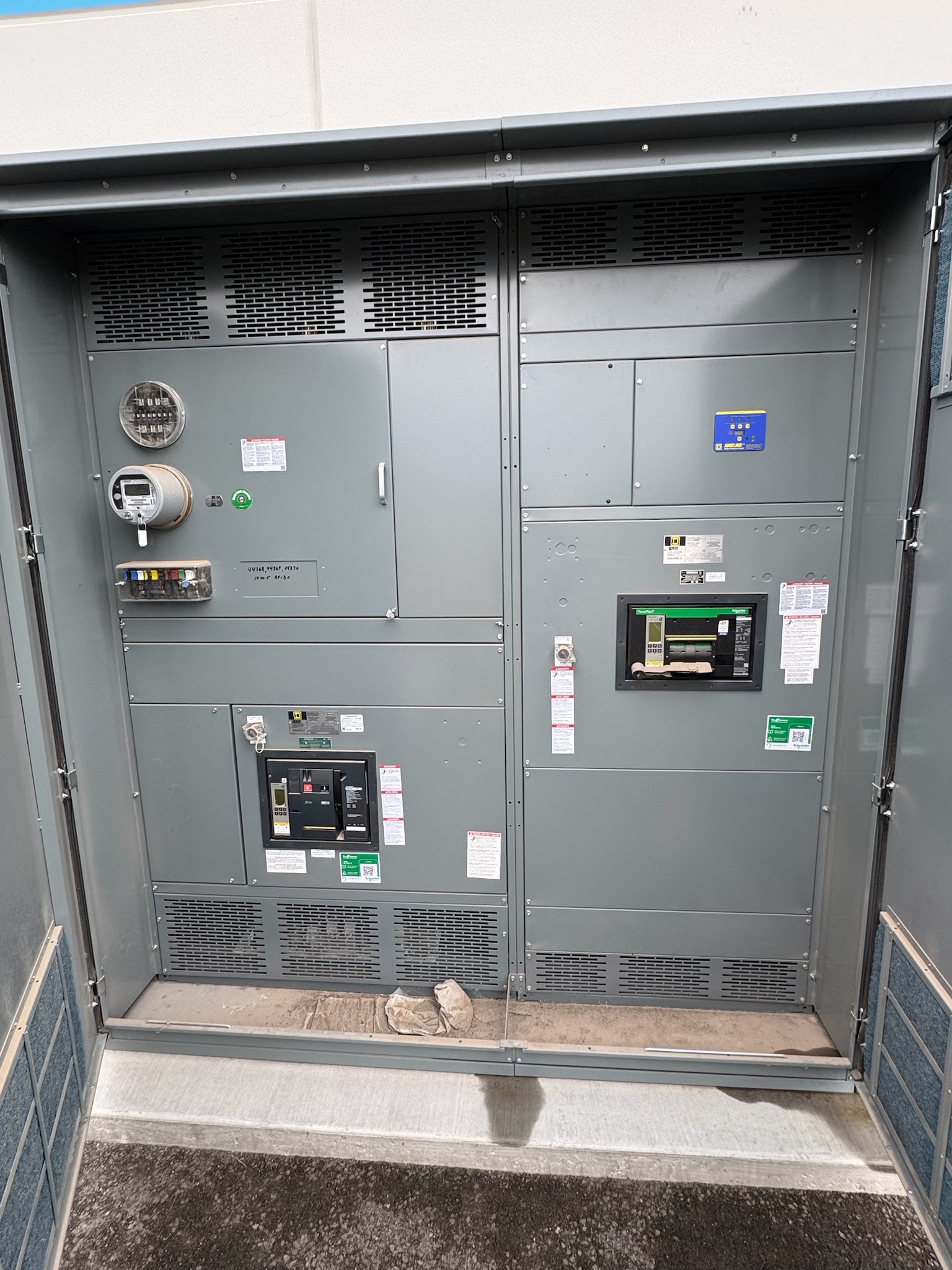
Identify what the markings actually establish
Record the manufacturer name and every legible exterior marking visible from an authorized safe position, including catalog or part identifiers and any rating labels. A Siemens marking identifies what is marked on the equipment; by itself, it does not establish compatibility with a particular assembly, application, or other breaker. Keep distinct entries for breaker spares, related components, and unidentified items rather than assuming they belong together. If labels are obscured or absent, note that uncertainty instead of guessing. Photograph only equipment exteriors and exterior nameplates safely visible from an authorized position; do not approach or handle equipment to improve a picture. Qualified authorized personnel must handle any electrical work under site rules.
Choose between one combined lot and building-level lots
Compare the value of consolidated inventory information with the practical cost of coordinating several access windows. For example, if one building holds a few loose spares and another holds a larger, separately documented group, a combined offer inquiry can still list each building as its own sub-lot. That preserves counts and location distinctions while allowing an assessment of the group. Separate lot requests may make sense when ownership records, access authority, or release timing differ. Ask whether the buyer can assess a combined inventory with staged pickups, or whether separate offers better fit the circumstances. Acceptance, pricing, and pickup arrangements depend on individual assessment and agreement.
Make access windows part of the inventory record
For each building, document the authorized site contact, available pickup windows, check-in requirements, loading-area constraints, and any restrictions on vehicles or scheduling. Distinguish a firm access window from a preferred one; a narrow window may affect whether a location is grouped with another, even when the spares are similar. Note whether each lot is already accessible for collection or requires coordination with site personnel. Do not move equipment or change its electrical state to prepare for pickup. Share access details early so proposed arrangements can be reviewed against the actual purchase and site rules. Monroe can be considered as a pickup location when appropriate, without assuming access or timing.
Describe spares without testing or overclaiming
Build a simple count by building and item, using visible markings and existing records where available. Separate confirmed identifiers from partial or uncertain ones, and describe condition only to the extent safely observable from outside. No seller testing or seller preparation is required, and the buyer considers equipment across all voltage classes. That does not mean every item will suit every application or be accepted; offers are assessed individually. Avoid treating a breaker’s markings as proof of fit with a specific panel, switchgear assembly, or bus. If known, record whether items are loose spares or part of a larger inventory, without opening, operating, or handling electrical equipment.
Clarify payment and removal responsibilities
The buyer makes cash offers and pays upfront for an agreed purchase; the seller is not asked to test equipment or hire a removal crew. As applicable to that purchase, the buyer covers agreed crane, rigging, disconnects, loading, freight, and hauling. Confirm which services are needed at each building and who controls site access before settling a plan. Disconnects and other electrical work must be performed by qualified authorized personnel in accordance with site rules—not by an unqualified seller or an unauthorized crew. Coverage and logistics are tied to the agreed transaction, so describe site requirements accurately and ask what the proposed scope includes rather than assuming every service applies.
Prepare a clear handoff for the offer review
Send a concise inventory with one line per building: visible Siemens markings, item counts, known ownership or authority to sell, safely observed condition, access contact, and pickup windows. Add a note identifying any items whose marks cannot be read and any site restrictions that could affect collection. The seller must own the equipment or have authority to sell it; clarify that point before requesting an offer. If the inventory comes from a decommissioned data center or shut-down power plant, identify that context accurately without implying a particular history for individual items. The buyer can then assess the lots and discuss feasible arrangements, with no guaranteed acceptance, price, or timetable.