Packaging clues are not product identity
Carton markings may show a manufacturer name, catalog or order reference, quantity, date code, or shipping destination. Treat these as clues, not proof that the contents match the label or belong to a particular busway run. Boxes may have been relabeled, split from a shipment, or stored apart from project documentation. A buyer can consider the visible information alongside an inventory or purchase record, but should not infer compatibility from a carton description alone. Keep any uncertainty explicit: for example, note that a label is legible but the contents have not been independently identified. Do not open a package to improve an assessment; no seller testing is required.
What existing records can establish
Useful records may include purchase orders, packing lists, receiving logs, asset registers, maintenance records, and correspondence that connects a stored unit to a project or system. Drawings can help explain intended application, but their absence does not prevent an initial review. Send copies only if authorized, and distinguish original records from later notes or assumptions. If records show ratings, preserve the exact wording and identify its source; do not substitute one value for another. Nominal system voltage, busway assembly voltage, continuous current, and any protective-device frame, trip, or interrupting ratings describe different things. Report each only when an existing record supports it.
Describe the lot without overclaiming
An inventory can state the number of boxes, visible markings, apparent condition of packaging, storage location, and whether records accompany the lot. Separate confirmed details from estimates, and identify boxes whose labels are missing, damaged, or inconsistent. Do not claim that units fit a particular busway, remain unused, or meet a project requirement unless reliable documentation supports that statement. Product identity, electrical ratings, physical condition, and application compatibility may remain unresolved. That uncertainty can affect whether a buyer makes an offer and what quantity or scope an offer covers. The buyer considers each proposed asset individually; an inquiry is not an acceptance or a guaranteed price or schedule.
Photos and site safety come first
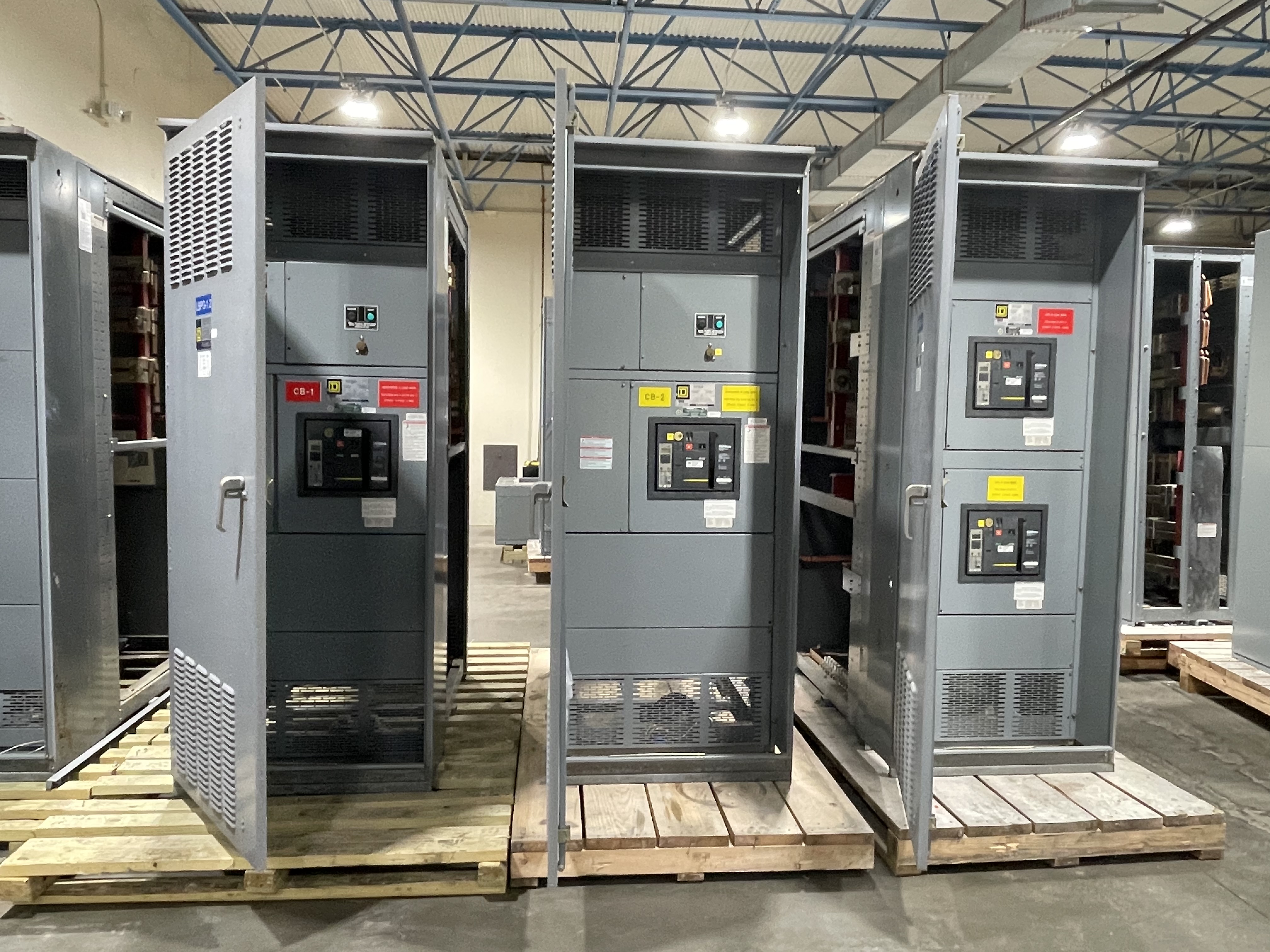
If photographs are permitted, provide only exterior views of safely accessible boxes and exterior labels or nameplates, taken from positions approved under site rules. Do not open cabinets or packages for images, and never photograph interiors. Do not approach, touch, open, operate, test, disconnect, remove, or move busway or associated equipment that is energized or could still be energized. Even equipment believed to be isolated remains subject to the facility’s controls and authorized-personnel requirements. Any electrical work must be performed by qualified personnel who are authorized for the site and acting under its procedures. A buyer assessment does not require the seller to perform tests, take measurements, or stage equipment.
Offer scope, payment, and removal arrangements
For an agreed purchase, the buyer makes a cash offer and pays upfront for the agreed assets. Each offer and acceptance is assessed individually, so neither a particular price nor timing is assured before agreement. Where removal is necessary and included in that agreement, the buyer covers the required crane, rigging, disconnects, loading, freight, and hauling. The seller does not need to hire or pay a crew for that agreed removal. Confirm in writing which boxed units are included, where they are located, access conditions, and who may authorize site work. Any disconnect or other electrical task remains subject to site rules and qualified, authorized personnel.
Set clear boundaries for a handover
Before arranging collection, reconcile the agreed quantity against the accessible inventory and identify exclusions, such as unidentified boxes or items with conflicting records. The buyer purchases used, surplus, and decommissioned electrical equipment across all voltage classes, including equipment from decommissioned data centers and shut-down power plants; that broad scope does not mean every proposed lot will be accepted. Agree on access, timing, documentation, and custody transfer without asking site staff to stage or move potentially energized equipment. A purchase of busway or tap-off units does not include unrelated demolition or hazardous-material remediation. If identity remains uncertain, record that fact in the handover scope rather than presenting an assumption as verified.