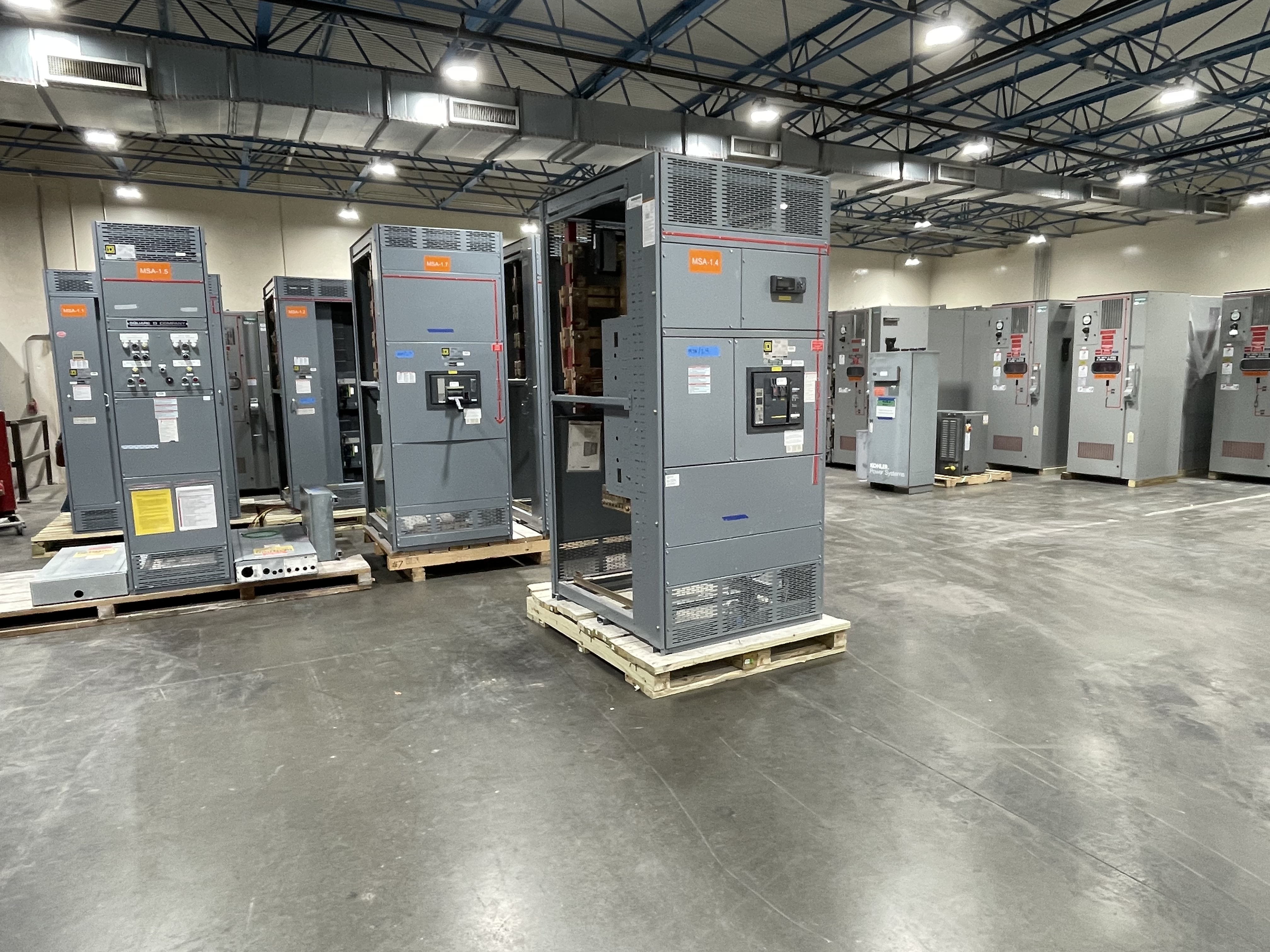
Start with what the marking identifies—and what it does not
A visible Square D name or mark is an identification clue, not proof of affiliation, endorsement, compatibility, or a particular specification. Record exactly where the marking appears: on a breaker, an assembly, a compartment label, or loose documentation. If equipment is already safely accessible, an authorized person can provide exterior nameplate photographs from an authorized safe position; nobody should approach or handle energized equipment to obtain an image. A brand marking on an enclosure does not establish the identity of every breaker inside. Keep the observation narrow: note the visible wording and item it is attached to, then leave electrical interpretation and any work on equipment to qualified, authorized personnel following site rules.
Separate frame identification from trip-unit details
In a mixed loose-breaker lot, the frame marking and trip-unit information answer different identification questions. A frame marking identifies the marked breaker frame; a separate device label may describe the trip unit installed or associated with it. Do not combine those details into a single assumed model or rating. For example, if three devices appear to share a frame marking but have different visible trip-unit labels, list three individual observations rather than describing all three as one interchangeable set. If a label is obscured or absent, record “not visible” rather than guessing. This distinction helps an individual assessment reflect actual documented inventory without asserting fit, condition, or compatibility that has not been established.
Inventory accessories and quantities independently
Accessories should be documented as observed items, not presumed inclusions. A loose breaker might be photographed alongside a separately labeled accessory, while another breaker may have no accessory visible; these are different inventory records. List the number of breakers, the visible frame markings for each, the trip-unit label for each when readable, and accessory descriptions and counts in separate fields. If a component is detached or its association is uncertain, say so. Do not represent a separately found part as belonging to a particular breaker unless that relationship is reliably documented without handling or electrical work. This approach makes a lot with mixed quantities easier to assess and avoids overstating completeness based on a shared brand name or appearance.
Use ratings as separate observations, not assumptions
Where safely visible, transcribe each rating and label exactly as printed, keeping nominal voltage distinct from breaker frame, trip, and assembly information. A rating printed on an assembly does not automatically describe every loose breaker offered with it, and a trip-unit label should not be substituted for a frame marking. Voltage classes are not a basis for assuming suitability or compatibility. If a label cannot be read from an authorized safe position, note that limitation instead of asking someone to open, touch, test, rack out, or move equipment for a better view. We buy used equipment across voltage classes, but each asset and offer is assessed individually; documentation supports review, not a promise of acceptance or a technical determination.
Make the offer review practical and safe
Send an inventory summary that ties each safely obtained exterior photo to a numbered item or group. Include the stated quantity, visible markings, trip-unit labels, accessory counts, and any uncertainty about associations. Mention whether items are loose or part of a larger assembly, without dismantling anything to clarify the description. No seller testing or seller preparation is required. Electrical tasks, including any required disconnects, must be performed by qualified, authorized personnel under site rules; do not approach or handle energized equipment. We provide cash offers and pay upfront when a transaction is agreed, with terms and asset acceptance determined individually. A seller must own the equipment or have authority to sell it.
Coordinate removal and transport responsibilities
If an offer is accepted, clarify access, equipment status, and the removal plan before scheduling work. The buyer covers freight and hauling and can cover crane, rigging, disconnects, and loading as applicable to an agreed transaction. That does not authorize unqualified electrical work or override site procedures: qualified, authorized personnel must perform electrical work, and the site’s access and safety requirements remain relevant. If a mixed lot includes both loose breakers and larger assemblies, describe each group separately so the proposed handling and transport can be evaluated appropriately. Removal arrangements, timing, and outcomes depend on the individual assessment and agreed scope; neither a brand marking nor an initial inventory guarantees a particular offer, acceptance, or schedule.