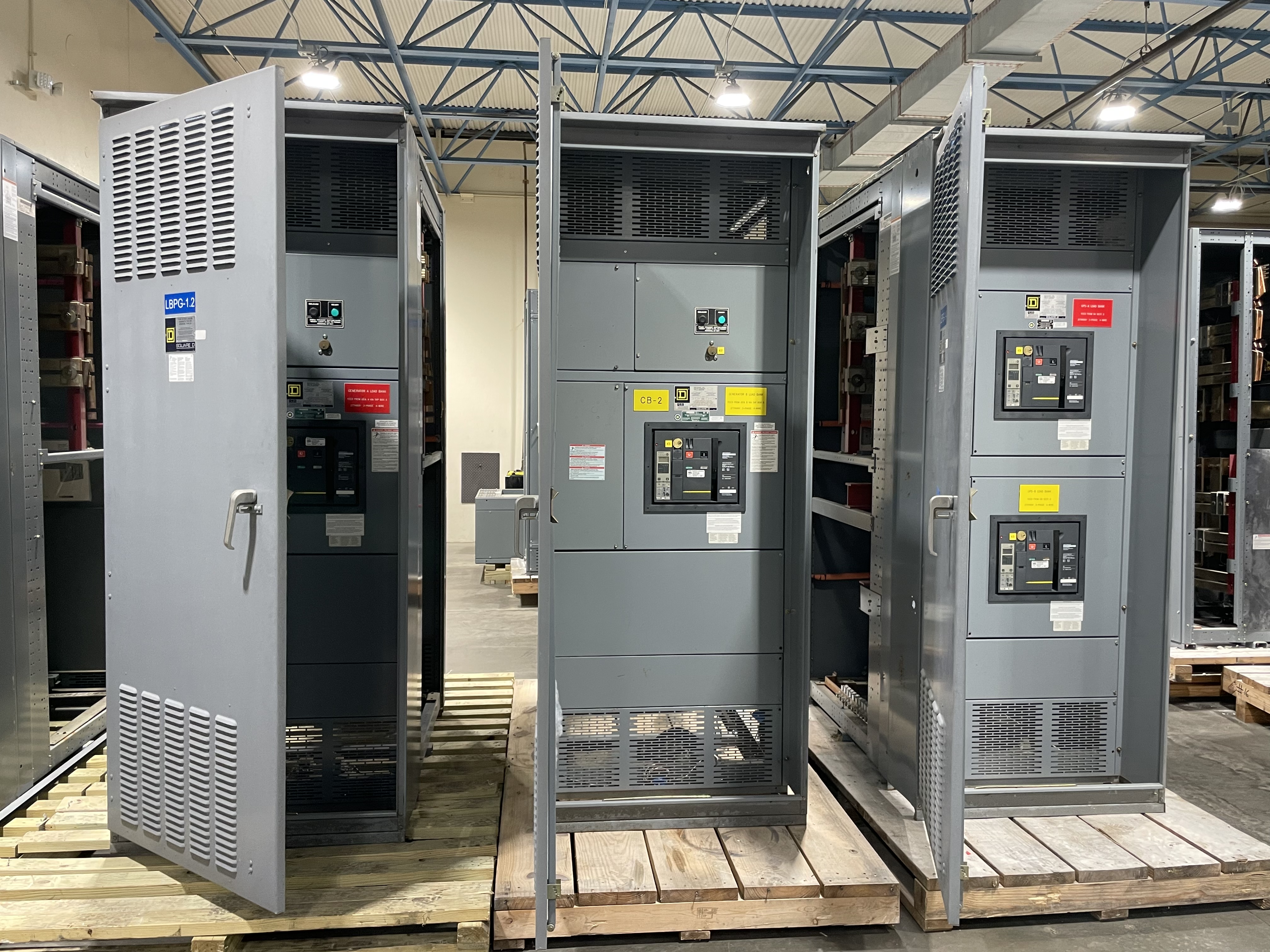
Separate the brand marking from the assembly identity
Record Square D only as a visible identification mark, not as proof of the assembly’s configuration, condition or compatibility. A safely accessible exterior nameplate may identify an assembly differently from labels on individual sections or devices. Keep those observations distinct: note the exact wording and location of each visible marking, and photograph only from an authorized safe position without approaching or touching equipment. If a nameplate is obscured or cannot be viewed safely, say that it is unreadable or unavailable rather than inferring its contents. Brand identification can help frame an inquiry, but the buyer is independent and does not represent the manufacturer or an authorized dealer.
Describe the lineup and the missing position separately
An assembly nameplate describes the identified assembly; it does not necessarily tell a buyer how many sections are currently present or which feeder positions are occupied. Count sections only from a safe, authorized vantage point, and report the count as an observation rather than a claim about the original lineup. Then describe the incomplete position: for example, if one feeder device is absent while the surrounding lineup remains in place, identify that gap separately from the number of visible sections. Do not call the position a spare, compatible opening or ready-to-fill space unless qualified documentation establishes that description. The distinction can prevent a partial lineup from being presented as a complete assembly.
Do not equate a missing feeder with a matching replacement
A vacant position does not establish which breaker belongs there, whether a device is missing, or whether another device would fit or be suitable. If records are available, share them as records—not as a compatibility guarantee—and distinguish a documented feeder designation from an assumption based on appearance. For instance, a lineup might have an exterior label naming a feeder while the device itself is absent; report both facts and leave the technical interpretation open. Breaker identity, frame, trip, ratings and the surrounding assembly are separate considerations. Do not open equipment, test a device or attempt a fit check. Any electrical evaluation belongs to qualified, authorized personnel following site rules.
Build a useful description from safe records
For an initial assessment, provide ownership or sale authority, the equipment’s general type, the visible Square D marking, safely readable nameplate text, section count if observable, and a clear description of the incomplete feeder position. Note whether information comes from an exterior label, an inventory record or another document. A safely accessible exterior photograph can help show the overall lineup and visible labels, but do not approach energized equipment or take photographs from an unsafe position. Do not remove covers, operate devices, rack out breakers, disconnect conductors or move anything to improve the view. State what remains unknown; a concise, accurate account is more useful than guessed specifications.
Set expectations for an individual purchase assessment
An independent buyer considers used, surplus and decommissioned electrical equipment on an asset-by-asset basis; the Square D marking alone does not determine acceptance or value. The buyer purchases all voltage classes, but that is not a claim that every assembly is suitable for every application. No seller testing or preparation is required. If the assets are considered for purchase, offers are for cash and payment is upfront, with terms and outcome assessed individually rather than guaranteed in advance. The seller must own the equipment or have authority to sell it. If a feeder device is missing, disclose that plainly instead of presenting the lineup as complete or implying a replacement is included.
Coordinate removal without assigning electrical work to the seller
If a purchase proceeds, discuss access, site rules, equipment condition as safely observable, and the incomplete position before coordinating logistics. Buyer-paid freight can include crane, rigging, disconnects, loading and hauling; the scope depends on the particular assets and site arrangements, so confirm what is included rather than assuming a specific plan. Electrical disconnects and all other technical electrical work must be performed by qualified, authorized personnel under the site’s rules. The seller is not expected to test, open, handle or prepare equipment. Keep people clear of electrical hazards and do not move energized equipment. Share any access restrictions or known handling constraints through an authorized site contact.