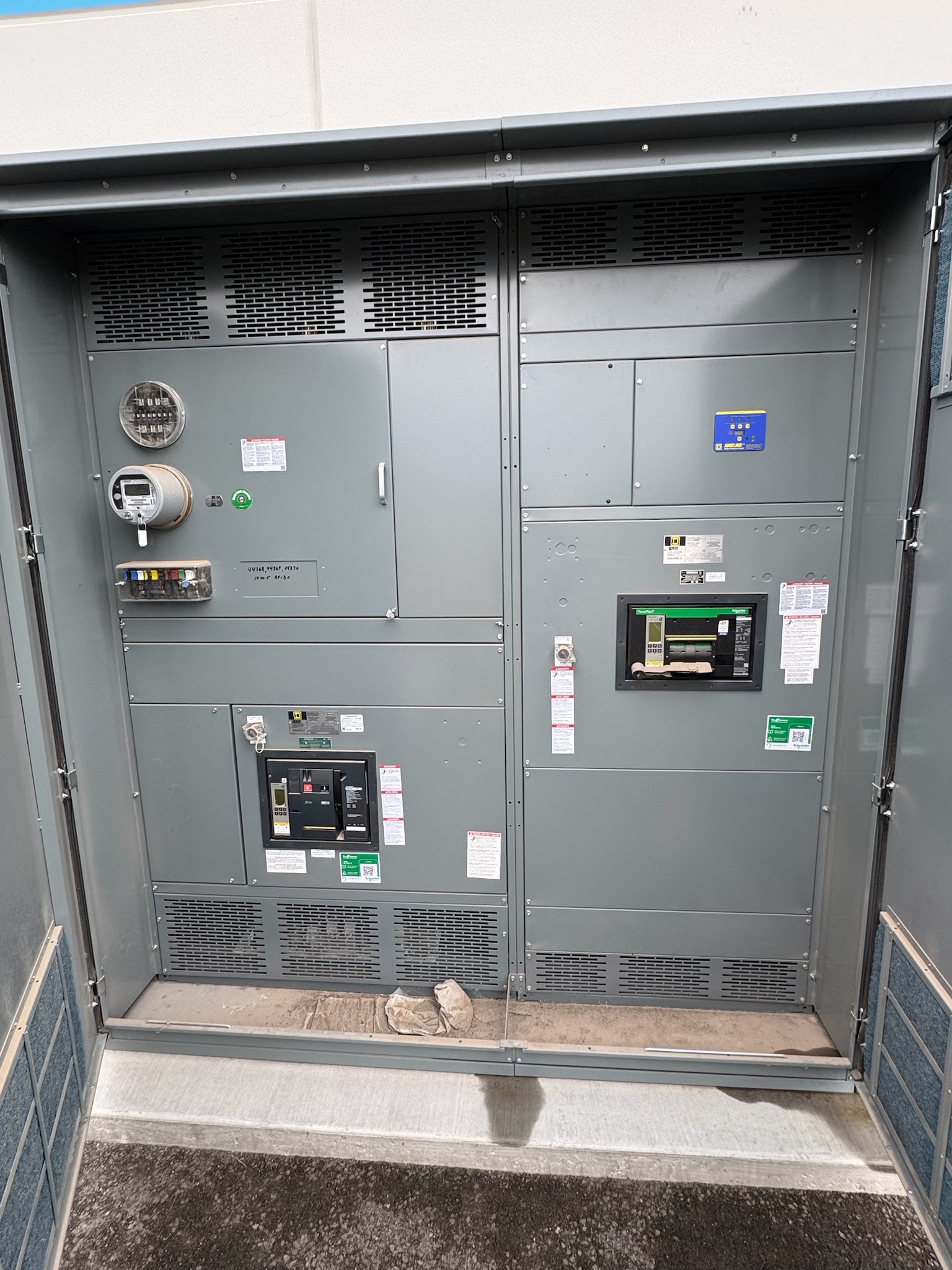
Keep the assembly and loose device separate
Start with an inventory that distinguishes the complete switchgear assembly from the loose device. Give each a separate description and, if already available, its location or existing inventory reference. Do not treat a device found nearby as a confirmed component of the assembly: a shared site, storage area, or ownership history does not prove it belongs there. A buyer can assess each item individually and may consider them together only after reviewing the available records. The assessment is not a declaration that the device fits, can be installed, or is electrically compatible. Whether either item is suitable for purchase remains subject to an individually reviewed offer and acceptance.
Use existing records to describe ratings carefully
Share existing equipment schedules, nameplate transcriptions, purchase records, or drawings if they are available and authorized for release. Keep the assembly’s nominal system voltage distinct from its assembly voltage and continuous-current rating. Record a device’s frame, trip, and interrupting ratings as separate fields only when supported by reliable existing records. Do not fill gaps by inference or assume a loose device inherits the assembly’s ratings. Model history is not essential to request an initial review, but its absence may leave identity, condition, and relationship to the assembly unresolved. No seller testing or new measurements are required; uncertainty can be reported plainly rather than corrected by site staff.
Provide useful identification without creating exposure
Useful context includes the number of assemblies and separate devices, broad descriptions, known storage status, and whether records are available. If photographs are permitted, limit them to safely accessible equipment exteriors and exterior labels or nameplates, taken from site-authorized safe positions. Never open a cabinet, photograph its interior, or approach equipment to obtain a clearer image. Do not operate, test, touch, disconnect, remove, or move energized or potentially energized equipment. Electrical work, if needed for a separately authorized site purpose, must be performed only by qualified, authorized personnel under site rules. A purchase inquiry does not authorize access or electrical work.
Understand what can and cannot be concluded
A legible label or drawing can support identification, but it does not establish that a device belongs with an assembly or that either item will be accepted. Missing model history, incomplete records, unknown condition, and uncertain ownership are relevant limitations to disclose. Avoid representing an unverified device as original, interchangeable, or ready for service. The buyer purchases used, surplus, and decommissioned electrical equipment across all voltage classes, including equipment from decommissioned data centers and shut-down power plants. That breadth does not guarantee interest in a particular asset. Each proposed purchase is individually assessed, and neither an offer nor timing is guaranteed before review and agreement.
Plan a handover around site controls
Share any known access windows, loading restrictions, required escorts, and site rules before agreeing on a handover plan. Do not prepare equipment by staging, opening, disconnecting, or moving it. Under an agreed purchase, the buyer covers necessary crane, rigging, disconnects, loading, freight, and hauling; the seller does not hire or pay a crew. All electrical work must remain with qualified, authorized personnel working under site rules. Removal scope and sequence must be agreed for the specific purchase, and site authorization still governs access. A purchase does not include unrelated demolition or hazardous-material remediation.
Request an assessment with clear expectations
Send the separate inventory descriptions, available records, and any permitted exterior photographs through the buyer’s chosen contact process. State what is unknown rather than guessing at model, ratings, condition, or device-to-assembly fit. The buyer reviews the information and may make a cash offer; for an agreed purchase, payment is made upfront under the agreed terms. An inquiry is not an offer, and submission does not commit either party. Acceptance, price, and timing depend on the individual assessment and agreement. If a proposal is not accepted, do not treat that as authorization to alter equipment; continue to follow site controls and applicable ownership procedures.