Resolve ownership before discussing removal
A facility sale may transfer the building and permanently installed switchgear, while a separate schedule lists selected electrical assets for sale. Those documents can conflict, or use different equipment descriptions. Compare the executed purchase agreement, asset schedules, bills of sale, amendments and any written exclusions; note who signed and whether later documents supersede earlier ones. A schedule entry alone does not establish that its signer can sell installed equipment. If ownership or authority remains disputed, pause the proposed sale and seek clarification from the parties with authority. Do not treat an equipment buyer’s assessment as a title determination. In Augusta, as elsewhere, written agreement on ownership and removal rights should precede any handover planning.
Match the schedule to the installed assembly
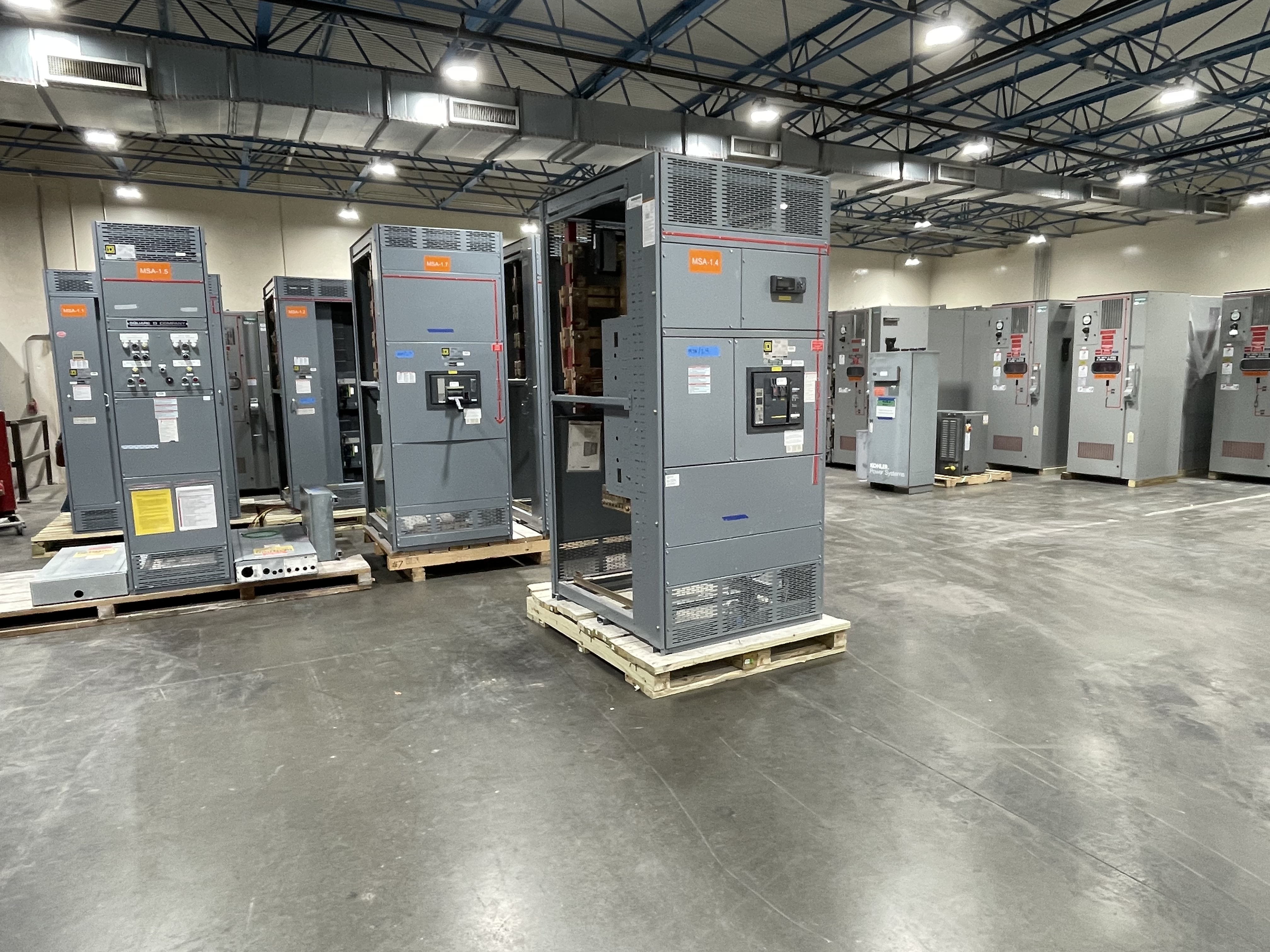
Low-voltage switchgear is not interchangeable with every panelboard, motor-control center or distribution assembly described loosely as a switchboard. Use existing records to identify the listed asset: equipment tag, manufacturer and model, section count, location, and exterior nameplate details if already documented. Compare these with the sale schedule, maintenance inventory, drawings and photographs. Names may be abbreviated, tags may have changed, and one schedule line may refer to several connected sections. Record discrepancies rather than resolving them by assumption. Do not infer a particular voltage, ampere rating, frame, trip setting or interrupting rating from appearance or a partial description; these are distinct facts, and compatibility cannot be established from a sales listing.
Separate ratings from transaction identity
Existing nameplate records can help identify equipment, but a rating is not proof of ownership or permission to remove it. Keep system nominal voltage separate from the switchgear assembly’s stated voltage, and keep ampere rating, frame designation, trip rating and interrupting rating distinct. If records conflict, mark the field as unverified instead of choosing a value. No seller testing is required for a purchase assessment, and the seller need not arrange tests, open cabinets or prepare equipment. Share only records you are authorized to disclose. If photographs are useful, take them only of safely accessible exteriors and exterior labels or nameplates, from positions authorized by site rules; never open equipment to obtain an image.
Confirm who can authorize the handover
Before seeking a purchase assessment, identify the legal seller and the person authorized to approve the transaction and site access. Depending on the sale documents, that could require written confirmation from an owner, buyer, lender, receiver or another party; do not assume a facility contact has authority to transfer title. Check whether the asset schedule permits removal, whether attached equipment is excluded, and whether access requires separate approval. Preserve the relevant pages and correspondence, but redact security-sensitive details before sharing anything externally. If parties disagree, stop rather than arranging access or removal. A buyer may assess an identified asset, but each offer and acceptance is individually reviewed; neither acceptance nor a particular price or timing is guaranteed.
Plan removal only after approval and safe release
For an agreed purchase, the buyer covers applicable crane, rigging, disconnects, loading, freight and hauling under the agreed scope; the seller does not hire or pay a removal crew. Confirm in writing what equipment is included, who grants access, the approved work window, loading route and handover point. Disconnects and all other electrical work must be performed only by qualified, authorized personnel under site rules. Never approach, operate, open, touch, test, disconnect, remove or move gear that is energized or may be energized. The seller is not asked to prepare the equipment. Scope a purchase assessment around the switchgear itself; it does not imply acceptance of surrounding property, demolition work or hazardous-material remediation.
Send a useful, restrained assessment package
A concise package can include the relevant sale schedule excerpt, equipment inventory, available drawings, existing exterior photographs, and a written explanation of any ownership or identity discrepancy. Provide the Augusta site location at an appropriate level, the authorized contact, access restrictions and whether written removal rights are confirmed. Do not include confidential building plans, credentials or sensitive network details unless disclosure is authorized and necessary. The buyer purchases used, surplus and decommissioned electrical equipment across all voltage classes, including equipment from decommissioned data centers and shut-down power plants; that scope does not make any particular asset eligible. The buyer makes cash offers and pays upfront for agreed purchases. Each assessment is individual, with no guaranteed offer, acceptance or schedule.