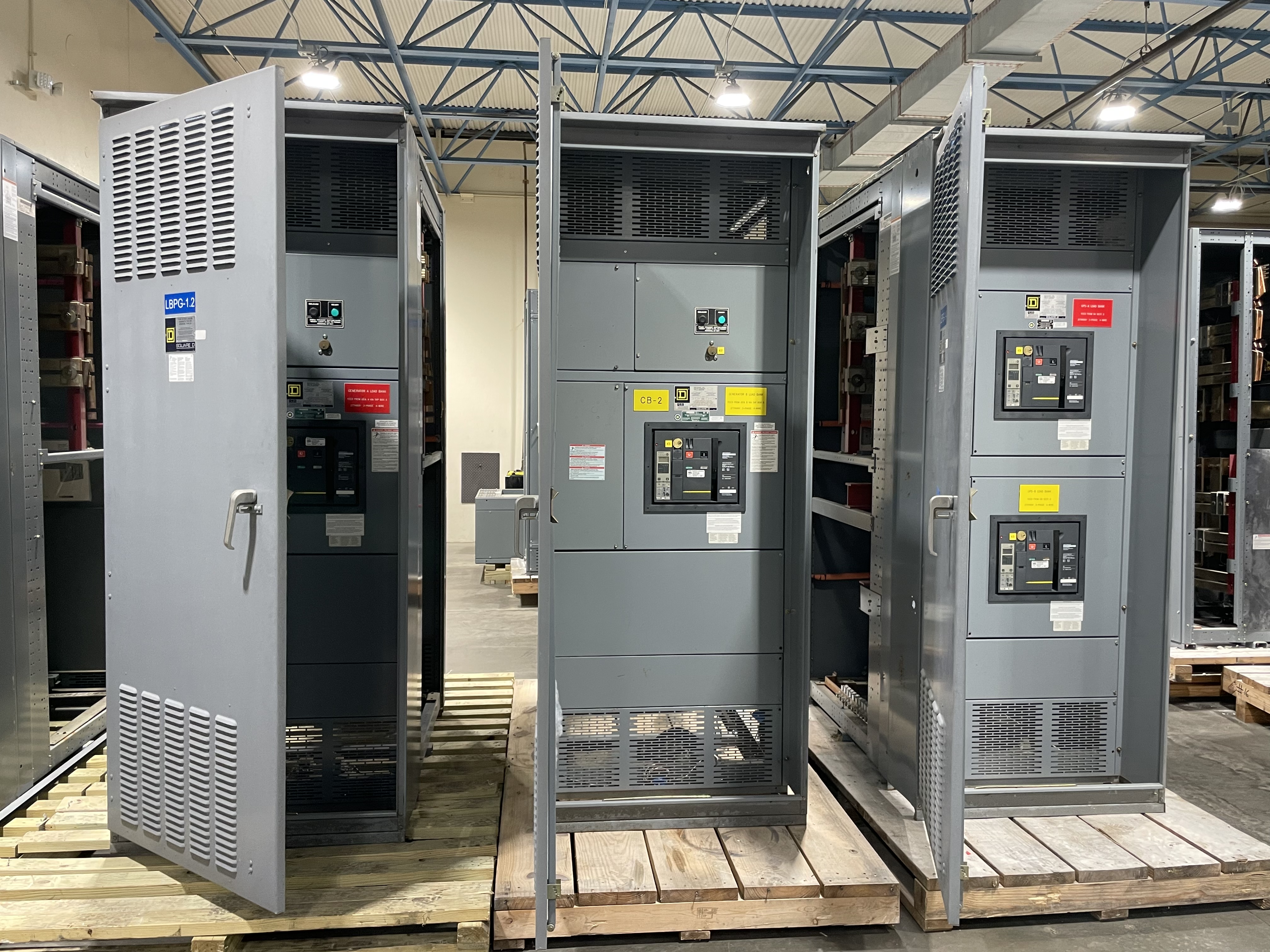
Start by separating stored spares from installed breakers
A stored spare may be accessible for exterior identification, while a breaker still in a lineup remains part of an electrical assembly and must be treated accordingly. Do not remove, rack out, disconnect, or approach energized equipment for an inventory. For each item, record whether it is stored loose, in its original packaging, or installed, based on information available from authorized personnel. This distinction helps a buyer assess the proposed inventory without assuming that a spare and an installed breaker have the same condition, completeness, or removal requirements.
Describe the assembly, frame, and trip information separately
Names and labels can describe different parts of a breaker, so list them distinctly rather than treating them as interchangeable. Note the assembly identification, breaker frame information, and any visible trip-unit label as separate fields. A trip unit may be absent, different from the frame, or difficult to identify from an exterior view; do not infer compatibility from appearance. If an authorized person can provide existing records or safe exterior photographs, include those references. Clear distinctions reduce ambiguity in an individual assessment without requiring seller testing or conclusions about performance.
Record ratings as labels, not as proof of suitability
Capture legible exterior nameplate details where they are safely visible from an authorized position, including the stated voltage and other marked ratings. Keep nominal voltage distinct from current, interrupting, or other rating information; one value does not establish the others. Do not open equipment, remove covers, or move a breaker to find a hidden label. If a field is unreadable or unavailable, mark it unknown instead of estimating. Buyers can review the information provided, but a label alone does not establish compatibility with another assembly or intended application.
Inventory mixed voltage classes without combining them
A decommissioned plant may have spare breakers associated with different systems, and a consolidated list can obscure those differences. Group items by the voltage class shown in available records or safely accessible exterior labels, while retaining each breaker’s individual identifiers and unknowns. For example, two visually similar stored units should not be grouped as interchangeable if their marked voltage classes differ or one label cannot be read. The buyer considers assets individually; buying across all voltage classes does not mean every item will be accepted or that unlike equipment has equivalent value.
Document storage conditions without disturbing equipment
For stored spares, describe known storage conditions using existing records and observations from safe, authorized positions: indoor or outdoor storage, packaging status, and any visible signs of moisture, corrosion, or impact. Do not unwrap, lift, tilt, or handle a unit to improve inspection. Distinguish observed exterior condition from assumptions about internal condition, and note how long or under what conditions it was stored only if reliable information exists. A covered breaker with incomplete records and an exposed breaker with clear records present different assessment questions, not guaranteed conclusions about serviceability.
Plan installed-equipment review around authorized work
If breakers remain in lineups, the seller should identify them from asset records or other information already available without accessing or manipulating energized equipment. Any electrical isolation, disconnection, or removal must be performed by qualified, authorized personnel under site rules. The buyer does not require seller testing or preparation. For a proposed purchase, clarify which equipment is included, who has authority to sell it, and what access restrictions apply. Do not include unrelated plant demolition or hazardous-material remediation in the breaker inventory scope; those are separate matters.
Request an individual assessment and define the handoff
Share the inventory, available records, safe exterior nameplate photographs, storage notes, and installed-versus-spare status for review. The buyer assesses each asset individually and may make a cash offer with upfront payment; acceptance, pricing, and timing depend on that assessment. For purchased equipment, the buyer covers freight and coordinates crane, rigging, disconnects, loading, and hauling as applicable. Electrical work remains with qualified authorized personnel under site rules. No seller testing is required, and no one should handle energized equipment to prepare information or facilitate a sale.
DECOMMISSIONING / THE COMPLETE SERVICE
From shut-down site to paid seller.
We buy electrical switchgear from decommissioned data centers and shut-down power plants. We handle all rigging and logistics: crane, rigging, disconnects, loading, freight and hauling are on us. Qualified personnel handle electrical disconnects and isolation according to site safety procedures. The seller does nothing but get paid.
We make cash offers, pay upfront, require no testing from the seller, and buy all voltage classes. Share the site and equipment details you know; photos are helpful only when they can be taken safely. Never open or touch energized equipment or disturb a live installation.