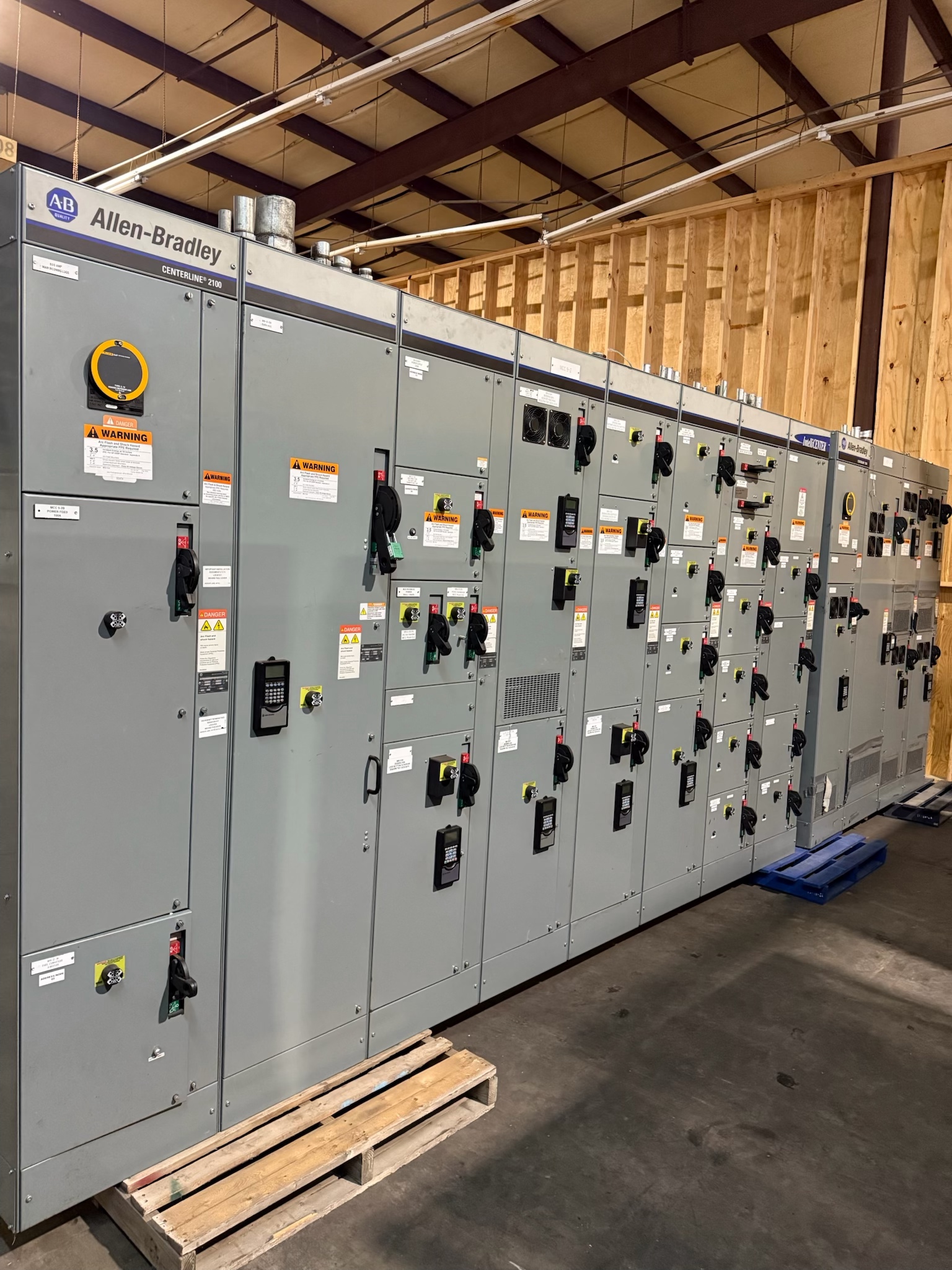
Start with the lineup nameplate, not an assumed complete inventory
Record the lineup nameplate exactly as it appears: manufacturer marking, identifiers, ratings, and any other legible fields. Do not fill gaps by inference or treat the nameplate as a record of every component now installed. A switchgear assembly and its individual breakers are distinct assets, and their markings may differ. If a field is obscured or unreadable, mark it unknown rather than guessing. This gives a buyer a reliable starting point while keeping the missing register visible as a limitation, not a reason to invent a configuration.
Build a separate breaker schedule from visible labels
List each breaker as a separate line item, using its label or nameplate as the source. Capture visible maker markings, identification numbers, frame information, trip-unit information, and stated ratings as separate fields where present; a frame designation is not the same as a trip setting, and neither substitutes for the lineup rating. Do not assume all breaker labels will match the lineup’s Square D marking. If labels cannot be seen safely from an authorized position, leave those entries incomplete and note why instead of trying to access or expose them.
Make the missing asset register a documented uncertainty
Without the original register, reconcile what can be observed against any available purchase records, maintenance documents, drawings, or prior inventories. Mark each item as confirmed by visible marking, supported by a document, or unresolved. For example, a record may name a breaker that cannot be matched confidently to a visible label; keep that discrepancy open rather than assigning it by position alone. Ask who owns the equipment and whether that person has authority to sell it. Clear provenance and honest uncertainty help an individual assessment without implying acceptance or a particular offer.
Keep documentation within safe limits
Photographs can help support the inventory when they show equipment exteriors and exterior nameplates safely visible from authorized safe positions. Do not approach, open, touch, operate, test, disconnect, rack out, or move equipment to improve a photo or reveal a label. Do not ask an unqualified person to expose internal markings. If information is inaccessible, provide the written description of what is visible and identify the gap. All electrical work, including any work needed for safe access, must be performed by qualified, authorized personnel under site rules.
Separate identification from voltage and rating assumptions
Include stated voltage classes and ratings only when they can be read on the relevant equipment or supported by reliable records. A lineup marking does not establish that each separately labeled breaker has the same voltage class, rating, or condition. Conversely, an incomplete label does not justify estimating those values from appearance. The buyer considers equipment across all voltage classes, but assets and offers are assessed individually; that is not a promise that a particular assembly or breaker will be accepted. Keep unknown values explicit so identification is not mistaken for technical verification.
Discuss purchase terms and removal responsibilities directly
For equipment that is considered for purchase, the buyer offers cash and pays upfront under agreed purchase terms; no seller testing or preparation is required. The buyer covers applicable disconnects, crane and rigging work, loading, freight, and hauling as part of an agreed purchase, with the specific scope settled for the assets and site. The seller need not hire or pay a removal crew. Electrical disconnects and other electrical work must be handled by qualified, authorized personnel under site rules. Do not treat this scope as a promise of acceptance or unrelated demolition.
Prepare a practical handoff for a possible Albany pickup
If Albany is the possible pickup location, share the site contact, access constraints, known equipment dimensions if documented, and the safe exterior inventory before discussing logistics. Distinguish what remains installed from equipment already removed, and flag whether labels or records are missing. Avoid estimating weights, rigging needs, or removal conditions unless reliable information is available; those details can be reviewed for the specific purchase and site. A concise schedule of the lineup plus separately identified breakers gives the buyer a clearer basis to assess the opportunity without requiring seller testing or unsupported claims about components.