Establish ownership before discussing the rating
Before evaluating a 1,200 A service-entrance switchboard, establish that the seller owns it or has authority to sell it. A facility employee may be able to describe equipment without having authority to transfer it; a contractor may be authorized for electrical work but not asset disposal. Ask which legal entity owns the assembly, whether it is part of a lease or financing arrangement, and who must approve the sale. For equipment in a decommissioned data center or shut-down power plant, confirm the disposal authority and any required internal sign-offs. Keep the ownership record tied to the specific lineup or asset identifier, not merely the room or project name.
Read 1,200 A as a marked rating, not a load figure
Record the exact text on the assembly nameplate, including punctuation, units, qualifiers, and any separate service-entrance marking. A 1,200 A assembly rating does not establish the facility’s actual demand, present operating load, or suitability for another installation. For example, a nameplate may show 1,200 A for the switchboard while individual sections or devices carry different markings. Document the complete nameplate and lineup identification from an exterior position that is safely accessible and authorized. Do not approach or handle equipment to improve a photograph. If markings are obscured or contradictory, note that limitation rather than resolving it by assumption; review of electrical equipment belongs to qualified authorized personnel.
Separate assembly, breaker, frame, and trip markings
Do not treat every “1,200” marking as the same rating. The assembly rating describes the switchboard as marked; a breaker marking identifies a device; frame and trip markings describe distinct aspects of that breaker. A device may have a frame rating that differs from its trip rating, while the assembly has its own rating. Transcribe each marking separately, with its location in the lineup, rather than summarizing the equipment as “a 1,200 A breaker.” If device labels cannot be safely read from an authorized position, record them as unavailable. These distinctions support an individual asset review; they do not establish coordination, compatibility, interrupting capability, or acceptance for purchase.
Clarify the utility interface and release authority
A service-entrance switchboard can involve a utility interface as well as facility-owned equipment. Identify which components belong to the seller and whether any metering, service conductors, seals, or utility-controlled parts are excluded from the proposed sale. Ask who has authority to approve release and what utility or site approvals must occur before any disconnection or removal. The 1,200 A marking does not establish that the utility has approved a change, or that the lineup can be transferred or reused. If ownership boundaries are unclear, pause the sale discussion until the relevant parties clarify them. Electrical review and all disconnect work must be performed by qualified, authorized personnel under site rules.
Build a safe, useful equipment record
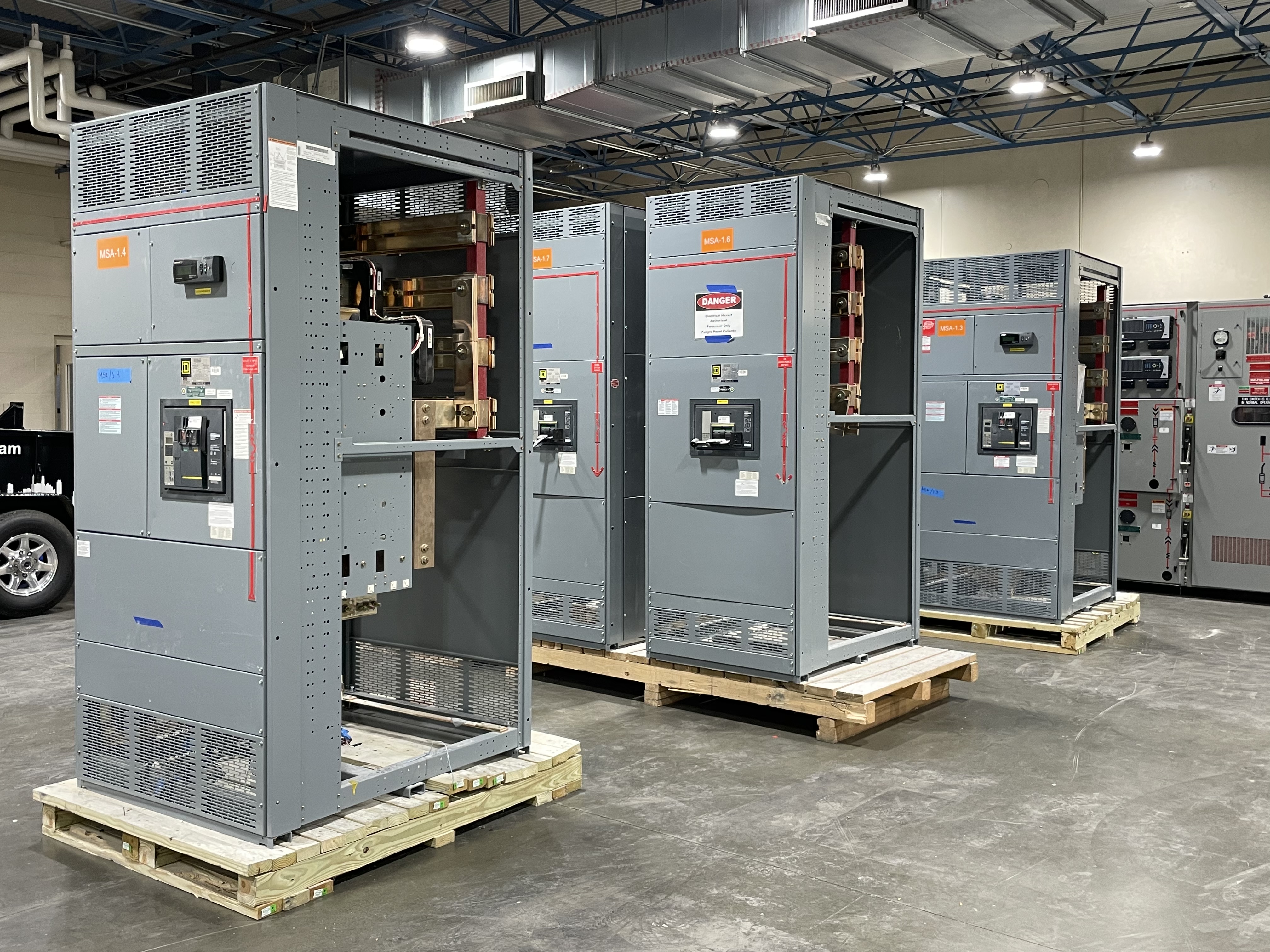
Useful documentation can include overall lineup photographs, accessible exterior nameplates, section identifiers, visible device labels, and a written inventory of included components. Take photographs only from authorized safe positions where the markings are already safely accessible; do not open doors, remove covers, touch equipment, or approach energized equipment to obtain a better view. Include known exclusions, missing labels, and any visible condition notes without attempting a test or diagnosis. No seller testing or preparation is required. If records differ from the physical markings, preserve both and flag the discrepancy for review. This lets a buyer assess the actual described asset instead of relying on an assumed configuration or rating.
Plan commercial terms and removal as separate decisions
Offers are assessed individually from the available asset details and sale authority; a 1,200 A rating alone does not determine price or acceptance. The buyer purchases used, surplus, and decommissioned electrical equipment across all voltage classes, offers cash, and pays upfront when a transaction is agreed. Buyer-paid freight can include crane, rigging, disconnects, loading, and hauling, with scope determined for the particular asset and site. Do not arrange electrical work outside site authorization or assume removal can proceed before approvals are complete. The seller need not test equipment or hire a removal crew. Any disconnecting, removal, or handling of electrical equipment must be performed by qualified authorized personnel following site rules.