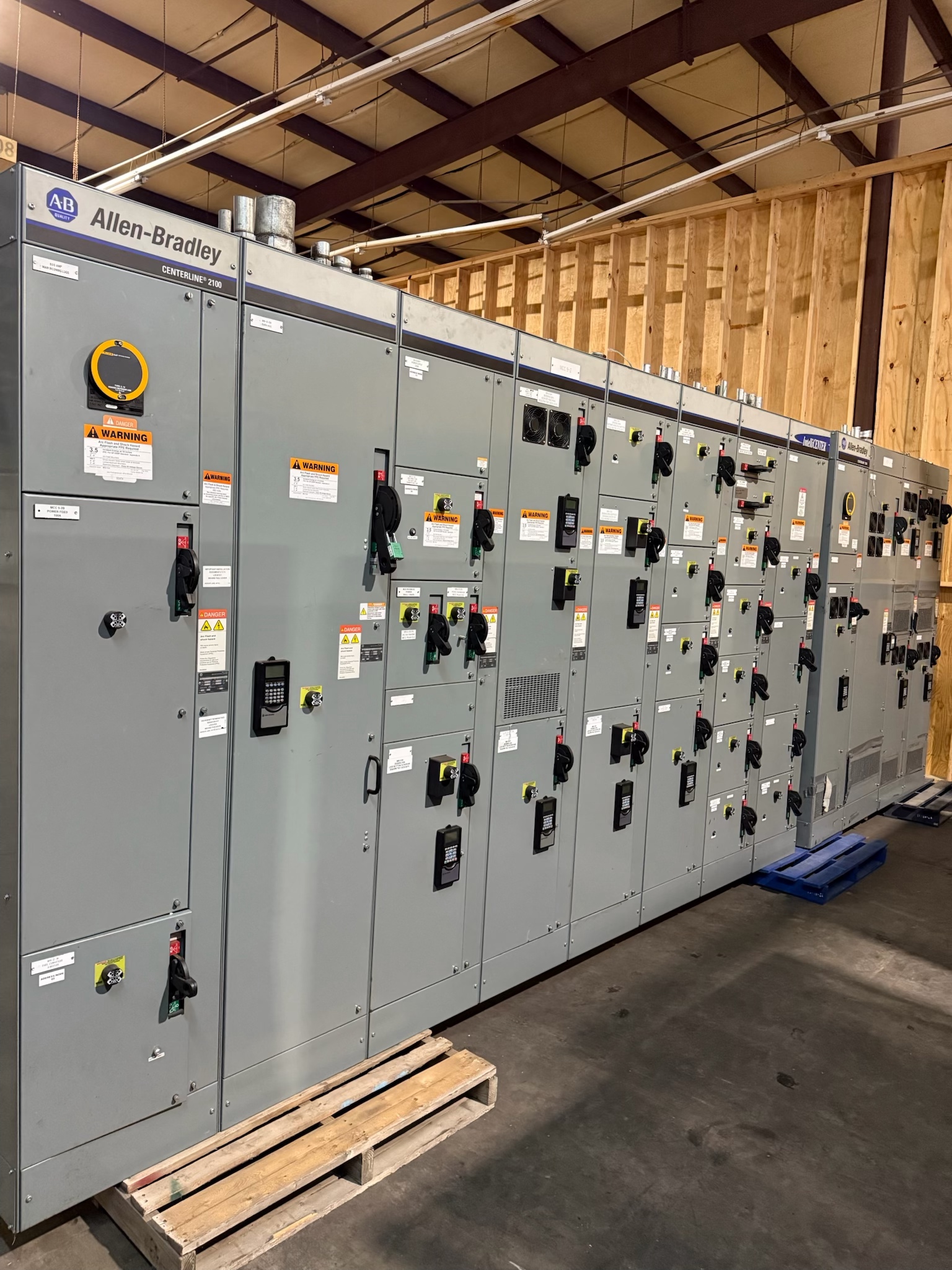
Start with the busway assembly marking
Record the exact nameplate text for the busway, including the stated 1,600 A rating, manufacturer and any catalog or identification numbers that are legible from a safe, authorized position. Preserve punctuation, abbreviations and suffixes rather than converting them into a paraphrase. Note whether the marking appears on a section, a label associated with the run, or another component; do not assume one label describes every piece. A 1,600 A figure identifies a stated rating, not the load currently carried, the project’s demand, or the value of the assembly.
Inventory straight lengths and fittings separately
Build a count of straight busway lengths and fittings as distinct inventory lines. For example, list each visible length or marked section separately, then identify elbows, tees, end closures, joint or feed components, and other fittings only when their markings or form are safely observable. Record quantities and any identifying labels; mark uncertain descriptions as unconfirmed. A run that once formed a complete installation may now be partial, while loose fittings may be difficult to match from appearance alone. Do not infer completeness, interchangeability, or compatibility from a count or visual resemblance.
Keep tap-off devices out of the system-rating assumption
Document tap-off units as individual devices, not as proof that every branch is rated 1,600 A. If a tap-off nameplate states a different current rating, preserve that separate marking and associate it with that device. Note visible breaker information independently, including its marked rating where legible. The busway’s system rating and a tap-off’s device rating answer different identification questions; neither establishes the project’s actual load. Do not add device ratings together, infer available capacity, or conclude that an unmarked or unreadable tap-off is suitable for a particular busway.
Transcribe breaker, frame and trip details precisely
Where a tap-off contains a breaker, distinguish the breaker assembly identification from its frame and trip markings. Transcribe each readable value exactly and indicate which label it came from; do not treat frame rating as trip rating or either as the busway rating. For instance, a marking on a breaker frame does not by itself establish the installed trip setting or the suitability of the complete tap-off. Do not open equipment to find hidden details. Qualified, authorized personnel must perform any electrical inspection or work under applicable site rules.
Record voltage without assuming a match
Capture the exact voltage markings wherever they are safely accessible, keeping them associated with the relevant assembly or device. If different components carry different or unclear voltage information, list each separately and flag uncertainty rather than selecting one as the system voltage. This buyer considers surplus equipment across all voltage classes, but that does not establish that any particular busway and tap-off combination is compatible or acceptable. Avoid deriving voltage from a project description, a nearby panel, or an assumed application. A legible transcription is more useful than a guessed interpretation.
Provide safe documentation and condition notes
Useful documentation can include a written inventory, available records and photographs limited to exterior nameplates or equipment that is safely accessible from an authorized safe position. Never approach, touch, open, operate, test, disconnect or move energized equipment to obtain information or images. Seller testing is not required, and no seller preparation is required. If markings cannot be safely seen or read, say so and leave the detail unresolved. Note known condition or missing-piece information without claiming that equipment has been electrically verified or that an installation is ready for reuse.
Set clear expectations for an individual assessment
Share the inventory and markings for an individual review; neither a 1,600 A label nor a complete-looking list guarantees an offer or acceptance. If the equipment is decommissioned, ownership or authority to sell still needs to be established. Offers are assessed individually, with cash offers and upfront payment where a transaction proceeds. Depending on the equipment and agreed arrangements, the buyer covers disconnects, crane and rigging, loading, freight and hauling. Sellers need not hire crews or perform electrical work; any required electrical work belongs to qualified, authorized personnel following site rules.