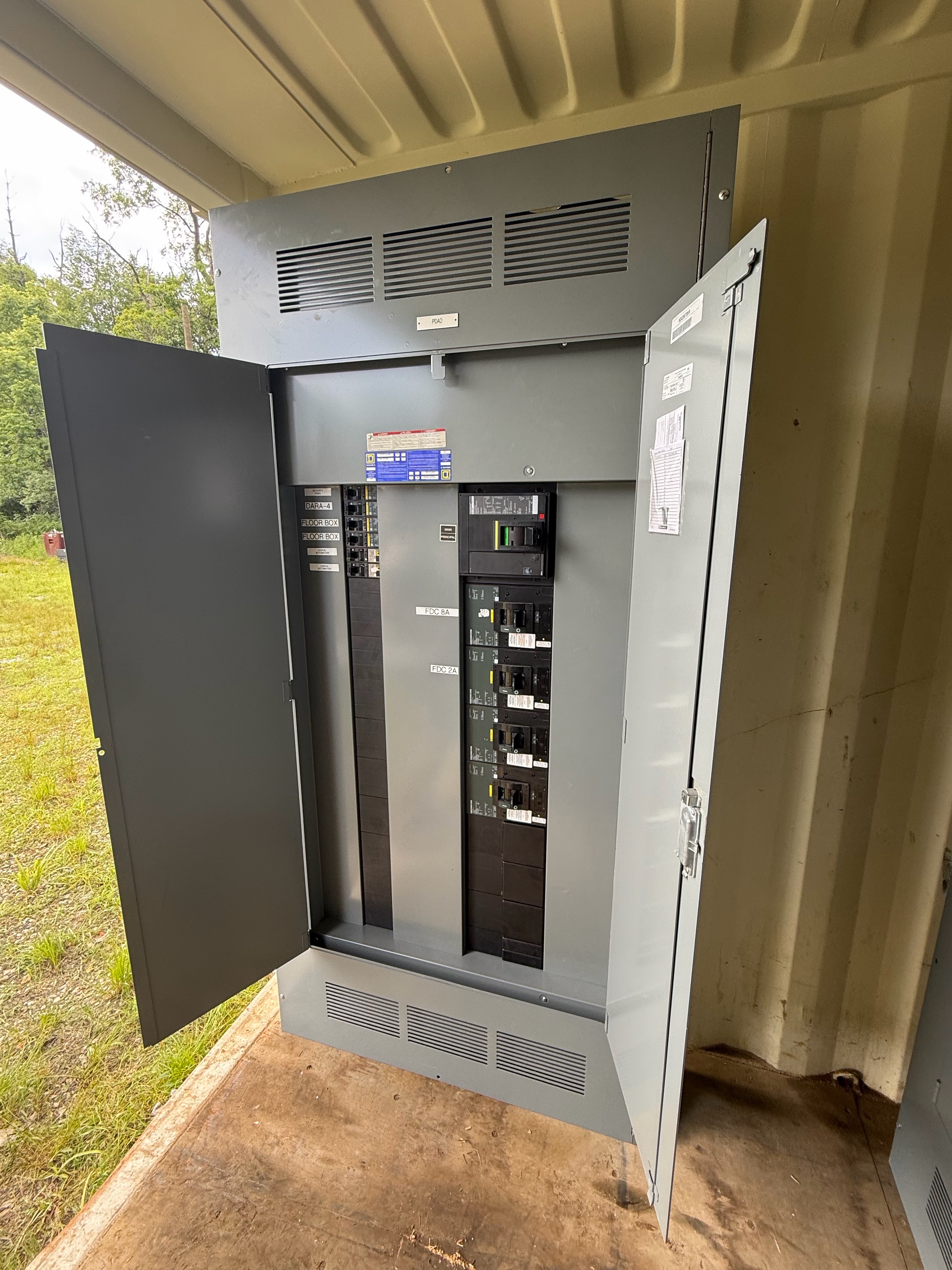
Start with authority and the asset’s location
Before discussing a crane, establish who owns the equipment or has authority to sell it, and identify precisely where it sits: rooftop, enclosed electrical room, or behind another assembly. A room label or panel schedule may identify a circuit, not prove the identity or ownership of the item offered. Record exterior nameplate details only when visible from an authorized, safe position. Do not enter restricted areas or approach equipment to obtain a photograph. This first distinction matters because a buyer cannot sensibly assess removal from a description that confuses a complete assembly with one breaker or component.
Verify the route from room to lift point
A roof-level item may have a door route, a removable architectural opening, or a path that cannot be confirmed without a building review. Ask the responsible building contact to document the proposed route from the room to the designated crane pickup point, including door dimensions, turns, thresholds, and any overhead restrictions. The building team should verify measurements and access; sellers should not move equipment or remove doors, covers, or structural elements for an estimate. A route that works for a compact breaker may not work for a larger switchboard section, even if both occupy the same room.
Evaluate crane reach against roof clearance
Crane placement is not simply a question of whether a truck can stop nearby. The lift planner needs an approved setup area, estimated load information, boom reach, roof-edge clearance, and a clear path that avoids obstructions. For example, a short reach over an open roof may be simpler than a longer reach past parapets, rooftop screens, or other structures, but actual feasibility depends on site conditions and professional review. Ask who can approve crane positioning and what measurements or equipment information they need. Do not treat a photograph as a substitute for a verified lift assessment.
Make building approval part of the plan
Building approval may govern roof access, crane staging, loading zones, access hours, and protection of occupied areas. Ask the property manager or authorized site representative which approvals are required, who grants them, and whether structural or access reviews must precede scheduling. A possible lift through a roof opening is not automatically preferable to carrying equipment through a building: it may reduce interior travel while introducing roof, weather, or clearance concerns. Conversely, an interior route may involve more turns and tighter openings. Compare the approved options rather than assuming the fastest-looking route is workable.
Separate equipment identity from electrical ratings
For evaluation, provide manufacturer and nameplate information that is safely visible, plus a description of what is included and what is not. Distinguish the assembly from its breakers; identify breaker frame and trip information separately where legible, and report nominal voltage and marked ratings as distinct details. A trip value does not establish the assembly’s full rating, and an unreadable nameplate should be reported as unreadable rather than guessed. We buy across voltage classes, but suitability and value are not universal: condition, completeness, identification, and removal circumstances are assessed item by item. Seller testing is not required.
Coordinate disconnects, rigging, and removal responsibility
Any electrical disconnection must be performed by qualified, authorized personnel under the site’s rules; the seller should not open, test, disconnect, or handle energized equipment. Clarify who coordinates authorization and confirms the equipment is released for removal before a lift is planned. Our scope can include crane, rigging, disconnects, loading, buyer-paid freight, and hauling, subject to individual assessment and site coordination. Discuss access constraints early: a crane plan may depend on the release sequence, rigging points confirmed by qualified personnel, and an unobstructed route. Do not assume a buyer’s removal scope includes unrelated demolition or hazardous-material remediation.
Compare the offer with the complete removal plan
When reviewing an offer, compare the proposed equipment scope and removal responsibilities, not just a number beside a nameplate. Ask what information remains unverified, who must approve the route, and which site constraints could change the assessment. We offer cash and pay upfront, but assets and offers are evaluated individually; acceptance, price, timing, and a particular lift outcome are not guaranteed. No seller testing or preparation is required. If roof access, clearance, or building approval cannot be established, pause the removal decision until the authorized site contacts can clarify the route safely.