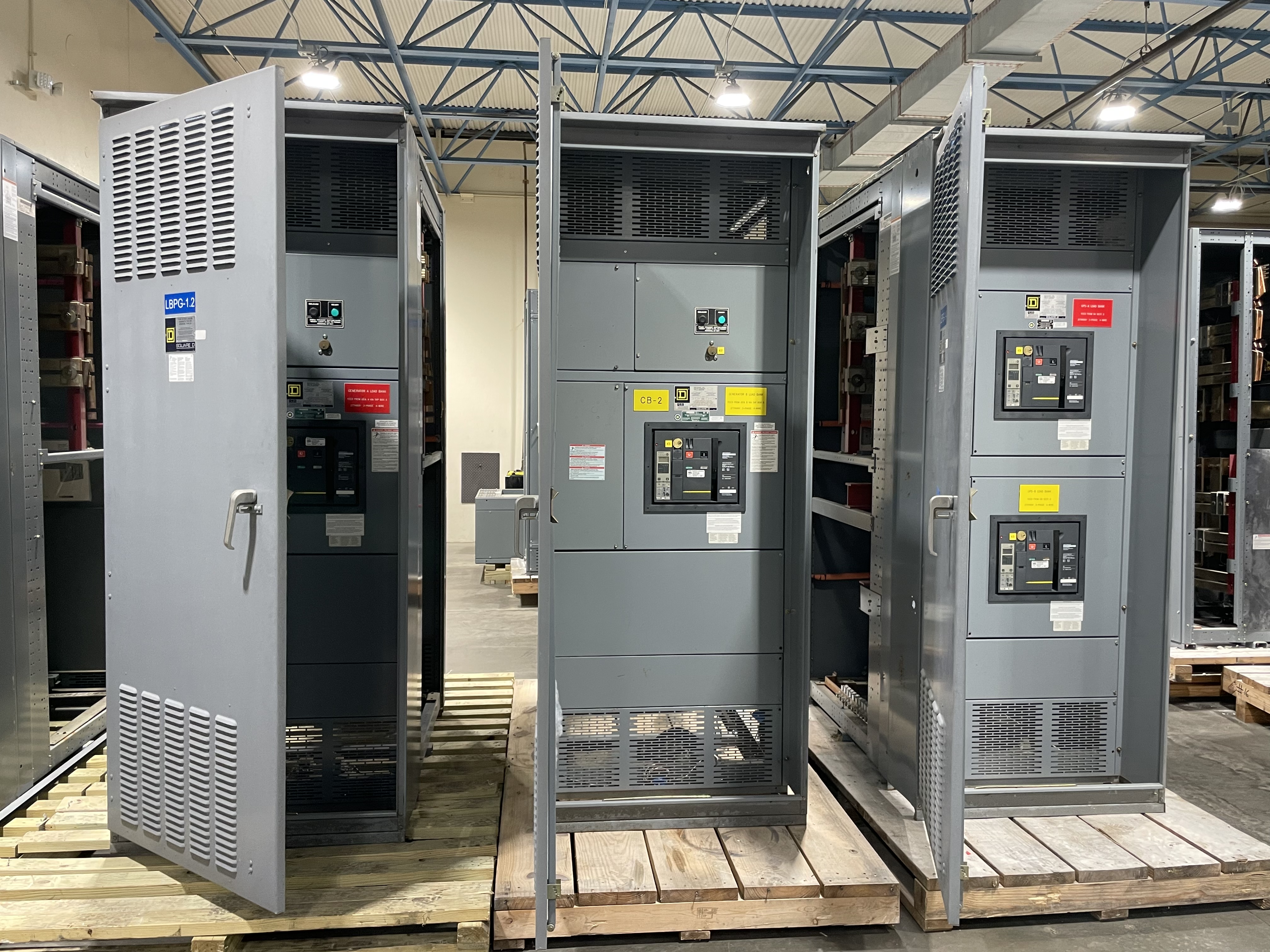
Separate evidence of water contact from discoloration
If equipment is being cleared after a building event, record what is actually known: whether water reached the equipment, which assemblies were affected, and how that information was established. Discoloration, staining, rust on an exterior, or residue may merit description, but does not prove flood contact inside the assembly. Conversely, a report of water reaching a lineup should not be softened into “cosmetic marks” merely because its outside appears presentable. Keep observations distinct from conclusions, and identify uncertain details as uncertain. Do not open or approach equipment to investigate; any electrical assessment belongs to qualified, authorized personnel following site rules.
Make missing records visible in the inventory description
Flood-exposed inventory may come with incomplete records for reasons unrelated to the equipment’s appearance. List available nameplate information and documents separately from items that cannot be located, such as drawings, maintenance history, or event records. If the enclosure is safely accessible, a clear exterior nameplate photograph can help identify the assembly; take it only from an authorized safe position, without approaching energized equipment. Do not fill gaps by guessing at a rating or configuration. A buyer can consider an asset with incomplete documentation, but missing information may affect individual review and the offer. Accurate gaps are more useful than confident assumptions.
Describe the equipment at the right level
A lineup is not a single interchangeable item: its sections, breakers, bus, frame, and trip components can have different identities and ratings. For example, a recorded breaker frame size is not necessarily the trip rating, and neither substitutes for the assembly’s nominal voltage or other marked ratings. In a water-contact scenario, preserve those distinctions rather than summarizing everything as “damaged switchgear” or claiming that a component is unaffected. Share only details already documented or visible from a safe, authorized position. The buyer evaluates assets individually, across all voltage classes; that does not mean every configuration or condition will be accepted.
Choose between selling as-is and seeking more information
The practical choice is often between presenting the inventory as-is with candid uncertainty or delaying the sale while authorized parties locate existing records. The first avoids treating a seller test as a prerequisite; the second may help clarify what the asset includes, but can consume time and still leave gaps. The buyer requires no seller testing and no seller preparation. Do not arrange access, inspection, or electrical work outside site controls to improve a sale description. If qualified personnel already hold relevant documentation, share it with permission. Otherwise, state what is unknown rather than undertaking remediation or making a condition promise.
Plan the pickup around site authority and safe access
For equipment at a Bulloch County site, share the pickup location and access restrictions so the buyer can evaluate logistics. Confirm who owns the gear or has authority to sell it, who may authorize access, and any site restrictions affecting loading. Electrical disconnects and related electrical work must be performed by qualified, authorized personnel under site rules; the seller need not perform them. Depending on the individual asset and site, the buyer covers crane, rigging, disconnects, loading, freight, and hauling. Describe constraints honestly, without promising that a particular removal method will suit every site.
Compare the offer with the uncertainty, not a guessed repair
For known water contact, missing records, or ambiguous staining, ask the buyer to assess the specific inventory rather than assuming a standard deduction or outcome. The buyer makes cash offers and pays upfront, subject to individual asset and offer assessment; neither acceptance nor a particular price is assured. Ask what inventory details are needed, how any offer relates to the described condition, and what pickup arrangements would apply if accepted. You do not need to test equipment, commission speculative repairs, or claim that discoloration proves damage. Keep the sale decision grounded in ownership authority, documented facts, and a clear account of what remains uncertain.