Confirm ownership before treating the enclosure as surplus
A pad-mounted enclosure may serve a private facility, or it may belong to a utility or another party. Its location on your property does not establish ownership. Before requesting an offer, confirm that you own the equipment or have written authority to sell it, and identify any easement, lease or service arrangement that could limit removal. If ownership records are unclear, pause the sale discussion while the responsible parties clarify title and authority. Do not rely on a logo, paint scheme or apparent age as proof. A buyer can assess equipment individually, but cannot resolve a seller’s authority to transfer property based on exterior appearance.
Build an exterior description without opening the cabinet
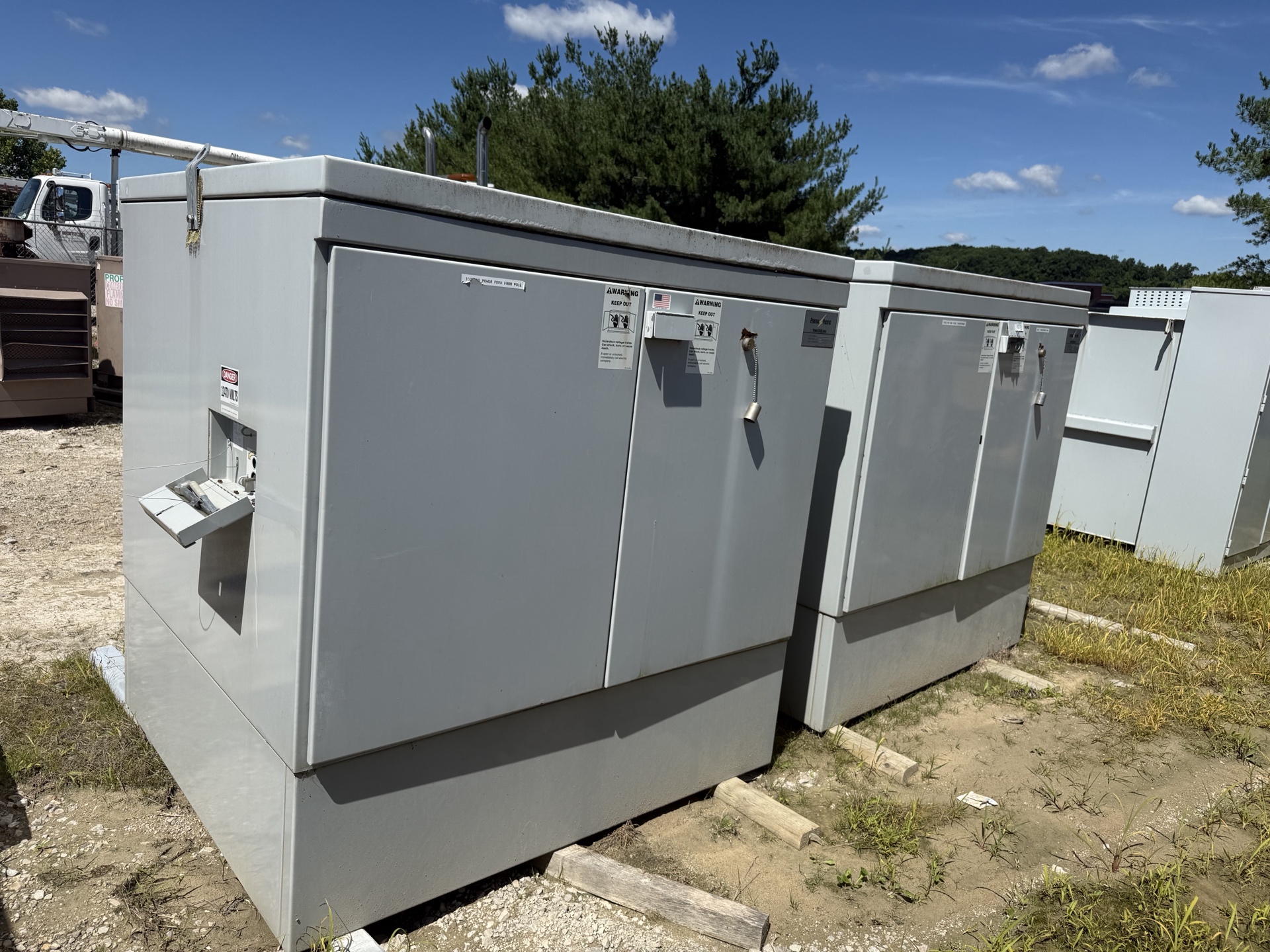
Useful identifiers may include manufacturer name, visible catalog or serial number, assembly designation, enclosure type, and any legible nameplate values for nominal voltage, current or interrupting ratings. Record only what is safely readable from an authorized position; do not open doors, remove covers, reach through barriers or approach equipment to improve a view. A switchgear assembly is not the same thing as an individual breaker, and a breaker’s trip rating is not the assembly’s rating. If a label is obscured or weathered, say so rather than guessing. A buyer can review available information without requiring seller testing, and buys equipment across voltage classes, subject to individual assessment.
Choose photos around safe visibility, not completeness
Photographs can show the exterior nameplate, overall enclosure, visible damage, doors and hinges, and the surroundings from an authorized safe position. Never open, touch, approach, test or move energized equipment for a photograph; if the label cannot be safely seen, provide a written note that it is unreadable or inaccessible. Include a scale reference only if it can be placed without approaching or handling the gear. A distant image may explain whether there are several sections, while a closer exterior view can clarify a label. The goal is useful identification, not a complete internal survey. Do not represent unseen components or condition as verified.
Assess vehicle access separately from equipment weight
For a possible pickup, describe the route from the public road to the equipment: gate width, turning room, overhead obstructions, surface type, slope, and any soft ground or seasonal access limits. Note whether a truck can reach the pad directly or would need to stage farther away. Do not estimate that a vehicle or crane can use a route simply because a passenger car has done so. If access depends on a locked gate, another owner’s land, or a restricted road, identify who can authorize entry. These details help evaluate logistics without assuming that a particular truck, lift plan or removal method will be suitable.
Compare direct access with lifting and handling constraints
Outdoor gear may appear easy to reach while still presenting limits from overhead lines, fences, nearby structures, pad dimensions or ground bearing conditions. Describe visible constraints from a safe position and share site rules or access requirements; leave lift planning to the qualified parties. Depending on an individual assessment, the buyer covers crane, rigging, disconnects, loading, freight and hauling. That does not make every site accessible or guarantee removal. Electrical work, including any required isolation or disconnection, must be performed by qualified, authorized personnel under site rules. Do not attempt to disconnect or prepare the equipment yourself, and do not hire a crew or conduct testing as a prerequisite to an inquiry.
Request an offer with clear records and expectations
Provide ownership or sale-authority confirmation, safe exterior photos, visible identifiers, approximate dimensions if already documented, and the access notes that affect pickup planning. Say plainly what is unknown, including whether internal components have been inspected; no seller testing or preparation is required. Offers are assessed individually, with no guaranteed acceptance, price or schedule. If an offer is made and accepted, the buyer pays upfront and provides a cash offer; confirm the agreed scope and logistics before arranging site access. For a Charlton County pickup, share the address and the contact who can authorize entry. Keep records of authorization and site contacts so the next steps can be evaluated responsibly.