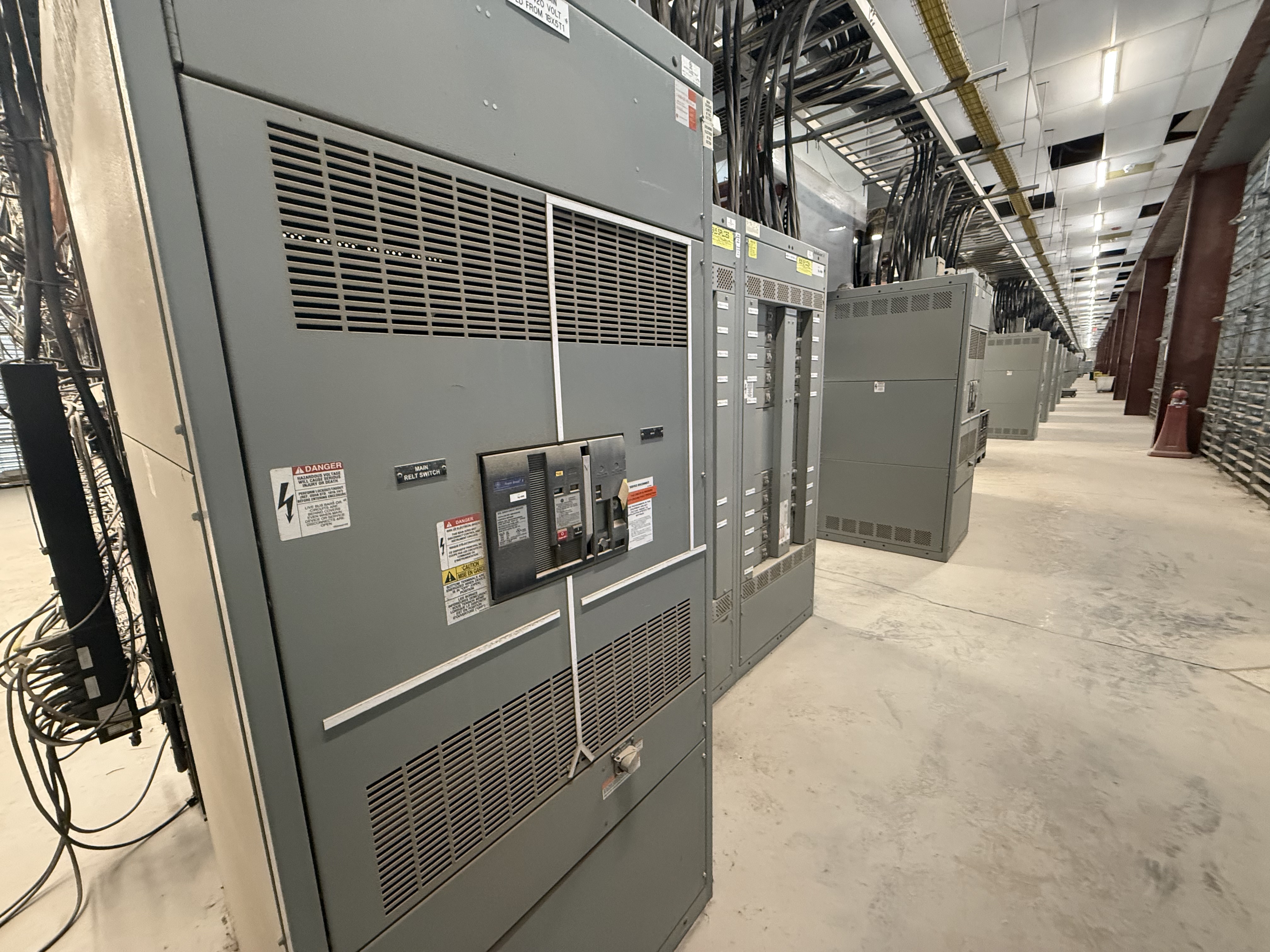
Use the Eaton marking as an identifier, not a conclusion
A safely accessible exterior nameplate bearing Eaton identifies a visible marking; it does not by itself confirm the equipment’s complete manufacturer history, internal contents, compatibility, or present condition. Record the wording exactly as seen, including any other visible maker or label, rather than interpreting it as proof of a particular configuration. If the marking is obscured or absent, write “not confirmed” instead of assigning a brand. Never open a door or approach equipment to get a better view. Photographs should be limited to safely accessible exterior nameplates, taken from authorized safe positions under site rules.
Build a section-level inventory when the one-line is missing
Without a one-line, describe the room in observable sections rather than drawing an inferred electrical path. Give each lineup or cabinet a neutral identifier, such as “north wall, section A,” if that location can be documented safely. Note visible labels, apparent section count, and whether a nameplate is readable, partly readable, or unavailable. Keep statements such as “adjacent to” separate from claims that sections are electrically connected. A list that preserves uncertainty is more useful than a guessed system diagram, especially when records have been lost or equipment has remained in place for years.
Separate assembly, breaker, bus, frame, and trip details
Do not let one visible number stand in for every rating. An assembly nameplate, an individual breaker label, a breaker frame marking, and a trip-unit marking can refer to different things; bus information may also be separately stated. Record each item only when its marking is safely visible, and identify which section or component it appears on. If the label is unreadable, say so. Do not infer a breaker’s trip setting from its frame, a bus rating from a nearby breaker, or a nominal voltage from appearance. Those distinctions help an evaluator identify gaps without asking the seller to inspect internals.
Capture unknowns explicitly and preserve the source
Use an “unknowns” column for missing one-line references, unreadable labels, uncertain section boundaries, and unverified component relationships. Add the source of each entry: exterior nameplate, existing records, or seller recollection. For example, if old paperwork calls a section “main” but no accessible label confirms that description, preserve it as “called main in file; not verified.” Keep original documents and photographs associated with the relevant inventory identifier. This creates a traceable account without converting an old note into a technical fact, and lets the buyer assess the listed assets individually against the information actually available.
Share records without taking electrical risks
Before sending an inventory, confirm you own the equipment or have authority to sell it, and follow facility access and photography rules. Do not operate, open, touch, test, disconnect, remove, move, or handle energized equipment for documentation. Electrical work and any required isolation or disconnection must be performed by qualified, authorized personnel under site rules. No seller testing or equipment preparation is required for an initial review; safe exterior information and existing records can be shared instead. If a label cannot be accessed safely, leave that field blank and explain the limitation rather than trying to obtain a closer image.
Discuss voltage and sale scope without guessing
An independent buyer considers used, surplus, and decommissioned equipment identified with Eaton markings, including assets from a decommissioned data center or shut-down power plant. Buying covers all voltage classes, but that does not mean every item or configuration will be accepted; assets and offers are assessed individually. If nominal voltage is missing, report it as unknown rather than estimating from room context or adjacent gear. Ask what inventory identifiers, exterior records, and ownership details are useful for review. A cash offer may be considered, with payment upfront if a sale is agreed; no specific price or acceptance should be assumed.
Coordinate removal responsibilities before agreeing
For equipment included in an agreed sale, clarify access, site restrictions, and which items are in scope before scheduling removal. Buyer-paid freight and hauling may be arranged, with crane, rigging, disconnects, and loading covered as applicable to the agreed plan; timing and methods depend on the individual assessment and site conditions. Do not disconnect or prepare equipment yourself. Qualified authorized personnel must perform electrical work under the facility’s rules, while any lifting or transport plan must respect those rules and approved access. Confirm boundaries around the listed sections so an uncertain inventory does not become an assumed removal scope.