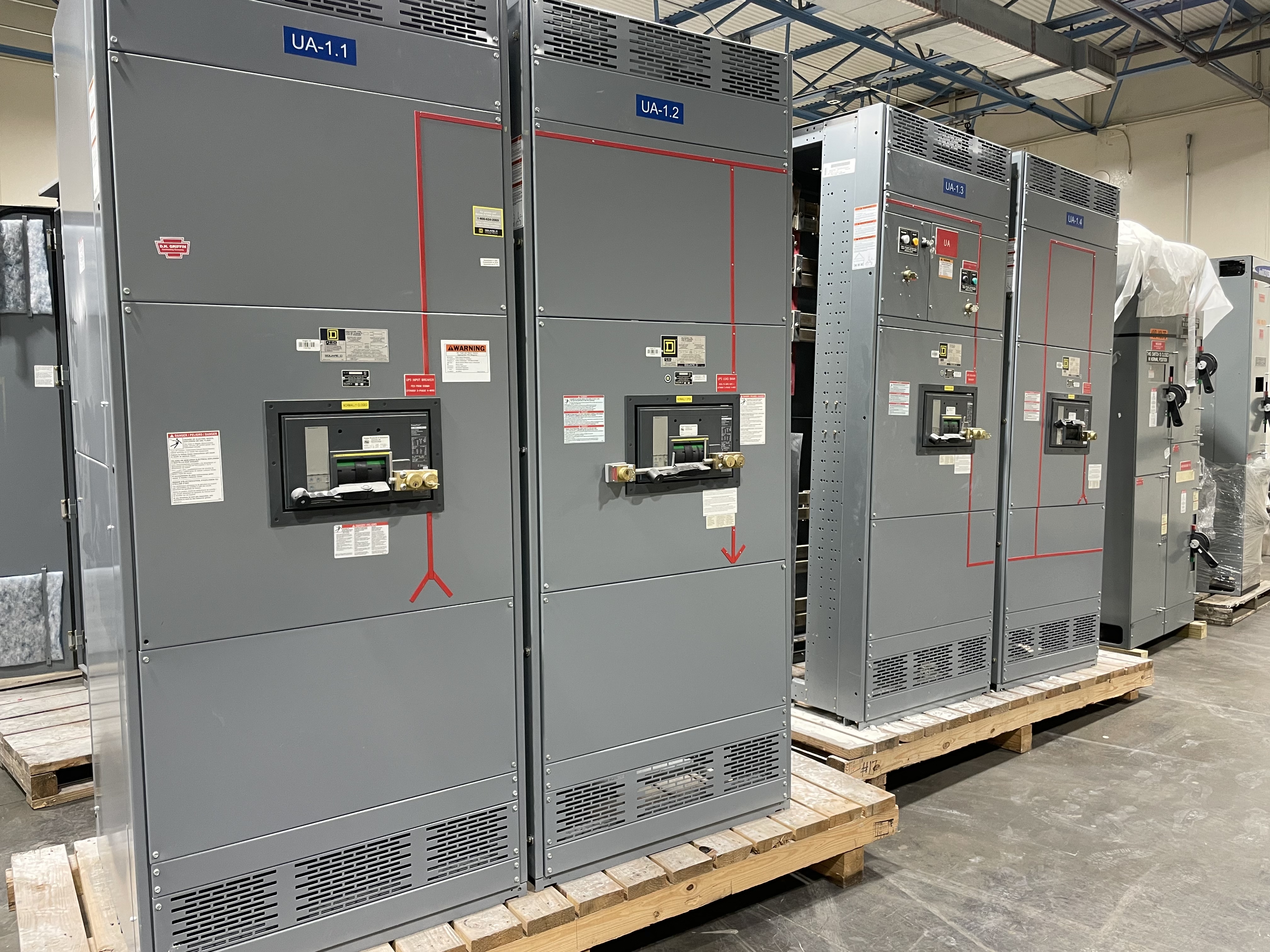
Identify the marked enclosure, not an assumed lineup
Start with the exact enclosure bearing the safely visible Eaton marking. Record the marking’s location, the enclosure’s position in the room or lineup, and any visible section identifier or nameplate text from an authorized safe position. If a retired switchboard sits beside an assembly bearing another brand, describe them as separate assets unless qualified personnel have established their relationship. A shared wall, aligned fronts or common room does not prove common manufacture, electrical continuity or a single saleable assembly. Clear boundaries help the buyer understand what is being offered and reduce the risk that an assessment inadvertently includes equipment the seller does not own or intend to sell.
Keep brand identity separate from electrical ratings
A brand name is an identification clue, not a substitute for equipment details. Where safely visible, transcribe the nameplate wording as written and distinguish the assembly or switchboard identification from any separately labeled breaker. Record visible voltage and rating information as distinct fields rather than treating one number as a description of the whole lineup. A breaker’s frame and trip information, if legible on an accessible exterior label, are not interchangeable with the switchboard’s ratings. Do not infer specifications from appearance or brand. If a label is obscured or unreadable, say so; qualified authorized personnel, following site rules, must handle any electrical investigation beyond safe exterior observation.
Document mixed-brand boundaries with a simple map
For a mixed lineup, make a short section schedule: enclosure order from a safe viewpoint, visible brand marking for each enclosure, section labels, and any apparent physical boundary between assemblies. Add a room or lineup sketch only if it can be prepared without approaching or touching electrical equipment. For example, a schedule might identify one Eaton-marked switchboard section and an adjoining differently marked enclosure, while explicitly noting that their relationship is unverified. Photograph only safely accessible exterior nameplates and equipment from authorized safe positions; never approach energized equipment for a picture. This record supports a more precise review without suggesting that neighboring sections are compatible, electrically connected, or part of one manufacturer’s system.
Describe condition without seller testing
Useful condition notes can be observational: whether a visible exterior label is legible, whether the enclosure appears complete from the permitted viewing position, and whether the seller knows the equipment has been retired or decommissioned. Do not operate, open, test, disconnect, remove, rack out, move or handle energized equipment, and do not arrange photographs that require doing so. Seller testing is not required. The buyer considers equipment across all voltage classes, but that does not mean every item or configuration will be accepted. If the lineup includes loose breakers, spare sections or parts, list them separately and identify their ownership and visible labels rather than assuming they belong with the marked switchboard.
Clarify ownership, scope and removal responsibilities
Before assessment, confirm that the seller owns the equipment or has authority to sell it, and specify exactly which enclosures, sections and separately listed components are included. Raise site access limits, shutdown coordination, lifting constraints and any known boundaries with other operating assets. Electrical work must be performed by qualified, authorized personnel under site rules; the seller need not hire crews or prepare or test the equipment. If an offer proceeds, the buyer can cover disconnects, crane and rigging needs, loading, buyer-paid freight and hauling as applicable to the agreed scope. Removal planning is distinct from unrelated demolition or hazardous-material remediation, which should not be presumed included.
Request an itemized assessment, not a brand-based assumption
Send the section schedule, safe exterior photographs, visible nameplate transcription, known condition and proposed sale boundary together. Ask the buyer to clarify whether the assessment treats the Eaton-marked switchboard and adjacent branded assembly as separate items, and what additional safe, authorized information would help. Cash offers and upfront payment are available for equipment considered for purchase, with each asset and offer assessed individually; neither a brand marking nor a visible rating guarantees acceptance, price or timing. This approach preserves distinctions between sections and components while giving the buyer enough context to evaluate the actual equipment offered, rather than relying on presumed compatibility or an assumed product relationship.