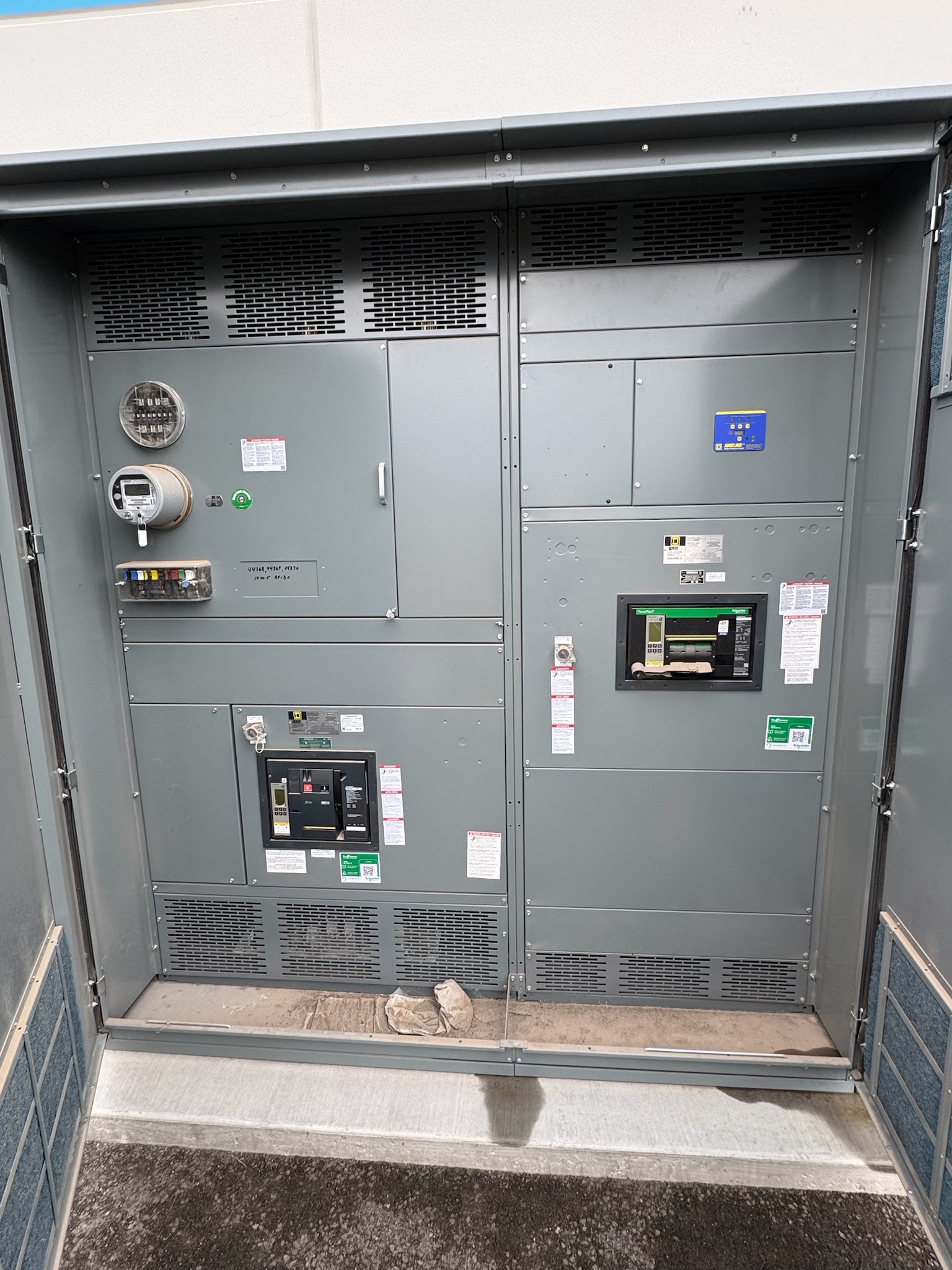
Start with the visible marking, not an assumed product identity
A safely visible GE name or logo is one identification clue, not proof of a particular model, configuration, rating, or relationship to other equipment. A lineup may contain sections, breakers, instruments, or replacement parts with different markings and histories. Record exactly what can be read from an exterior nameplate and note which component bears it. If a marking is obscured or missing, say so rather than inferring it from neighboring equipment. Do not open doors or covers, approach equipment, or move anything to improve a view. Photographs should show only safely accessible exterior surfaces from an authorized safe position, under site rules.
Define the lineup boundary before describing what is offered
Decide whether the proposed sale concerns a complete lineup, selected sections, or separately identified components. A row that appears continuous may include equipment outside the seller’s ownership or authority, an adjoining assembly, or items intended to remain in service. Use site-approved records and an existing inventory, when available, to describe boundaries; do not physically investigate energized equipment. A simple marked-up floor plan or section schedule can clarify which assets are included and excluded. For example, distinguish the GE-marked section from adjacent unmarked gear instead of describing the entire room as GE equipment. The seller must own the assets or have authority to sell them.
Keep visible labels separate from missing documentation
Exterior labels can support identification, while drawings, schedules, maintenance records, and prior asset lists may provide separate context. Neither should be treated as a substitute for the other. Note which documents are available, their dates if known, and any gaps or conflicts without trying to resolve electrical questions yourself. A nameplate that is readable on one section does not establish ratings for every section in a lineup; a breaker label does not automatically describe the assembly. If records are absent, disclose that plainly. Do not create missing specifications from memory or assume that similar-looking equipment has matching ratings, construction, or condition.
Describe ratings precisely, without turning labels into guarantees
When safely readable, transcribe the label wording and identify the component to which it applies. Keep assembly information distinct from breaker information, and distinguish frame designation, trip information, nominal voltage, and other stated ratings rather than compressing them into one number. A visible value may be incomplete, hard to read, or relevant only to a particular component. Do not infer compatibility, interrupting capability, application suitability, or operating condition from a GE marking or a partial label. If a value cannot be read safely, mark it unknown. Any technical interpretation, inspection, isolation, or electrical work must be handled by qualified, authorized personnel under applicable site rules.
Share useful details without testing or preparing equipment
An initial description can include the number of sections believed to be included, visible exterior labels, known document gaps, and whether the equipment is installed, stored, or decommissioned. State uncertainties rather than attempting to confirm them through testing. No seller testing or seller preparation is required for an assessment. Do not operate, open, touch, disconnect, remove, rack out, move, or handle energized equipment, even to collect a photograph or verify a label. If access or status is unclear, stop and follow the site’s authorization and safety procedures. We buy equipment across all voltage classes, but voltage class alone does not determine acceptance or an offer; each asset is assessed individually.
Discuss the transaction and removal scope clearly
We independently buy used, surplus, and decommissioned electrical equipment, including assets from decommissioned data centers and shut-down power plants. GE is treated as an identification marking, not an affiliation, endorsement, or authorized-dealer claim. For equipment considered for purchase, we provide cash offers and pay upfront; offers and acceptance depend on individual assessment, with no guaranteed outcome. The buyer-paid scope can cover disconnects, crane and rigging, loading, freight, and hauling, coordinated around site requirements. Qualified authorized personnel must perform electrical work under site rules. Share ownership authority, lineup boundaries, safe exterior information, and removal constraints early so the proposed scope can be evaluated without requiring seller testing or handling.