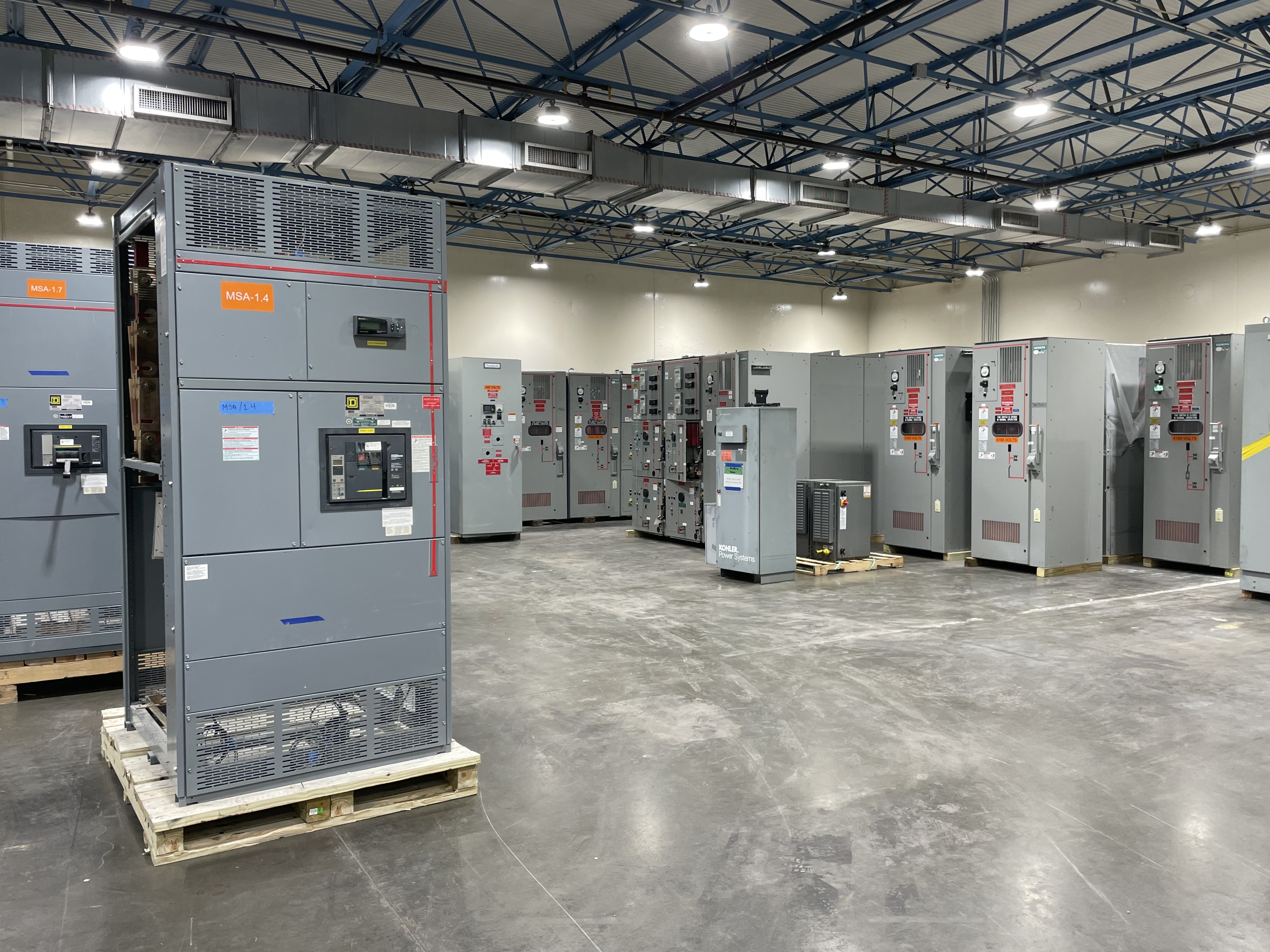
Read the marking as identification, not proof of ownership
A safely visible Schneider name or logo can be useful when describing equipment, but it is not evidence that the person contacting us owns it or may sell it. In a multi-tenant building, a cabinet might serve a shared electrical room, a single tenant’s suite, or a landlord-controlled area. Ask who holds title and who has authority to approve a sale. Record the seller’s organization, the asset’s general location in the property, and the basis for that authority. Do not infer ownership from access, occupancy, or a brand marking.
Separate assembly branding from device labels
The cabinet or distribution assembly may carry one identification marking while individual breakers or other devices carry separate labels. Those labels describe different items; they do not, on their own, show that every device is part of the assembly being offered. For example, a tenant may propose a marked cabinet while a device inside is separately owned, reserved, or excluded. Describe the assembly and any included components as distinct sale items, using only information safely visible from an authorized position. Avoid claiming a device is original, compatible, or included unless ownership and sale scope are confirmed.
Resolve multi-tenant permission before arranging a review
Permission can be layered: the property owner may control common electrical rooms, while a tenant may own equipment serving its leased space. A facilities contact’s cooperation is not necessarily proof that either party can transfer title. Ask for the owner or authorized representative to confirm what may be sold and who can approve access and removal. If a lease, asset register, or written authorization governs the equipment, have the responsible party clarify the relevant scope. When ownership is disputed or unclear, pause the sale discussion until the parties with authority resolve it.
Document scope without unsafe inspection
Useful initial documentation can include the seller’s description of the assembly, its ownership status, whether identified devices are included, and any known exclusions. Photographs should be limited to safely accessible exterior nameplates and equipment, taken from an authorized safe position; do not approach or handle equipment to obtain them. Never photograph by opening a cabinet, touching equipment, or entering a restricted area. Do not ask a seller to energize, test, disconnect, or prepare the equipment. If a label cannot be safely viewed, leave it undocumented rather than creating an exposure or access problem.
Describe ratings carefully; do not assume from the brand
Where records safely available to the seller identify ratings, keep the distinctions clear: an assembly rating is not automatically an individual breaker rating, and a breaker’s frame rating is not the same as its trip rating. Nominal voltage and other ratings should be recorded only as documented, not guessed from appearance or brand. We consider equipment across all voltage classes, but that does not establish acceptance or suitability for any particular use. The seller need not test equipment; technical evaluation and any electrical work must be handled by qualified, authorized personnel under site rules.
Agree on what the sale and removal cover
Before any removal planning, align the written asset list with the ownership decision: identify the cabinet, list included devices if known, and mark excluded or separately owned items. If the equipment is in a shared room, confirm who may authorize disconnects and access, and what site rules apply. We can assess used, surplus, or decommissioned equipment individually and may make a cash offer with upfront payment; no outcome or offer is guaranteed. We cover freight, crane, rigging, disconnects, loading, and hauling when applicable, coordinating the scope rather than requiring seller testing or preparation.
Use a clear handoff record
A clean handoff record helps prevent a brand reference from becoming an assumption about the transaction. Keep the seller’s authority confirmation, the agreed asset description, included and excluded devices, and any access or removal conditions together. If ownership or permission changes, update the record before proceeding. Decommissioned data centers and shut-down power plants can also have equipment offered for purchase, but each asset still requires individual assessment and proof the seller may transfer it. Schneider identification remains an identifier only: it does not imply affiliation, endorsement, a dealer relationship, or a guaranteed sale decision.