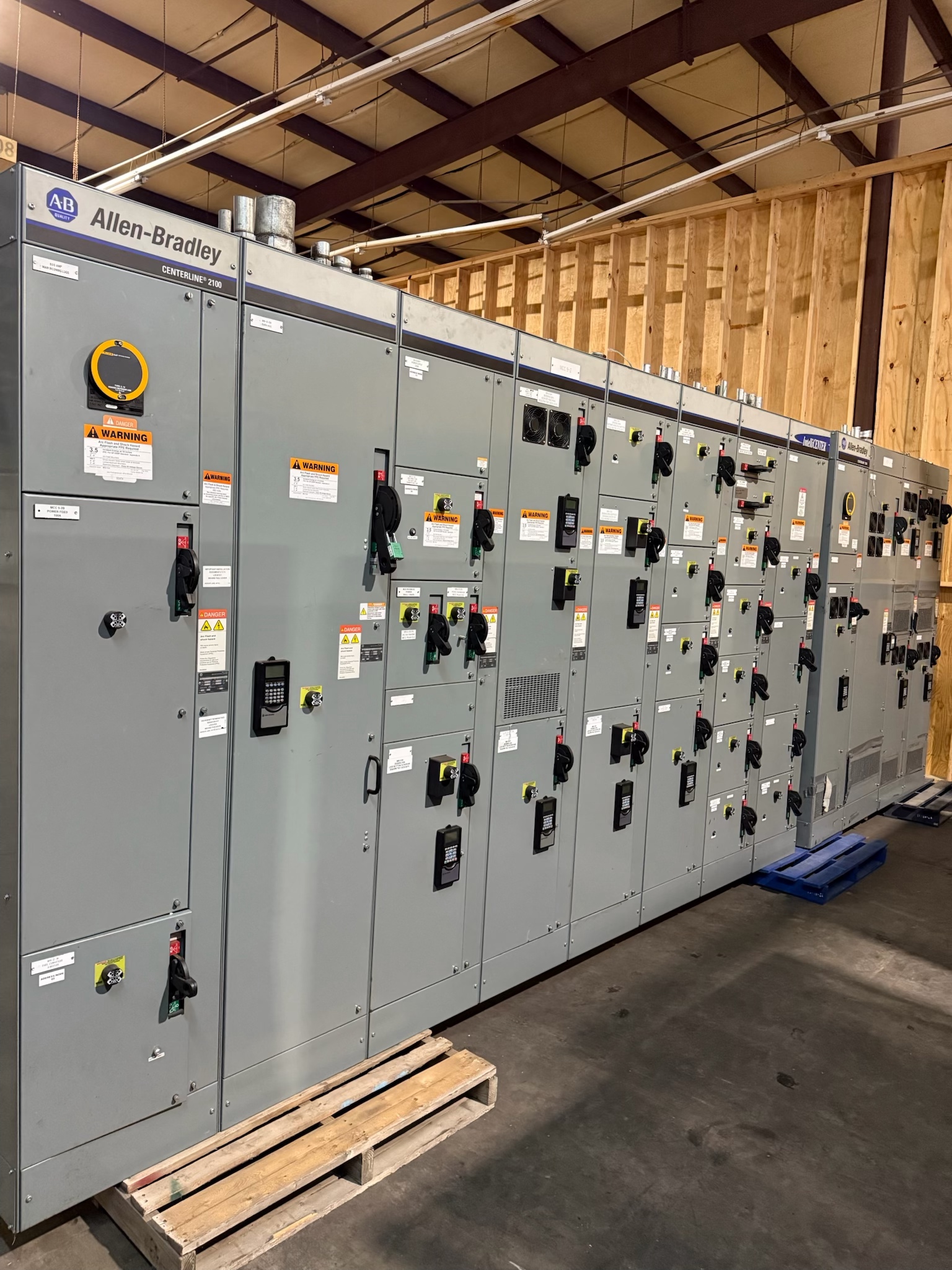
Read the marking as identification, not a complete description
If a safely accessible exterior nameplate shows Cutler-Hammer, report that wording exactly as it appears, including punctuation, prefixes, and any adjacent identifiers. Do not convert a visible brand reference into a claim about the full assembly’s manufacturer, age, design, or capabilities. A lineup may include components marked by different manufacturers, and a nameplate may identify only a particular section or assembly. For an initial review, note where the marking appears and whether it is on the enclosure, a door, or an individual device, without opening equipment or approaching an unsafe area.
Separate assembly details from breaker details
Descriptions are more useful when they distinguish the distribution assembly from its installed breakers. Record any safely visible assembly nameplate information separately from markings on individual breaker exteriors. If several breakers are present, identify them by position or section only when that can be done from an authorized safe position; do not infer a breaker’s function from appearance alone. A breaker’s frame designation, trip information, and ratings are not interchangeable, and none should be attributed to the overall assembly without evidence. When a field is unreadable, say so rather than filling the gap with a guess.
Document mixed-brand equipment without assigning lineage
Mixed markings call for precise transcription, not a story about how the equipment came to be assembled. For example, if an exterior assembly plate bears Cutler-Hammer while a safely visible breaker marking names another manufacturer, list both names and identify which component each marking appears on. Do not describe one company as the successor, parent, or affiliate of another, or imply that shared markings establish compatibility. If the exact component boundary is unclear, state that the manufacturer name is visible but its scope is uncertain. This lets an assessment account for the ambiguity instead of relying on a misleading single-brand label.
Capture useful information only from safe positions
Photographs can support identification when taken only of safely accessible exterior nameplates and equipment from authorized safe positions. Never open, touch, approach, test, disconnect, remove, rack out, move, or handle energized equipment to improve a photo or read a label. If a marking cannot be seen safely, leave it unrecorded and explain the limitation. Pair each image with a short note identifying the visible component and the exact text you can read; avoid cropping out adjacent manufacturer names or rating fields that may clarify what the label describes. Site rules and access authorization govern any inspection.
Describe voltage and ratings as separate fields
When visible, transcribe nominal voltage and other ratings exactly, preserving units and any distinction between assembly-level and component-level information. A voltage class is not a substitute for a specific nameplate value, and a breaker rating does not automatically describe the complete distribution assembly. Do not infer missing data from a brand marking, neighboring equipment, or another device in the lineup. An unreadable or absent rating is useful information to disclose, not a reason to estimate. The buyer considers assets and offers individually, so clear source attribution for each recorded value can matter more than a tidy but unsupported summary.
Make the equipment’s status and ownership clear
For equipment from a decommissioned data center, shut-down power plant, or another surplus situation, explain whether it is installed, disconnected, or already removed only if you know that status. Do not perform electrical work to confirm it. Any electrical work—including disconnects and removal—must be handled by qualified, authorized personnel under site rules. The seller must own the equipment or have authority to sell it. Share known completeness issues, visible damage, missing sections, and uncertainty about mixed-brand components; do not present unverified condition or operation as fact. No seller testing or equipment preparation is required for an initial consideration.
Discuss sale and removal responsibilities before arranging access
An independent buyer considers used, surplus, and decommissioned equipment identified by safely visible Cutler-Hammer markings, including mixed-brand assemblies, across all voltage classes. If an asset is considered, the buyer can make a cash offer with upfront payment; acceptance, price, and timing depend on individual assessment and are not guaranteed. The buyer covers freight and can cover crane, rigging, disconnects, loading, and hauling as applicable. Clarify site access, authorization, and the boundaries of the equipment being offered before removal planning. Do not assume unrelated demolition or hazardous-material work is included.