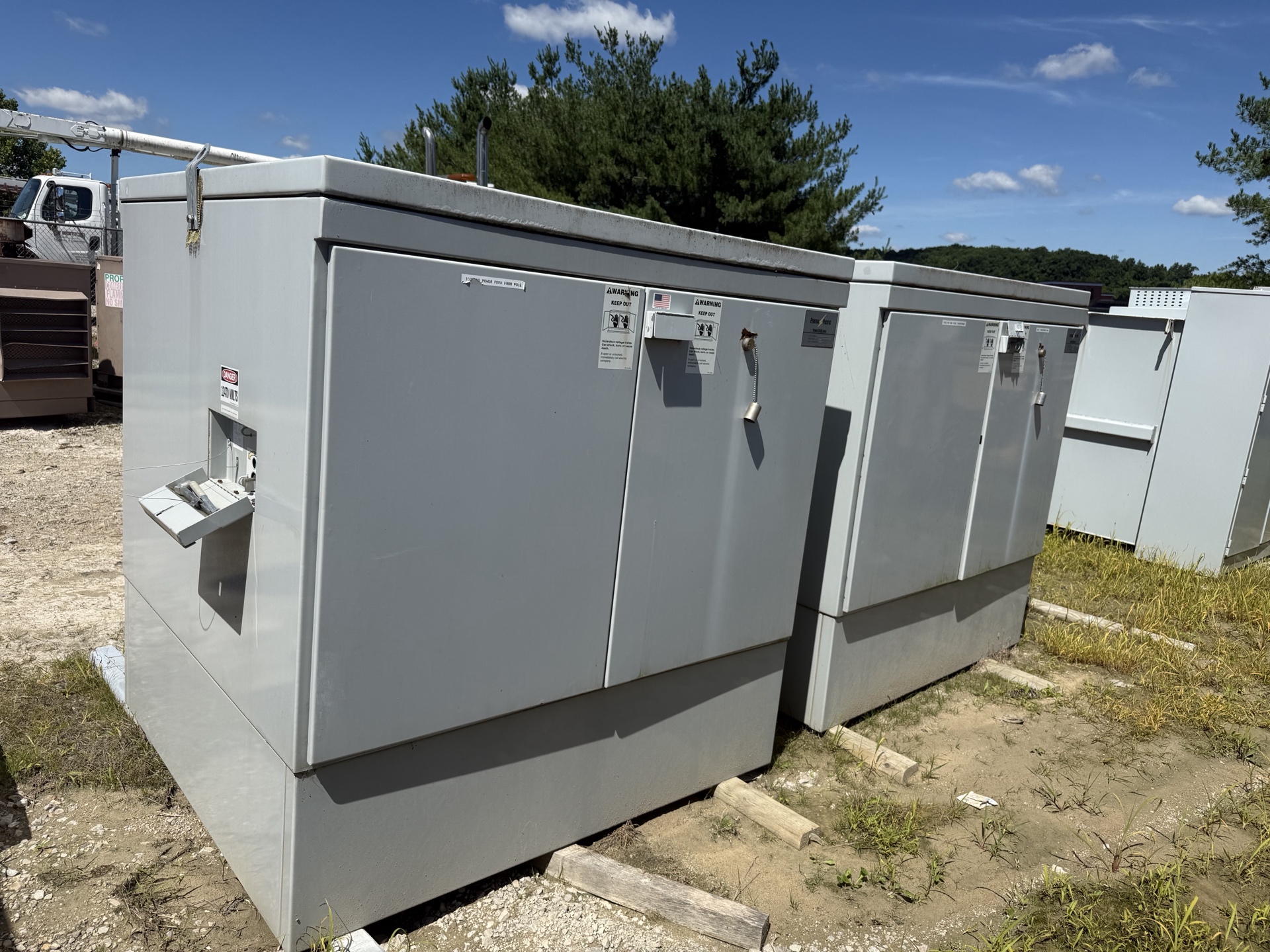
A practical sale during an industrial shutdown
Plant closures rarely follow a neat equipment-by-equipment schedule. One area may be idle while another is being de-energized, an auction or demolition contractor may have control of the building, and ownership may be divided between the operating company, a landlord and a project manager. Treat the electrical inventory as its own workstream. Confirm who has authority to sell, which items are included, and when each lot can be released. That simple separation helps prevent a usable lineup from being confused with scrap, retained spares or equipment needed for a final shutdown procedure.
We buy equipment from industrial facilities, shut-down power plants and decommissioned data centers. A complete lineup is not required for an initial conversation. Individual sections, drawout breakers, spares and partial lots can be described separately. If equipment is still installed, do not remove covers, operate mechanisms or enter an energized area to obtain details. Qualified personnel handle electrical work and safe disconnection. Sellers should follow their own site safety rules and provide only information that can be obtained safely without handling energized equipment.
Define lots without overworking the inventory
A useful lot description does not need to be a perfect engineering record. Start with the room or area, a simple item number, the visible manufacturer and model information, approximate section count, and whether the equipment is installed, staged or already disconnected. Note obvious inclusions such as main sections, feeder sections, tie sections, breaker compartments, relays or accessory cabinets. If a label is faded or a rating is unknown, say so rather than guessing. Exterior photographs of nameplates, lineup faces, breaker compartments and overall dimensions often provide enough context for a preliminary review.
- Separate complete lineups from loose breakers, spare buckets, fuses and stored accessories.
- Record whether sections belong to one lineup or were accumulated from different rooms and projects.
- Identify missing doors, trim, covers, keys, drawout elements or control components when visible.
- Keep excluded equipment clearly marked so it is not loaded by mistake.
- Use the seller's own labels for voltage and service descriptions; do not open equipment to verify them.
Lot boundaries matter because a shutdown may involve equipment that looks similar but has different ownership, release dates or removal restrictions. A room-by-room list, even a brief one, lets us discuss what can move together and what must remain until a later phase. It also reduces surprises when the loading crew arrives.
No seller testing is required
We do not require seller testing for a purchase discussion. Used and decommissioned equipment may have incomplete records, an unknown operating history or visible wear. Tell us what is known, what is uncertain and what condition is apparent from a safe exterior inspection. Do not energize equipment for our benefit, bypass interlocks, perform live measurements or ask unqualified staff to troubleshoot it. Qualified personnel can evaluate disconnection and removal requirements as part of the planned work. Our buying scope includes all voltage classes, so a seller should report the equipment's stated rating when available without assuming that a particular class is acceptable or unacceptable.
Full-service removal and freight coordination
Industrial electrical equipment is often heavy, awkward and located where an ordinary pickup cannot reach it. Our team coordinates the practical sequence: qualified electrical disconnects, rigging plans, crane support when required, movement to the loading point, loading, freight and hauling. Access details shape that plan. Tell us about overhead clearance, doors, docks, stairs, turning space, restricted hours, shared driveways, floor limitations and any plant rule that affects a truck or crane. If the equipment is already on pallets or in a laydown area, say that too. These facts help match the shipment and handling approach to the actual release conditions.
The seller does not need to arrange a separate crane company, find a rigger or load a trailer. We coordinate those services for the equipment we purchase. The seller's useful responsibilities are limited to providing accurate access information, confirming the authorized contact, keeping included equipment available and approving the pickup window. We do not present the sale as unrelated demolition or hazardous-material remediation. Any broader plant closure work remains a separate matter for the parties responsible for that work.
Planning for hospitals and campuses that are closing
Hospital and campus closures can contain industrial-scale electrical inventories even when the facility is not a manufacturing plant. A hospital may have multiple distribution rooms, emergency-power interfaces and later-added sections. A campus may have equipment spread across buildings with different custodians and access rules. In both cases, create a building-level lot list and distinguish electrical assets from fixtures or systems that another owner intends to retain. Confirm shutdown authority and the release date for each building before pickup planning.
For a hospital, do not interrupt remaining clinical or life-safety operations to prepare equipment for sale. For a campus, do not assume that a room in one building can be treated as available because another building has closed. Our qualified personnel can coordinate the electrical disconnect and removal scope with the authorized site contact. Sellers should not open, move or handle energized equipment simply to make it easier to sell.
What happens after you send the inventory
Send the location at a useful level of detail, photographs that can be taken safely, available labels, approximate quantities and the timing of the shutdown. We review the equipment and lot boundaries, discuss access and release conditions, and provide a cash offer when the information supports one. Payment is made upfront according to the agreed purchase arrangement. Because no seller testing is required, an incomplete record is not a reason to delay the first conversation; clearly identified unknowns are more helpful than confident guesses.
Once the sale is authorized, we align the pickup with the site's qualified shutdown process and coordinate disconnects, rigging, crane work, loading, freight and hauling. This approach gives the seller one point of coordination for the purchased electrical equipment instead of a chain of separate removal vendors. If a plant, power station, data center, hospital or campus is closing in stages, identify the lots and release windows early. A clear handoff protects the seller's schedule, keeps retained equipment separate and lets the full-service logistics team do the heavy work while the seller gets paid.
DECOMMISSIONING / THE COMPLETE SERVICE
From shut-down site to paid seller.
We buy electrical switchgear from decommissioned data centers and shut-down power plants. We handle all rigging and logistics: crane, rigging, disconnects, loading, freight and hauling are on us. Qualified personnel handle electrical disconnects and isolation according to site safety procedures. The seller does nothing but get paid.
We make cash offers, pay upfront, require no testing from the seller, and buy all voltage classes. Share the site and equipment details you know; photos are helpful only when they can be taken safely. Never open or touch energized equipment or disturb a live installation.