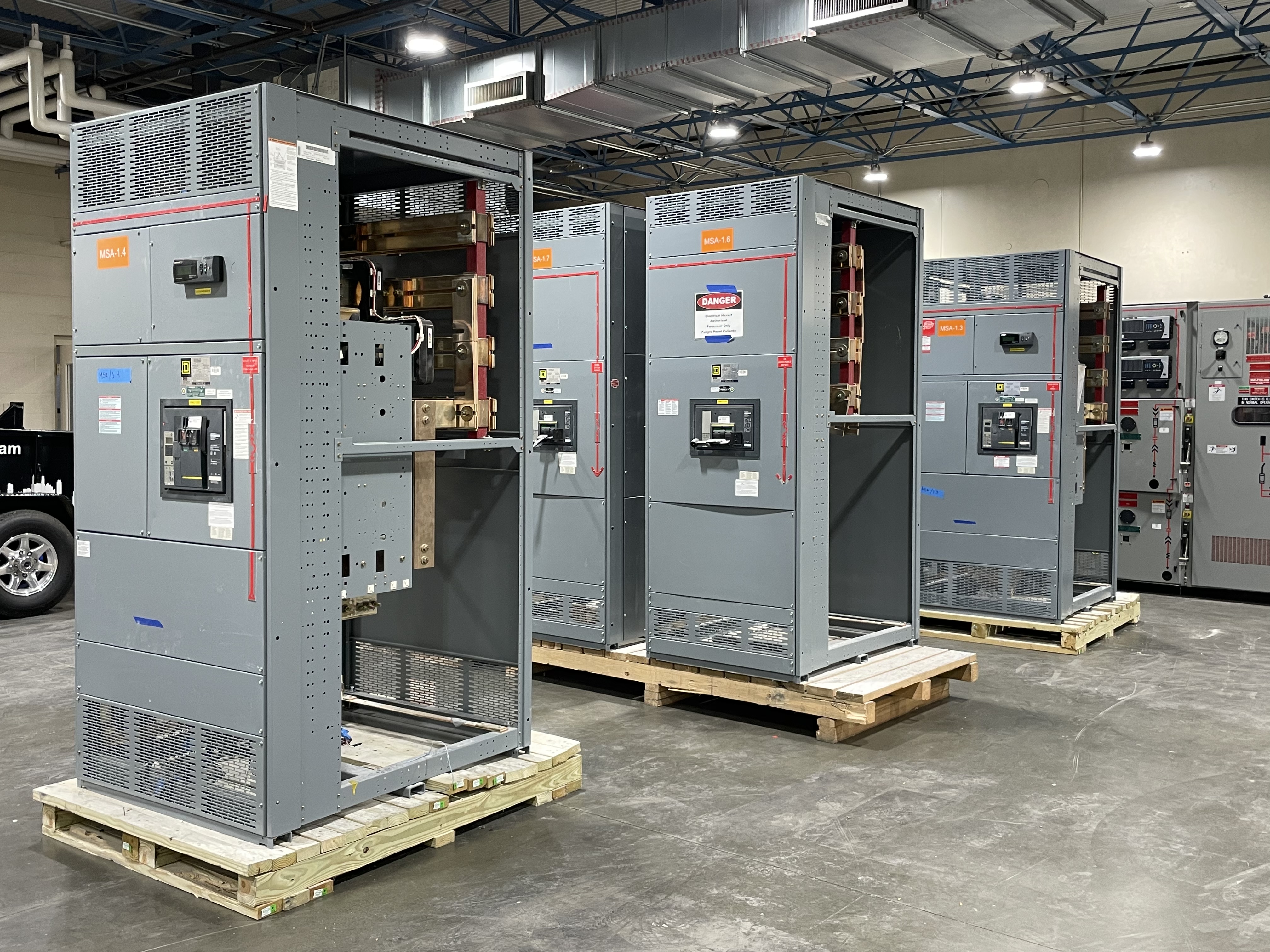
Sell retired data-center power equipment without adding a new work package
A decommissioning schedule already has enough moving parts: tenant or workload migrations, temporary power, access controls, cutover windows and space that must be returned or repurposed. Treating the electrical lineup as a separate sale can help keep the asset decision clear. We buy used, surplus and decommissioned switchgear from data centers in Georgia, including equipment being retired as part of a phased upgrade. We also buy equipment from shut-down power plants. The equipment does not need to be presented as operational, and we do not require you to perform seller testing.
We buy all voltage classes. A preliminary review can begin with exterior photographs, nameplate information when it is safely visible, an equipment list and a description of what is installed, stored or already disconnected. If a label is unclear or records are incomplete, identify the uncertainty rather than guessing. The goal is an accurate conversation about the actual lot, not a claim about performance or future application.
What to document before requesting an offer
Data-center electrical inventories are often distributed among utility entrances, main distribution rooms, generator interfaces, UPS areas, battery rooms and floor-level distribution points. A useful inventory ties each item to a room or equipment tag without exposing unnecessary operational detail. Include the following where available:
- Manufacturer, model, serial number and nameplate ratings visible from a safe location.
- Whether the asset is a complete lineup, an individual section, a breaker, a transfer device, a busway component or a loose spare.
- Approximate quantity, dimensions and weight from existing records; do not measure by entering a restricted or unsafe area.
- Whether doors, breakers, relays, control power components, shipping pieces or documentation appear to be included.
- Current status: installed, isolated by qualified personnel, removed, crated, stored indoors or exposed to weather.
- Known missing parts, damage, corrosion, water exposure or changes made during the upgrade.
Photographs of the exterior, labels, lineup ends and storage condition can be more useful than a rushed technical description. Keep confidential customer names, network diagrams, access credentials and live-operations details out of ordinary email unless your own information-security process permits them. We can review the equipment facts needed for an offer without requiring a disclosure of sensitive facility information.
Plan around phased retirement and redundant systems
A data center may have multiple electrically similar lineups that are not released at the same time. Separate the inventory by planned release window and identify which sections must remain in place until a later cutover. This prevents an early pickup plan from being mistaken for authorization to remove equipment that still supports a load. It also helps compare a single-lot sale with staged releases when the migration plan changes.
Redundancy deserves careful description. A lineup described as “backup” may still be connected to a maintenance-bypass path, a reserve source or a control scheme. Do not open cabinets, operate breakers, remove covers or attempt electrical tests for the purpose of preparing a sale. Sellers should never handle energized equipment. Your facility’s qualified electrical personnel must determine isolation, de-energization and access requirements. Our qualified personnel handle the electrical work associated with the agreed removal; we do not ask a seller to improvise those steps.
Full-service removal from the electrical room to the carrier
Large switchgear is not a hand-carry item, and the shortest route out of a building may not be obvious. After the equipment and release conditions are agreed, our team coordinates the disconnects, crane and rigging, loading, freight and hauling. We account for practical constraints such as door clearances, turning areas, overhead obstructions, floor transitions, dock access, lift requirements and the timing allowed by site security. Sharing existing drawings or access notes can improve planning, but you do not have to engineer a removal method yourself.
The seller does nothing but provide authorized access, site coordination and the information needed to identify the equipment. Our crew handles the physical logistics. This is a purchase of electrical equipment and its removal logistics, not a promise to perform unrelated demolition or hazardous-material remediation. If the property has separate demolition, environmental or abatement obligations, keep those scopes with the appropriate contractors and site representatives.
Hospitals and campus closures need a controlled handoff
Hospital closures require special attention to life-safety systems, emergency distribution and areas that may remain occupied or medically controlled. A seller should identify the authorized facilities contact and the point at which qualified personnel have released the equipment. Do not assume that a dark room or disconnected-looking cabinet is safe to handle. The same disciplined handoff applies to a campus closure: equipment may serve separate buildings, research spaces, residence areas or temporary operations, and ownership or release authority may differ by building. We can review a grouped inventory while you keep each building, release window and access rule distinct.
How the sale proceeds
Send the information you have, including photographs and the planned release condition. We review the equipment as used, surplus or decommissioned material rather than asking you to prove an operating result. If the lot is suitable for purchase, we provide a cash offer for your consideration. Payment is made upfront as agreed, and freight is covered. There is no requirement for seller testing, and the offer is not a guarantee of a particular price before the equipment details and logistics are reviewed.
Before pickup, confirm who owns the equipment, who can authorize its release, which rooms are accessible, and when the equipment will be available. Keep the sale list aligned with the final cutover plan. With that handoff in place, you can convert retired data-center electrical equipment into a paid asset while our team takes responsibility for the disconnect, rigging, loading and transportation work.
DECOMMISSIONING / THE COMPLETE SERVICE
From shut-down site to paid seller.
We buy electrical switchgear from decommissioned data centers and shut-down power plants. We handle all rigging and logistics: crane, rigging, disconnects, loading, freight and hauling are on us. Qualified personnel handle electrical disconnects and isolation according to site safety procedures. The seller does nothing but get paid.
We make cash offers, pay upfront, require no testing from the seller, and buy all voltage classes. Share the site and equipment details you know; photos are helpful only when they can be taken safely. Never open or touch energized equipment or disturb a live installation.