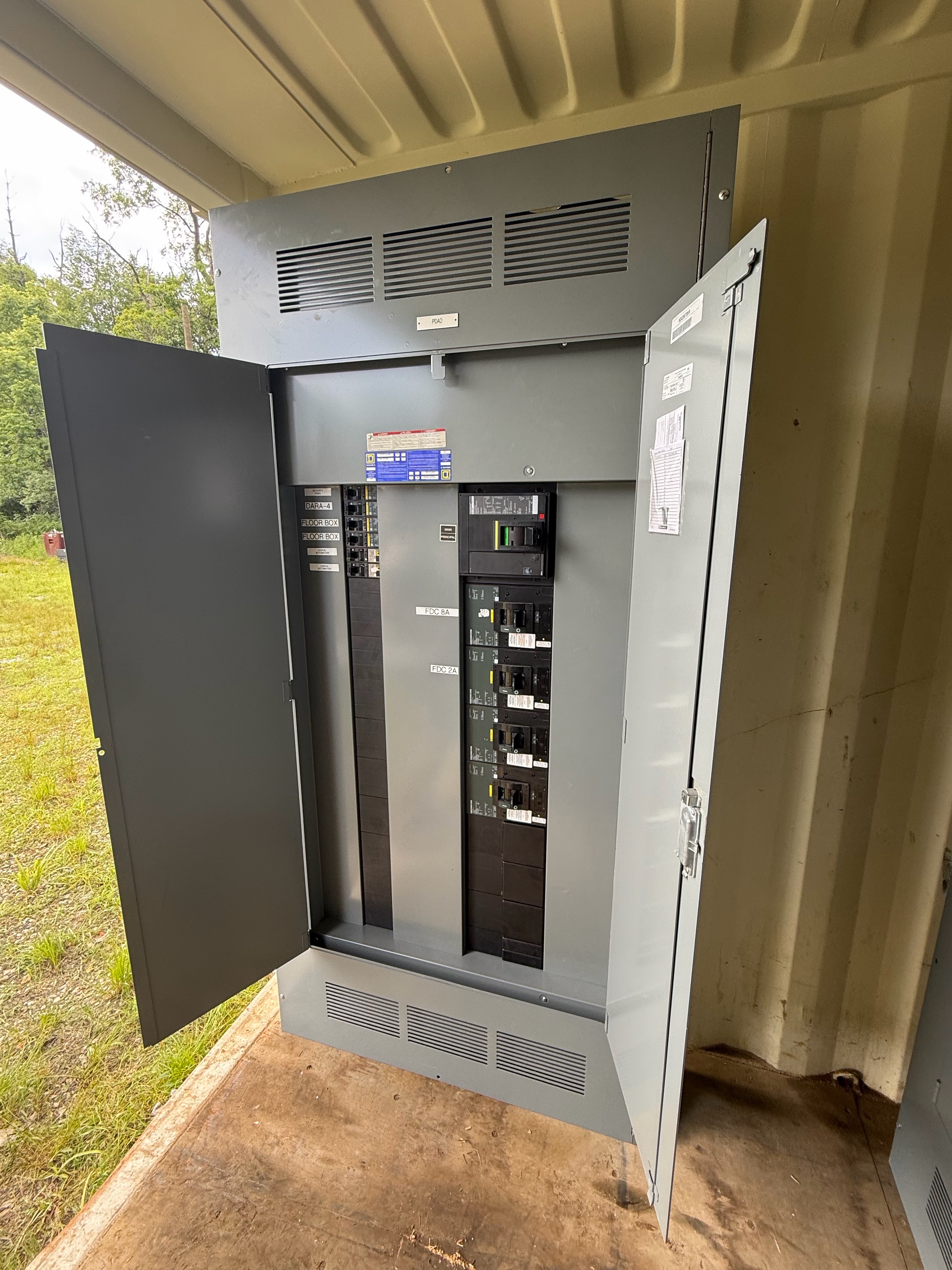
What counts as used switchgear
Switchgear is more than a single cabinet or a loose circuit breaker. A lineup commonly consists of multiple connected sections serving a coordinated distribution function. Depending on the installation, those sections may include an incoming or main section, feeder sections, bus compartments, metering or instrument compartments, drawout breaker cells, relays, control power components and a connection point for outgoing conductors. A seller may have a complete lineup, a partial lineup, spare sections, or individual devices removed from a lineup. Each situation can be reviewed, but describing what is actually present helps prevent confusion during an offer and pickup plan.
An individual circuit breaker should be listed separately from the lineup that once contained it. A breaker may have a frame size, trip unit, interrupting rating, voltage designation and drawout or fixed mounting arrangement, while the surrounding gear supplies the enclosure, bus, shutters, controls and interconnections. Do not assume that a loose breaker represents a complete switchgear assembly. Conversely, do not discard cabinets, cell parts or bus sections simply because they are separated. Tell us whether components remain together, are stored in different rooms, or are incomplete.
Information that makes a review useful
You can begin with exterior information; seller testing is not required. Clear photographs of nameplates, front elevations, section labels and any visible breaker labels are useful. A simple count of cabinets or lineup sections is more helpful than an estimate of electrical capacity. If a label is faded or unreadable, report it as unknown rather than guessing. Notes about approximate dimensions, whether sections are bolted together, and whether the gear is installed or already loose can help the logistics team think through the move.
- Record the number of lineup sections and identify any loose breakers, relays, meters or control components.
- Share visible manufacturer, model, serial, voltage, current and interrupting-rating information when available.
- Note missing doors, covers, breaker cells, bus links, hardware or documentation without opening the equipment.
- Separate photographs and counts for equipment located in different rooms, buildings or storage areas.
- Identify the person authorized to sell the equipment and the site contact who can approve access and release.
Condition should be described plainly. Let us know about storage outdoors, water exposure, fire exposure, impact, corrosion, missing parts or unknown history. These facts do not require you to prove whether the equipment is operable. We can evaluate the information as used or decommissioned equipment rather than asking you to certify performance. Age alone does not determine whether a purchase is appropriate, and a clean-looking enclosure is not a substitute for qualified inspection.
How the sale works for a closure or replacement
Switchgear frequently becomes available when a data center is decommissioned, a power plant shuts down, a campus closes or a hospital closes. The same practical issue appears in each case: the electrical asset may be valuable to a buyer, but it is also heavy, connected to the building and subject to a controlled release. A hospital closure may involve multiple buildings, restricted access, records-sensitive areas and a need to coordinate with the owner’s closure schedule. A campus closure may involve separate utility rooms, academic or administrative buildings, phased access and equipment spread across a larger site. We can discuss the equipment lot without claiming that any particular facility exists or assuming that the closure timetable is fixed.
For a replacement project, distinguish gear already removed from gear that remains installed. Installed switchgear must not be opened, tested or handled by a seller. Electrical disconnects, verification of a safe condition and removal from service belong with qualified personnel. If a contractor or facility electrician is already responsible for de-energization, we can coordinate the release point with the authorized site contact. We never instruct sellers to open or handle energized equipment.
For a data center or shut-down power plant, tell us whether equipment is still in its original lineup, staged in a laydown area, or stored as separate sections. A decommissioned plant may have high-voltage or medium-voltage gear alongside lower-voltage distribution equipment; a data center may have switchgear, transfer equipment or related distribution sections in different electrical rooms. We buy all voltage classes, but accurate labels and photographs help keep unlike equipment from being treated as one item. We buy the switchgear itself, not an assumed bundle of unrelated building contents.
Full-service removal and freight coordination
Our team handles the physical logistics associated with the purchase. Qualified personnel coordinate electrical disconnects when needed, then plan the appropriate crane, rigging, loading, freight and hauling steps. The plan depends on the equipment’s size, weight, position, route to the loading point, door clearances, floor or dock conditions, overhead obstructions and truck access. You do not need to arrange a crane or find a carrier on our behalf. You do not need to dismantle a lineup to make it easier for us.
Before pickup, we may need practical site information such as a release window, gate or dock rules, lift restrictions, parking limitations, stairs, narrow corridors and whether multiple loads are required. These details are for coordination, not a request for you to perform rigging or electrical work. A seller should keep personnel away from energized or uncertain equipment and follow the site’s own safety controls. Our qualified personnel handle the work that requires electrical and lifting expertise.
Freight and hauling are covered as part of the arranged purchase logistics. Access can affect scheduling and the method of removal, so early notice of a closure date or contractor handoff is helpful. Do not move the equipment simply to meet a pickup assumption; let the coordinated team determine how it will be loaded safely. If sections are already on pallets or skids, describe that condition, but do not repackage heavy equipment unless the responsible professionals direct it.
What the seller receives
We buy used, surplus and decommissioned switchgear rather than sell replacement equipment. After reviewing the available details, we can discuss a cash offer for the specific equipment described. Payment is made upfront as arranged, so the seller does not have to wait for a resale or find a downstream buyer. The offer should be based on the equipment actually included: complete sections, loose breakers, spares, missing components, location and the agreed release conditions.
Gather ownership or surplus authorization before accepting an offer, especially when a landlord, lender, contractor, estate, hospital, campus or former operator may have an interest in the assets. Keep any available inventories, photographs and labels together, but do not delay a conversation because records are incomplete. A straightforward account of what is known, what is missing and who can authorize release gives us a better basis for reviewing the lot and arranging a clean handoff.
Start with the equipment you can identify
To begin, send the visible information for the switchgear, the number of sections or loose devices, the general site access conditions and the expected release date if one is known. There is no seller testing requirement, and you do not need to open an enclosure to answer questions. Whether the equipment comes from a replacement, a hospital or campus closure, a decommissioned data center, or a shut-down power plant, we can focus on the actual switchgear and coordinate the heavy work. You provide the information and authorization; our team handles the removal logistics and you get paid.