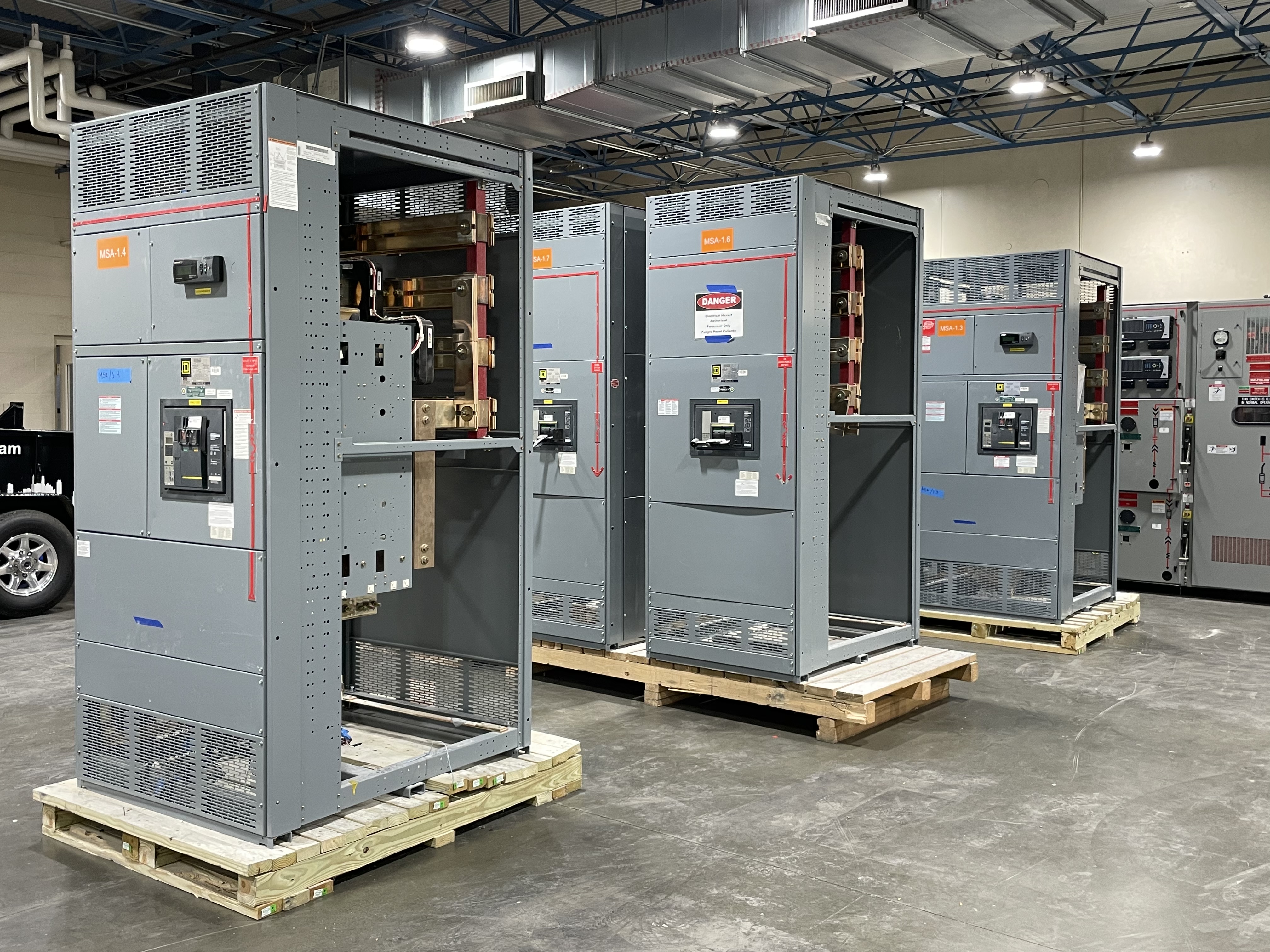
Define the offer by cabinet and boundary
For a lineup with a retained feeder section, identify the cabinets being offered by their existing labels, lineup position, and any available equipment schedule or marked drawing. State plainly which section remains in service or under site control, which cabinets may be considered, and where the proposed boundary lies. A lineup’s physical joint, end panel, or shipping split does not by itself establish an electrical release, safe isolation, or permission to remove equipment. The site’s authorized electrical and operations personnel must determine those matters under its procedures. The buyer can assess a proposed group of assets, but acceptance depends on the specific equipment and agreed scope.
Use exact markings and records
Share legible transcriptions or records for the offered cabinets, preserving wording, punctuation, and any uncertainty in the labels. Safely accessible exterior nameplates may help identify what is present; photographs should show only cabinet exteriors and exterior labels, taken from positions the site authorizes as safe. Do not open a cabinet or photograph its interior. Existing schedules, one-lines, inventory lists, and decommissioning documents can help clarify which section is offered, but may be incomplete or outdated. Keep ratings distinct: nominal system voltage, assembly voltage, continuous current, device frame, trip setting or rating, and interrupting rating are separate values, and should be reported only when supported by records.
Separate known facts from open questions
A useful initial assessment distinguishes documented facts from assumptions. Note the number of cabinets offered, the precise retained boundary, known dates or status from existing records, and whether drawings match the labels; identify gaps rather than filling them by inference. Do not infer Cutler-Hammer origin history, product family, specifications, compatibility, or endorsement from a marking alone. Records may not establish internal condition, completeness, or suitability for a particular future use. No seller testing or measurement is required to request consideration. The buyer may ask for clarification or decline an asset if the available information does not support an agreed purchase; an inquiry is not a technical approval.
Agree on scope, price and payment
For equipment the buyer agrees to purchase, the buyer makes a cash offer and pays upfront under the agreed transaction terms. The offer and acceptance are assessed individually, so neither a particular price nor a completion date is guaranteed. Put the accepted asset list and physical boundary in writing, especially when a neighboring feeder section is being retained. Record any agreed exclusions, access conditions, and the person authorized to release the assets. A quotation for selected cabinets does not include equipment outside that scope, electrical engineering, demolition, or hazardous-material remediation. If the proposed group changes or records reveal a different boundary, revisit the assessment before committing to a handover.
Plan removal without shifting crew costs
Under an agreed purchase, the buyer covers the necessary crane, rigging, disconnects, loading, freight, and hauling within the agreed scope. The seller is not expected to hire or pay a removal crew. Before scheduling, coordinate access, lifting points or restrictions, route and timing, site induction, and any separation work with the site’s authorized representatives; the buyer’s logistics plan must respect site controls. Only qualified, authorized personnel may perform electrical work, and they must follow the site’s rules and release procedures. No one should approach, touch, open, operate, test, disconnect, remove, lift, or move equipment that is energized or potentially energized.
Request an assessment with safe details
To start, provide the St. Marys pickup location if applicable, the proposed cabinet list, the retained-section boundary, available exterior label information, and relevant existing records. Include known access constraints and the site contact responsible for authorization, without asking staff to create measurements or prepare equipment. Share photos only when the exteriors and nameplates are safely accessible from site-approved positions; never open a cabinet for a picture. The buyer considers used and surplus equipment across all voltage classes, including equipment from decommissioned data centers and shut-down power plants, but evaluates each offered asset separately. No purchase is final until scope, price, payment, and handover terms are agreed.