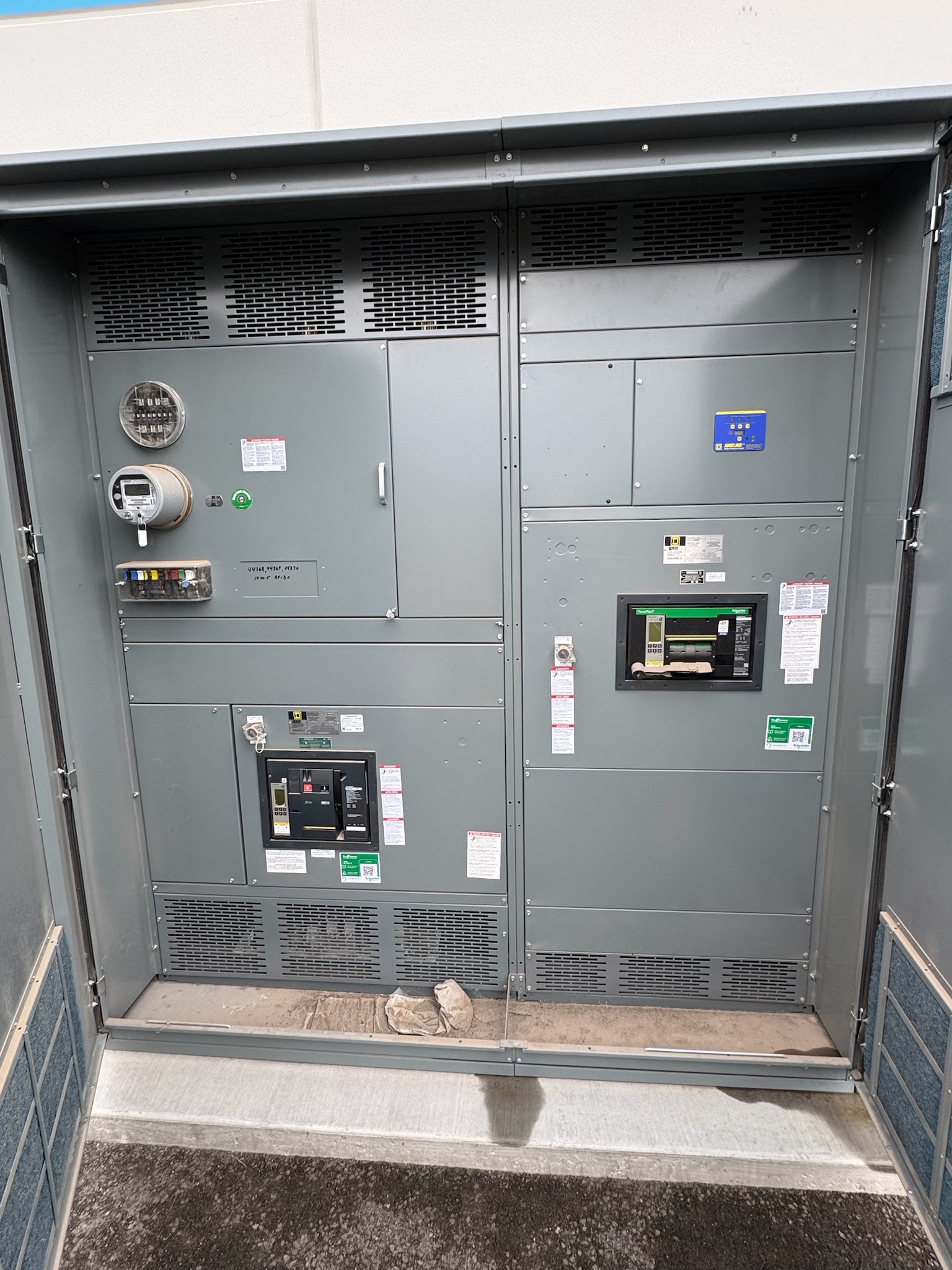
Start with the markings you can verify
For legacy switchgear, exact visible wording is more useful than a guessed product family. If the exterior can be viewed safely from a site-authorized position, note the maker name as printed, any type or catalog designation, serial or assembly number, and the wording on exterior nameplates. Record punctuation and suffixes where legible; mark unreadable fields as unknown rather than reconstructing them. Westinghouse markings do not by themselves establish who built a particular assembly, when it was made, what has been changed, or whether components belong together. We are independent and make no manufacturer-affiliation claim. A review may identify a potential purchase, but it is not acceptance of every marked asset.
Pair visible details with existing records
Useful material may already exist in asset registers, purchase files, maintenance histories, drawings, inspection records or decommissioning inventories. Share what is available without commissioning new tests or measurements. For modified equipment, separate documented changes from recollections: note what the record says, its date if shown, and which cubicle or assembly it appears to cover. Preserve uncertainty when the paperwork conflicts with a plate or another record. If ratings are documented, keep categories distinct: nominal system voltage, assembly voltage, continuous current, device frame, trip setting or rating, and interrupting rating are not interchangeable. We will not infer missing values, lineage, suitability or compatibility from a Westinghouse nameplate alone.
Photos and unknowns that matter
Photos are optional and should show only safely accessible exterior surfaces and exterior labels or nameplates, taken from positions permitted by site rules. Do not open a cabinet or capture interior views. Never approach, touch, open, operate, test, disconnect, remove or move equipment that is energized or may be energized. Electrical tasks belong only to qualified, authorized personnel working under the facility’s procedures. If access is restricted, rely on records or have the site’s authorized staff provide information through its approved process; do not seek access for a better picture. Note missing plates, unreadable text, known modifications and gaps in records plainly. Those limitations help establish what can—and cannot—be assessed.
Match the asset to the removal situation
Tell us what equipment is being considered, how many identified assemblies are included, where they are situated, and whether access or removal constraints are documented. These details help assess the opportunity; they do not commit either party. A seller need not stage equipment, prepare it for transport, arrange testing or hire a crew. For an agreed purchase, the buyer covers the necessary crane, rigging, disconnect work, loading, freight and hauling as applicable to the agreed scope. The seller is not expected to hire or pay a removal crew. Electrical disconnects and related electrical work must be done by qualified, authorized personnel under site rules, with responsibilities settled before work begins.
Price, payment and purchase limits
We make cash offers and pay upfront for purchases that are agreed. Each offer depends on the specific equipment, available identification and records, condition information, scope and practical removal arrangements; there is no guaranteed price or response or removal schedule. An assessment is not a promise to accept an asset, and any purchase requires agreement on its terms and scope. Our buying activity includes used and surplus equipment across all voltage classes, as well as equipment from decommissioned data centers and shut-down power plants. That breadth does not establish that a particular Westinghouse-marked item is suitable for purchase. Confirm which assets and costs are included in writing before relying on an offer.
Plan a controlled handover
Before a handover, coordinate site access, work windows, permits, escorts and any facility-specific authorization with the responsible site contact. Keep equipment under site control until authorized personnel have completed required electrical isolation and released the relevant work area in accordance with site procedures. Do not attempt to make equipment ready for collection yourself. The agreed scope should identify the assets, who coordinates each required task, and how loading and transport will proceed; the buyer covers necessary removal and transport costs for an agreed purchase as described above. A purchase does not include unrelated demolition or hazardous-material remediation. If records or safe exterior identification are insufficient, the asset may remain unassessed or not be accepted.