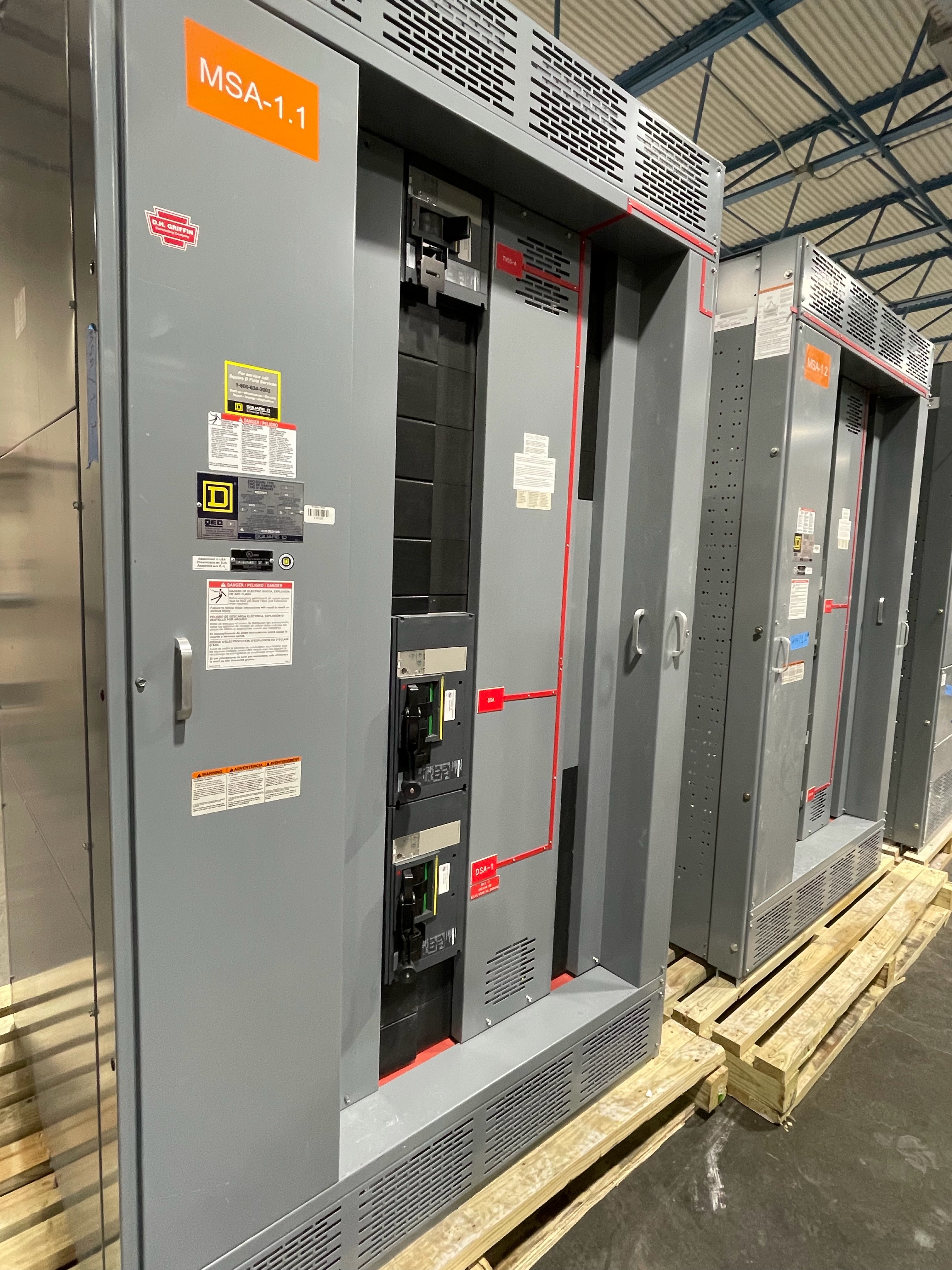
Start with ownership and release authority
A visible Cutler-Hammer name identifies a marking, not the person entitled to sell the equipment. Before requesting an assessment, establish who owns the asset and who can authorize its sale: the facility owner, a landlord, a lender, or another party may have different rights. If equipment belongs to a tenant or is subject to a lease, confirm written authority rather than relying on a maintenance contact’s assumption. Record the asset’s building or room identifier, internal tag if safely visible, and the name and role of the authorized decision-maker. This separates a genuine disposal decision from a plant schedule that merely anticipates future work.
Separate the disposal boundary from the plant schedule
When a facility is still powering other areas, a planned shutdown date does not itself release every nearby cabinet or switchboard. For example, equipment in a decommissioned data-center suite might sit beside distribution serving active offices; a shutdown milestone for the suite would not authorize removal of shared or still-needed gear. Ask the facility’s authorized electrical and operations personnel to define the exact asset boundary and confirm which systems remain in service. Keep that boundary distinct from unrelated demolition, tenant turnover, or construction phases. A buyer can assess only equipment offered for sale; it cannot decide which energized or connected assets the facility may release.
Use the marking as an identification clue, not a specification
For a first inventory, note whether Cutler-Hammer is legible on an exterior nameplate that is safely accessible from an authorized position. Record any other visible manufacturer or facility identifiers without opening doors, removing covers, or approaching equipment to improve a photograph. Brand alone does not establish the assembly type, contents, condition, age, or market value. A lineup may include separately identifiable sections or components, while a breaker marking may describe that breaker rather than the entire assembly. Do not infer compatibility, replacement suitability, or electrical ratings from a nameplate image. Share only information obtained without disturbing the equipment, and leave technical interpretation to qualified personnel.
Keep assembly, breaker, and rating details distinct
If exterior information is safely visible, distinguish the overall assembly from an individual breaker and from any frame or trip information shown for that breaker. Nominal system voltage, equipment ratings, breaker ratings, and trip settings are not interchangeable descriptions. Capture the wording exactly rather than translating it into a broader claim, and note when a field is unreadable or absent. A safely accessible photograph should show only the exterior nameplate or exterior equipment from an authorized safe position; never operate, open, touch, test, disconnect, or move equipment to obtain it. No seller testing is required. Technical verification, isolation, and any electrical work must be performed by qualified, authorized personnel under site rules.
Compare the offered scope with the access plan
Once the seller has authority and has defined the release boundary, describe what is included: a complete assembly, a section, or separately offered components. Note access restrictions, known site rules, and whether adjacent equipment must remain untouched; do not promise that a unit can be removed based on a photograph. We buy across all voltage classes, but each asset is assessed individually, with no implied acceptance or outcome. For equipment selected for purchase, we pay cash upfront and cover the agreed crane, rigging, disconnects, loading, freight, and hauling arrangements. Electrical disconnect work belongs to qualified, authorized personnel, coordinated with the facility’s controls and approvals.
Make the handoff conditional on an authorized release
Before a sale proceeds, align the asset description, ownership authority, release boundary, and site access plan in writing. If the plant schedule changes or operations identify a continuing need, pause the affected scope and have the authorized facility personnel resolve it; a buyer’s assessment is not permission to interrupt service. Ask who approves access, who coordinates qualified electrical work, and which assets remain excluded. If the facility later offers additional equipment, document that as a separate scope rather than treating it as included automatically. This disciplined handoff lets an independent buyer assess clearly identified Cutler-Hammer-marked equipment without implying brand affiliation or taking decisions away from the operating facility.
DECOMMISSIONING / THE COMPLETE SERVICE
From shut-down site to paid seller.
We buy electrical switchgear from decommissioned data centers and shut-down power plants. We handle all rigging and logistics: crane, rigging, disconnects, loading, freight and hauling are on us. Qualified personnel handle electrical disconnects and isolation according to site safety procedures. The seller does nothing but get paid.
We make cash offers, pay upfront, require no testing from the seller, and buy all voltage classes. Share the site and equipment details you know; photos are helpful only when they can be taken safely. Never open or touch energized equipment or disturb a live installation.