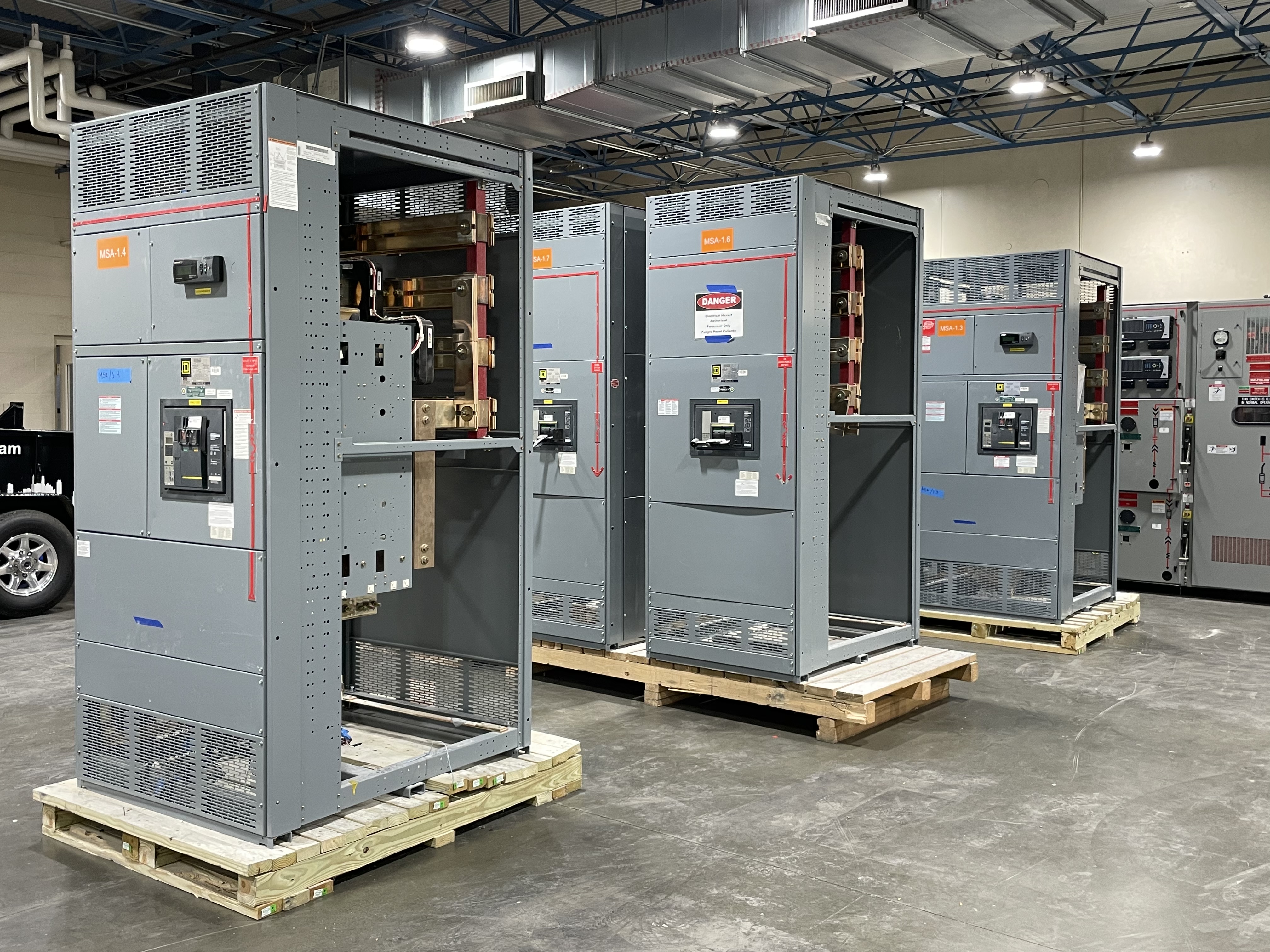
Separate voltage, amperes, and equipment identity
Build the asset list with distinct fields for equipment identity, rated voltage, and ampere rating. A panelboard marked 240 V and 400 A is not interchangeable as a description with a 240 V, 100 A breaker; the first number identifies a voltage marking, while the ampere value describes a separate rating. Record the assembly and each separately listed component only as their labels support. If a plate is unclear, use “not legible” rather than filling gaps from appearance or nearby equipment. This prevents one figure from being mistaken for another.
Transcribe the label, not an interpretation
Copy the nameplate wording and units exactly, retaining decimal points, ranges, AC or DC designations, and any additional voltage entries. Note where each marking appears: assembly nameplate, breaker face, or another safely visible label. Do not convert a multi-entry plate into a single “240 V” claim; its entries may describe different ratings or conditions, and their meaning requires qualified interpretation. If a character is uncertain, mark it uncertain and ask whether a clearer image of the safely accessible exterior label can be provided from an authorized safe position. Never approach or handle equipment to improve a photograph.
Keep system nominal voltage distinct
A facility’s stated system nominal voltage and an individual device’s marked rating are different records. If a seller knows the system description from existing documentation, list it separately and identify the document or source; do not derive it from one device’s 240 V marking. A breaker may carry ratings or markings beyond its voltage, while the connected assembly has its own identity and nameplate. Neither the label nor the system description alone establishes how equipment was configured, connected, or applied. Leave those questions open unless supported by records interpreted by qualified, authorized electrical personnel.
Distinguish breaker details from assembly details
For stored switchgear or distribution equipment, identify whether the listed asset is a complete assembly, a breaker, or a component retained separately. Record visible breaker ampere, frame, trip, and voltage markings as distinct fields, without assuming that a frame value is the trip setting or that the breaker describes the full assembly. For example, a 240 V marking on a breaker does not establish the assembly’s complete ratings or prove that the breaker is a suitable replacement. If identity is uncertain, describe what can be safely identified from records and visible exterior labels, and flag the uncertainty.
Make the inventory useful without energizing equipment
Useful documentation does not require seller testing or equipment operation. Include the exact transcription, manufacturer and model only when legible, quantity, condition observations available without contact, and whether the asset is assembled or separately stored. Attach photographs only of safely accessible exterior nameplates and equipment, taken from authorized safe positions; do not open doors, remove covers, touch, approach, or move equipment to obtain an image. If a label cannot be safely seen, state that limitation. This gives an assessor a clearer basis to ask follow-up questions without inviting unsafe inspection or unverified conclusions.
Ask for an individual assessment, not a voltage shortcut
When sharing the list, ask whether the asset can be assessed using the documented identity, ratings, quantity, and condition information, and what additional records would help. Do not infer configuration, compatibility, price, or acceptance from “240 V,” even when another asset carries the same marking. This buyer considers used, surplus, and decommissioned equipment across all voltage classes, including equipment from decommissioned data centers and shut-down power plants. Cash offers and upfront payment may be considered for assets individually assessed; no particular offer or outcome is guaranteed. Sellers are not required to test equipment.
Coordinate removal and payment responsibilities
If assets are considered, clarify the proposed scope before scheduling any removal: the buyer covers freight, crane, rigging, disconnects, loading, and hauling as applicable to an agreed transaction. The exact work and access needs depend on the site and equipment; no removal plan should be assumed from a voltage rating or inventory entry. All electrical work must be performed by qualified, authorized personnel under site rules. The seller must own the equipment or have authority to sell it. Confirm payment arrangements, asset identity, and logistics for the specific transaction rather than relying on general expectations.