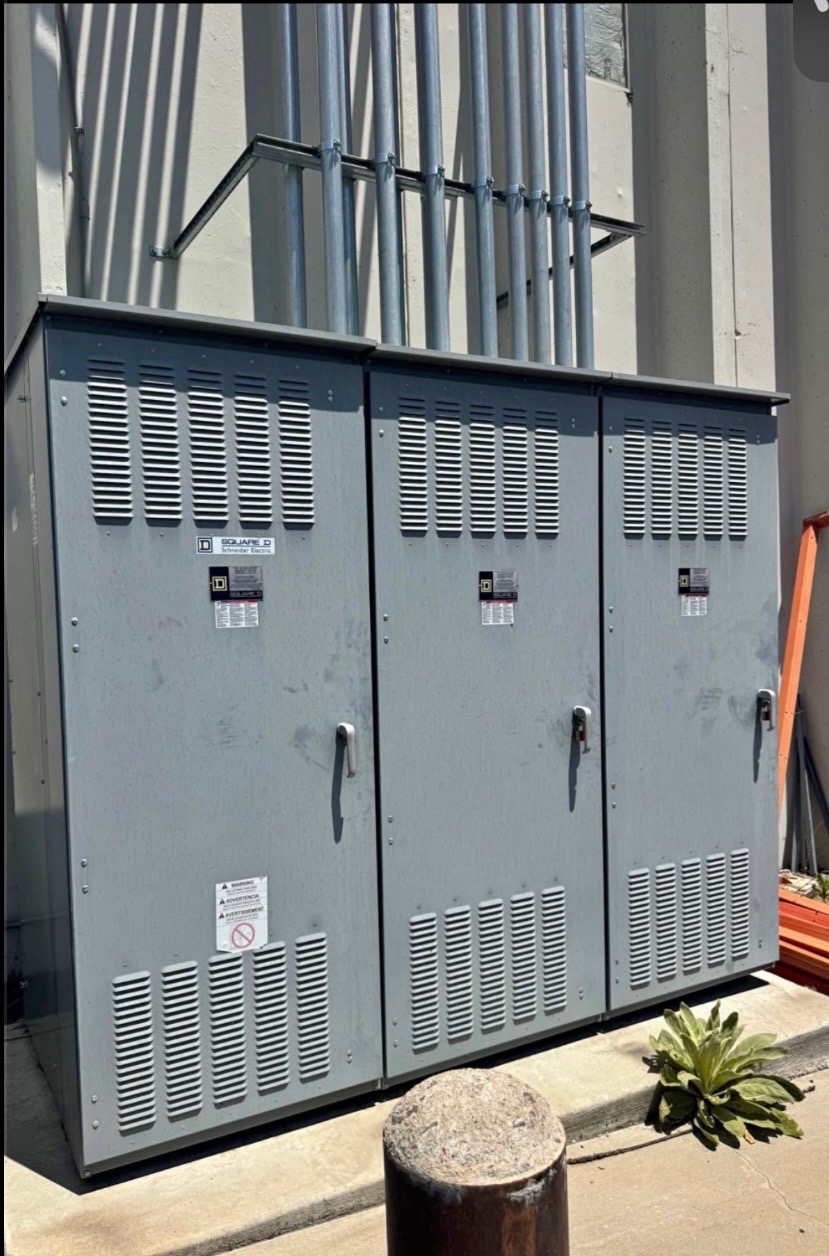
Start with the assembly nameplate, not a presumed system description
Transcribe the switchboard nameplate exactly, preserving wording, units, punctuation, and any voltage notation rather than reducing it to “480 V gear.” Note the manufacturer and identification details only as they appear, along with assembly voltage and other legible ratings. A stated voltage rating describes the assembly marking; it does not independently confirm the facility’s present nominal system voltage, grounding arrangement, frequency, or operating configuration. If a field is unreadable, record it as unreadable instead of supplying a likely value. Safe photographs can help document the exterior nameplate when it is safely accessible from an authorized position. Do not approach, open, or handle equipment to obtain a better image.
Record breaker-device markings as separate evidence
List each breaker’s exterior markings independently from the switchboard’s assembly ratings. Distinguish the breaker frame designation, trip unit or trip rating, and voltage marking; they describe different aspects and should not be collapsed into one number. For example, an assembly marked 480 V and a breaker carrying a different or additional voltage notation are two observations, not proof of compatibility or inconsistency. Record manufacturer and catalog identifiers only when legible, and do not infer a breaker’s interrupting rating, trip settings, or suitability from appearance. If reading a marking would require opening a compartment or entering a restricted area, leave it undocumented for qualified authorized personnel to assess under site rules.
Separate nominal system voltage from equipment ratings
Ask the site’s authorized electrical representative what nominal system voltage the board serves, and how that value was established; keep the answer separate from transcribed nameplate ratings. A system described as 480 V does not mean every connected device has the same marking, nor does an assembly rating establish the actual operating voltage. If records identify a different nominal value, retain the source and wording rather than “correcting” either record. Do not infer phase, wire configuration, grounding, frequency, or compatibility from a 480 V label. These distinctions matter when an asset is evaluated for possible disposition, but an equipment buyer’s review is not an engineering determination or approval for reuse.
Protect operating loads before defining release conditions
If the switchboard serves continuing operations, make release a separate planning decision from the rating review. Identify which loads or downstream systems depend on it, who has authority to approve an outage, and what operating constraints must be met before equipment can be released. Do not treat a retirement date, spare-board status, or isolated breaker as evidence that the assembly is safe to disconnect. Any electrical assessment, isolation, disconnect, or removal must be performed by qualified authorized personnel under site rules. Share only the release conditions the site has approved; the buyer can assess an asset individually, but cannot determine that production, life-safety, or other facility needs are protected.
Build a usable record without seller testing or preparation
A concise record can include assembly nameplate transcription, safely accessible exterior photographs, separate breaker-marking notes, known system-voltage documentation, asset ownership or authority to sell, and the site’s release constraints. Label observations as observed, reported, or unknown so a reported nominal voltage is not mistaken for a nameplate rating. No seller testing or seller preparation is required; do not energize, operate, open, touch, test, or move equipment to fill documentation gaps. The buyer considers used, surplus, and decommissioned electrical equipment across all voltage classes, including assets from decommissioned data centers and shut-down power plants. Each asset and offer is assessed individually, without implied acceptance or a guaranteed outcome.
Discuss commercial terms and logistics without assuming acceptance
When requesting consideration, provide the record and explain whether the assembly is still supporting operations, whether release has been authorized, and what access limits apply. If the asset is accepted, the buyer offers cash and pays upfront; pricing and acceptance depend on individual assessment, not a 480 V label alone. The buyer covers freight, crane, rigging, disconnects, loading, and hauling as applicable to the agreed scope, so sellers do not need to hire crews or perform electrical work. Confirm responsibilities and access arrangements before any work is scheduled. Electrical tasks remain with qualified authorized personnel, and no specific pickup timing, offer amount, or transaction outcome should be assumed before assessment and agreement.