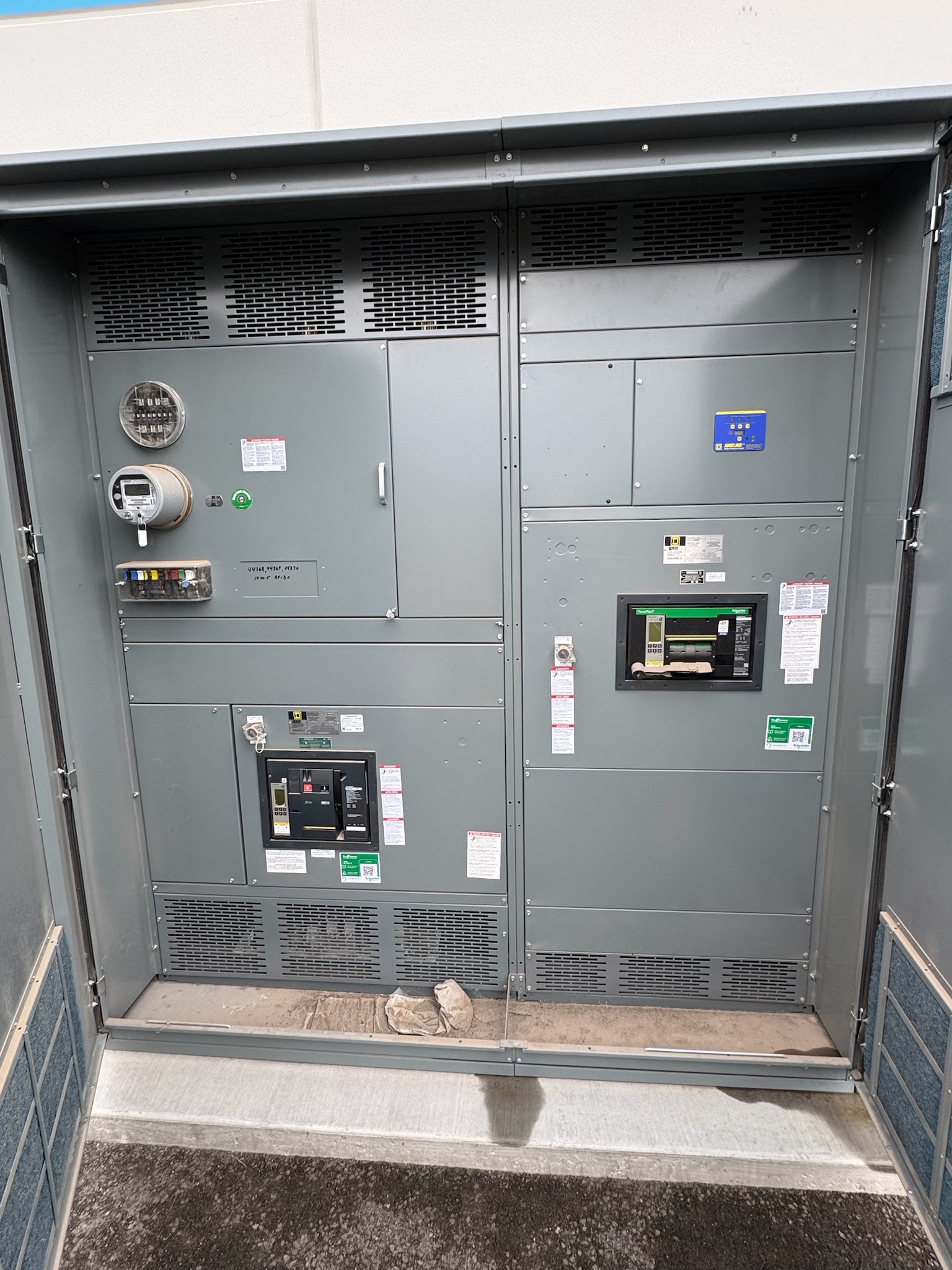
Transcribe the nameplate exactly
Record the wording as printed, including punctuation, units, prefixes, and any separate ratings shown on the lineup or individual sections. For example, if a plate says “4,160 V,” preserve that text rather than converting it to “4.16 kV” in the source transcription. If another plate uses different wording, record it separately and note which equipment it identifies. Do not guess at faded or inaccessible text. A clear photograph may help only when the exterior nameplate is safely accessible from an authorized position; no one should approach or handle energized equipment to obtain it. Mark uncertain characters as uncertain.
Separate system nominal voltage from device ratings
A reported 4,160 V system nominal does not establish every component’s rating or the lineup’s usable configuration. Keep system nominal voltage distinct from a breaker’s voltage rating, interrupting rating, continuous-current rating, frame size, and trip information. Likewise, do not treat an assembly rating as interchangeable with a component marking. If available records show differing values, preserve each value with its source and the item it describes instead of selecting one as controlling. A buyer can review the details, but a voltage label alone does not demonstrate compatibility with a particular system, application, or replacement device.
Count sections and describe the lineup’s boundaries
Give the total section count and a simple left-to-right sequence using labels already visible in records or safely accessible exterior markings. Describe the physical boundaries you can document, such as the first and last section identifiers, without assigning an unverified function to a section. If a lineup was expanded, divided, or partly removed, say what is known and distinguish it from assumption. A section count helps scope the reported assembly, but it does not prove that sections are electrically or mechanically compatible, complete, or offered together. Do not open compartments or move equipment to verify internal construction.
Make incomplete breaker positions explicit
For every visibly or documentarily incomplete breaker position, report its section, position identifier if available, and what is missing or unknown. A position that appears empty is not proof that a breaker was originally specified, nor does it establish which breaker would fit. Separate “no breaker present” from “breaker removed,” “space provision,” or other descriptions unless records support the distinction. Note whether shutters, covers, or related components are reported present only when that information is safely available. These details may affect assessment, but they do not establish configuration, compatibility, price, or acceptance.
Build a records package without testing
Useful supporting material can include equipment schedules, one-line diagrams, prior inventory records, maintenance documents, and exterior nameplate photographs taken from authorized safe positions. Identify document dates and flag whether each record describes the current lineup or an earlier arrangement. No seller testing is required, and no one should energize, open, touch, test, disconnect, remove, rack out, move, or handle equipment to complete a sales inquiry or obtain photographs. If a detail cannot be confirmed safely from existing records or an accessible exterior marking, report it as unknown rather than creating a risk or filling the gap with an inference.
Coordinate release with qualified site personnel
Before discussing a release, establish who owns the lineup or has authority to sell it and who is authorized to coordinate site access. Electrical work, isolation, verification, and disconnection must be handled by qualified, authorized personnel under the site’s rules; the seller should not undertake those tasks for an inquiry. Agree on how release status will be confirmed and what site conditions govern access, loading, and scheduling, without assuming a timetable or outcome. If records conflict or the equipment’s status is uncertain, pause the release discussion until responsible site personnel resolve the issue through approved procedures.
Request an individual assessment and logistics review
Provide the exact markings, section count, incomplete-position notes, records, ownership authority, and release constraints for individual review. The buyer purchases used, surplus, and decommissioned electrical equipment, including equipment from decommissioned data centers and shut-down power plants, across all voltage classes; each asset and offer is assessed individually. A review may lead to a cash offer with upfront payment, but no price or acceptance is assured. The buyer covers freight and can coordinate crane, rigging, disconnects, loading, and hauling as applicable. Confirm responsibilities and site requirements before any work; do not infer a logistics plan from the voltage or lineup description.