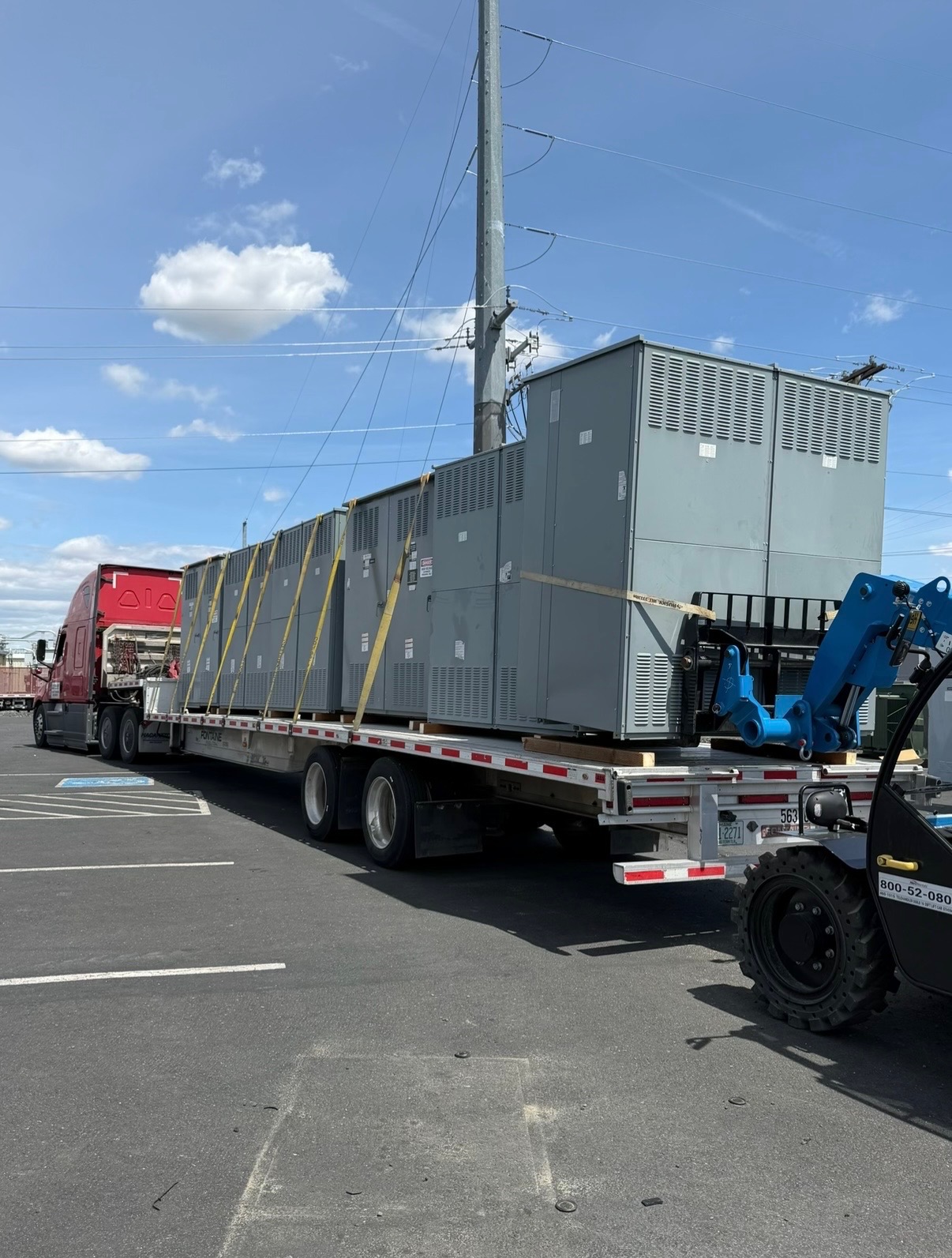
Start with the assembly, not the headline rating
Record the lineup as a collection of sections rather than describing every cabinet as “6,000 amp gear.” Note the number of sections, visible section identifiers, arrangement, and any nameplate wording that identifies the assembly. A lineup may include incoming, distribution, metering, or other sections, but their functions should be reported only when labels or facility records support that description. If records call the assembly 6,000 A while a visible section plate shows another rating, preserve both readings and identify where each appears. Do not resolve the discrepancy by assumption.
Transcribe nameplates exactly and in context
Copy each accessible exterior nameplate exactly, preserving punctuation, units, abbreviations, and any qualifiers. Record the plate’s location, such as “leftmost section, exterior door,” so a reviewer can connect the text to the equipment. Keep assembly markings separate from markings on individual devices. A safely obtained photograph can supplement transcription when the plate is clearly visible from an authorized safe position; never approach or handle equipment to get a better image. If a marking is obscured or uncertain, say so rather than completing missing characters from memory or inference.
Separate assembly, breaker, frame, and trip ratings
A 6,000 A assembly rating is not automatically the rating of every breaker installed in it. Document breaker markings as device information, and distinguish a breaker’s frame rating from its trip rating when both are identified. For example, a device label may show a frame value and a different trip value; report each under its own label rather than calling either the lineup rating. Also record visible catalog or serial markings if legible, without using them to claim compatibility or configuration. Where labels conflict, list the exact text and location of each marking for individual review.
Describe completeness without guessing what is missing
Completeness affects what can be assessed, so make a section-by-section inventory of visible doors, covers, breakers, and obvious gaps. Note equipment identified as removed, spare, or stored separately only when that status is known, and distinguish it from an empty space whose history is unclear. Include available drawings, schedules, and maintenance records as documents, not proof that the present lineup matches them. If a lineup was partly dismantled before your organization took control, describe what remains and what is separately available. Do not reinstall parts or open equipment to improve the inventory.
Give enough information to assess the application, not infer a load
Where known, share the former facility function, service records, and the equipment’s decommissioning status. Those details provide context for review; they do not establish the lineup’s actual operating load, condition, suitability for reuse, or connection compatibility. For instance, a record showing a 6,000 A assembly does not prove that the facility drew 6,000 A or that each section carries that rating. Identify unknowns plainly, including missing schedules or uncertain service history. We assess assets and offers individually, so context supports evaluation without guaranteeing pricing, acceptance, or a particular outcome.
Plan removal around verified access and lifting information
Before discussing removal, document what is safely known about the route, overhead and doorway constraints, staging area, and access for lifting equipment. Share existing lift plans or manufacturer handling information if available, but do not infer weight from amperage, section count, or appearance. Crane and rigging arrangements must be based on verified conditions by qualified personnel. We can cover crane, rigging, disconnects, loading, freight, and hauling as applicable to an individually assessed transaction; specific logistics depend on the equipment and site. Electrical work must be performed by qualified, authorized personnel under site rules.
Make the inquiry useful without seller testing
Send the exact transcriptions, section count, safely accessible exterior photographs, completeness notes, and any relevant records together. No seller testing or preparation is required, and sellers should not operate, open, touch, approach, disconnect, move, or handle energized equipment to gather information. We buy used, surplus, and decommissioned electrical equipment across all voltage classes, including assets from decommissioned data centers and shut-down power plants. For equipment we decide to purchase, we offer cash and pay upfront; assessment remains individual, with no promise of a specific price or acceptance.