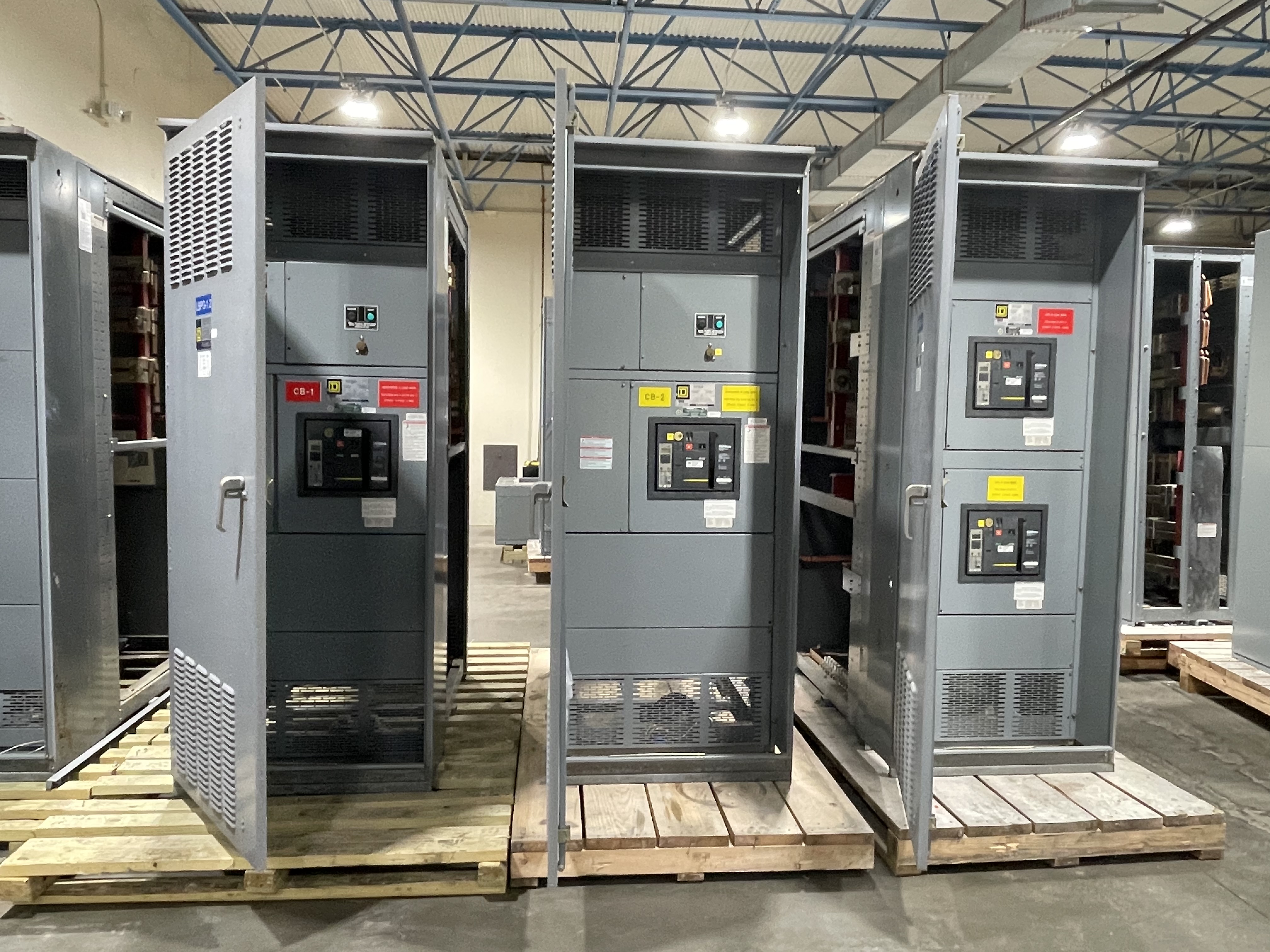
Use the ABB marking as an identification clue
Record exactly what is legible on safely accessible exterior nameplates and labels, including the manufacturer marking and any visible assembly designation. Do not infer an assembly’s identity from a logo on a nearby enclosure, breaker or document alone. If multiple sections appear to share one lineup, note their visible labels and arrangement without approaching restricted or energized areas. An ABB marking is useful for describing what is offered; it does not establish affiliation, endorsement, product lineage, specifications or compatibility. Share uncertainty plainly rather than filling gaps with assumptions.
Separate assembly data from component ratings
For a medium-voltage lineup, distinguish the assembly’s information from labels on individual breakers or other components. If exterior data is safely readable, transcribe the exact wording and units; keep assembly rating, breaker rating, frame designation, trip information and nominal voltage as separate fields. They describe different things and should not be substituted for one another. Do not derive a missing value from a neighboring section or familiar-looking label. A clear note that data is obscured or unavailable is more useful than an estimate, and an individual review may require clarification.
Keep documentation within safe access limits
Photograph only exterior nameplates and equipment that are safely accessible from an authorized safe position, following site rules. Never open a door, cross a barrier, approach equipment to improve a shot, or operate, touch, test or handle anything for documentation. If a label cannot be read from a permitted position, record that limitation and ask the site’s responsible personnel how information may be obtained safely. A written inventory can capture visible section labels, apparent configuration and known missing parts without implying that internal condition has been inspected.
Establish controlled access before discussing removal
Identify who controls the electrical room, what access restrictions apply and which representative can coordinate a site visit. If equipment remains within an operating facility, do not assume a decommissioned designation means adjacent gear or circuits are safe. Keep the proposed sale separate from access authorization: ownership or authority to sell must be established, and site rules remain in force. A buyer can assess an offered assembly from the information available, but any access beyond safe exterior viewing must be arranged and controlled by authorized site personnel.
Obtain qualified electrical release for the work
Before any disconnect or removal, the seller and buyer need a clear plan for qualified, authorized electrical personnel to perform the electrical work under site rules. The owner’s responsible team determines the applicable release and access controls; a buyer’s interest or offer is not electrical authorization. Do not ask unqualified staff to verify isolation, disconnect conductors or prepare the lineup. Clarify who coordinates the qualified work and when the equipment may be released for handling. The sale assessment is separate from any electrical determination about safe work.
Make the offer decision from the actual inventory
Send the visible ABB identification, safely recorded exterior data, section count if known, known omissions and access constraints for individual assessment. Include whether the offer concerns a complete assembly or selected components, and state any uncertainty about breakers or other parts. The buyer purchases used, surplus and decommissioned equipment across all voltage classes, including equipment from decommissioned data centers and shut-down power plants; that does not guarantee acceptance of a particular item. If an offer is made, it can include cash paid upfront. No seller testing is required, and price and acceptance depend on the specific assessment.
Coordinate logistics without shifting the work to the seller
Discuss route constraints, doorway or staging limits, loading access and any known handling restrictions before agreeing on logistics. For accepted equipment, the buyer covers freight and hauling and arranges the required crane, rigging, disconnects and loading as applicable. Electrical disconnects and other electrical work remain for qualified, authorized personnel under site rules; this is not a request for the seller to perform them. Share only information that can be obtained safely and lawfully. The buyer evaluates practical handling needs case by case, without guaranteeing a removal date or a particular outcome.
DECOMMISSIONING / THE COMPLETE SERVICE
From shut-down site to paid seller.
We buy electrical switchgear from decommissioned data centers and shut-down power plants. We handle all rigging and logistics: crane, rigging, disconnects, loading, freight and hauling are on us. Qualified personnel handle electrical disconnects and isolation according to site safety procedures. The seller does nothing but get paid.
We make cash offers, pay upfront, require no testing from the seller, and buy all voltage classes. Share the site and equipment details you know; photos are helpful only when they can be taken safely. Never open or touch energized equipment or disturb a live installation.