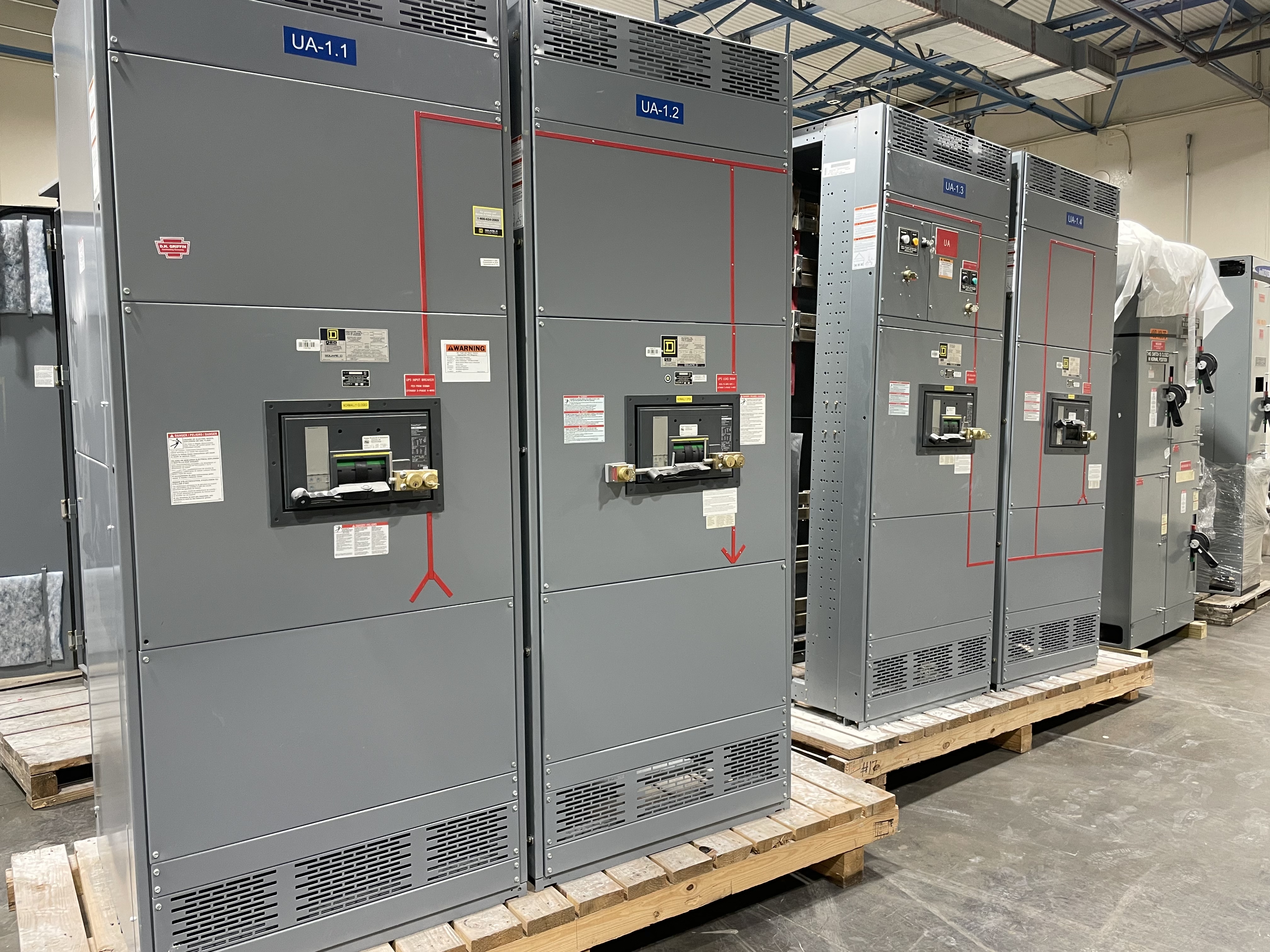
Separate plant shutdown from equipment release
A generating station may be shut down while ownership, environmental controls, leases, or asset disposition remain unresolved. Conversely, a particular lineup may be formally released even while other plant systems remain under the owner’s control. Before discussing an offer, identify the legal owner or authorized seller and ask which specific assemblies are cleared for sale. Useful records may include an asset register, sale authorization, disposal schedule, or marked-up equipment list, provided sharing them is permitted. Do not infer that a room, building, or entire plant is available from a shutdown announcement. Electrical isolation, verification, and any disconnection must be handled by qualified authorized personnel under site rules—not by the buyer or seller casually treating the asset as released.
Use the marking as an identifier, not a specification
A Westinghouse name visible on an exterior nameplate or safely accessible documentation is a useful identification clue, not proof of product lineage, affiliation, condition, or compatibility. Record the marking exactly as visible, along with any safely readable assembly identification, without approaching or opening equipment to obtain it. A switchgear lineup is an assembly; an individual breaker is a device within it. Frame, trip, nominal voltage, and ratings describe different attributes and should not be collapsed into a single “rating.” If some fields are obscured or absent, report that honestly. An independent buyer can assess equipment identified by the marking, but brand recognition alone cannot determine whether a particular asset is suitable for another installation.
Map lineup boundaries and included components
For a lineup, document what is included at the sale boundary: sections, separately listed breakers, control components, and any loose devices identified as spares. A spare breaker stored nearby may belong to a different owner, be reserved for another unit, or be excluded from the asset schedule. Ask the seller to reconcile the equipment list against ownership and release records rather than assuming proximity means inclusion. Where available and authorized, a non-invasive inventory or existing records can clarify counts and identifiers; do not open compartments or operate equipment to confirm them. This boundary work prevents a price discussion for an entire lineup from silently including devices that are not owned, released, or actually offered.
Describe condition without seller testing
No seller testing is required for an initial assessment, and sellers should not energize, open, rack out, or otherwise manipulate equipment to answer buyer questions. Share existing maintenance or inspection records only if authorized, and distinguish documented facts from unknowns—for example, “record available” versus “condition not established.” Safe photographs should show only exterior nameplates or equipment that are safely accessible from an authorized safe position; never approach energized equipment or move covers for a better image. Identify obvious visible damage only from that safe position, without touching or probing. A missing test report is not a reason to invent a result, and a visible brand marking does not substitute for records or individual asset review.
Plan access and loading before valuation
A lineup’s dimensions, route out, overhead clearance, floor loading limits, doors, and staging area can affect whether removal is practical and how it is priced. Ask the site contact what access information and lifting constraints are documented, and who controls scheduling and approvals; do not estimate a lift from a photograph or arrange movement before release. If a transaction proceeds, the buyer can assess coverage for disconnects, crane, rigging, loading, freight, and hauling, with buyer-paid freight considered in the offer. Qualified authorized personnel must perform electrical work under site rules. This is not a commitment that every access condition or removal scope will be feasible; the specific lineup and site constraints require individual assessment.
Request an individual cash offer for identified assets
Once ownership authority, release scope, records, and access details are clear, submit the offered equipment for individual review. The buyer purchases used, surplus, and decommissioned electrical equipment across all voltage classes, including assets from shut-down power plants; voltage class alone does not promise acceptance or determine value. If the assessment supports a transaction, the buyer can make a cash offer and pays upfront under agreed terms. Provide a contact, the asset list, safely obtained exterior identification, known exclusions, and any access restrictions, while keeping uncertain details labeled as unknown. Do not assume that a whole lineup and its spares receive one outcome: each assembly and device is assessed on its own information, ownership, condition records, and removal circumstances.
DECOMMISSIONING / THE COMPLETE SERVICE
From shut-down site to paid seller.
We buy electrical switchgear from decommissioned data centers and shut-down power plants. We handle all rigging and logistics: crane, rigging, disconnects, loading, freight and hauling are on us. Qualified personnel handle electrical disconnects and isolation according to site safety procedures. The seller does nothing but get paid.
We make cash offers, pay upfront, require no testing from the seller, and buy all voltage classes. Share the site and equipment details you know; photos are helpful only when they can be taken safely. Never open or touch energized equipment or disturb a live installation.