Keep the removal deadline separate from the sale review
A contractor’s schedule may be driven by a shutdown window, a replacement installation, a lease handback or a broader construction sequence. The equipment sale can be reviewed alongside that schedule without assuming that every item must be removed on the same day. Start with the date by which the electrical room, yard or storage area must be clear, then identify which assets are available first and which remain in service until a later release.
For a useful review, send exterior photographs, nameplate images when they can be taken safely, approximate quantities, overall dimensions if already known, and the planned release date. Include whether the gear is still installed, already disconnected, partially dismantled or stored loose. Do not open cabinets, remove covers or approach energized equipment to gather information. Qualified personnel must determine isolation and perform electrical work; sellers should never handle energized equipment or attempt a disconnection for a quote.
What to identify before a contractor leaves the site
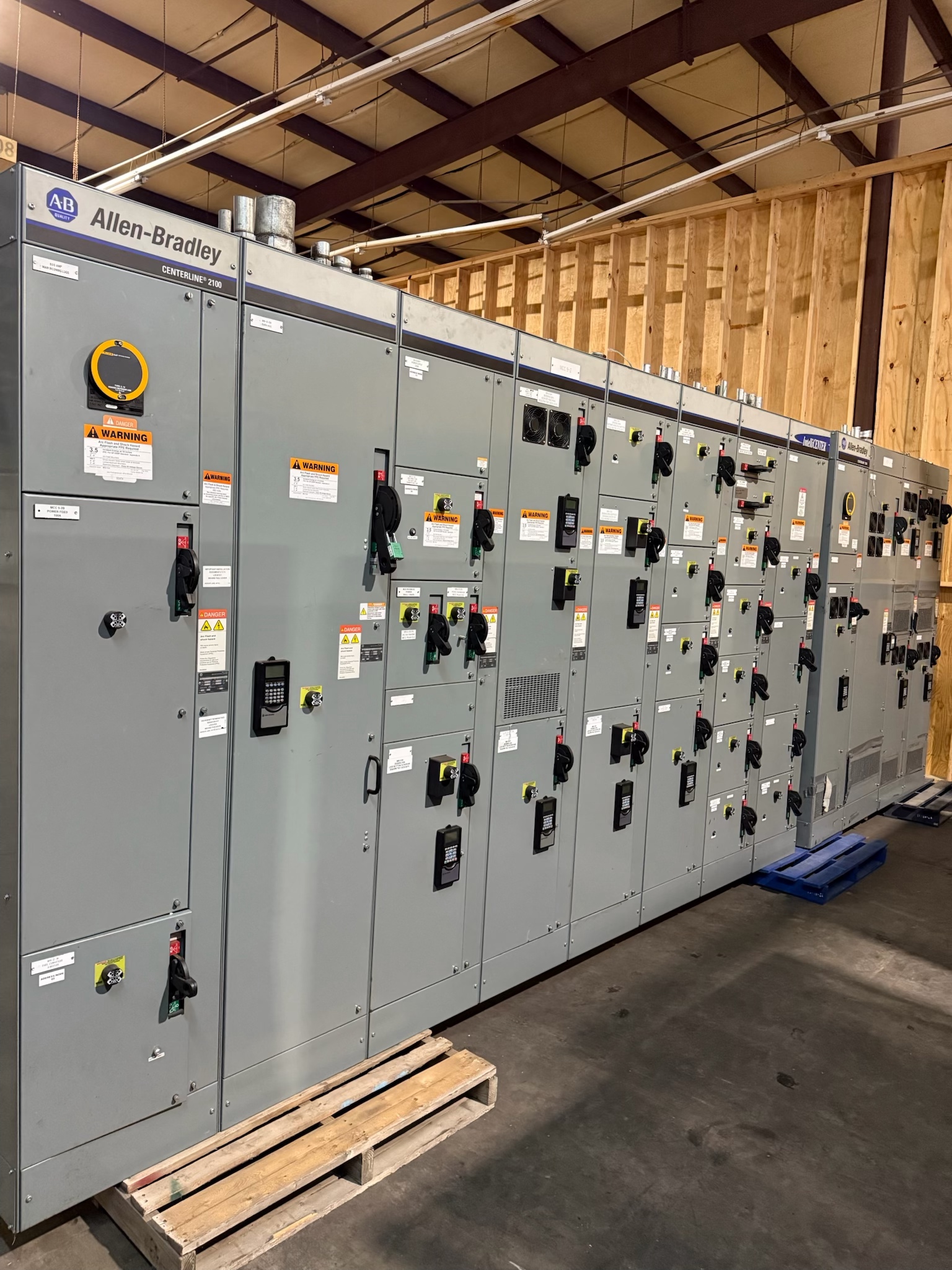
Switchgear is often priced and moved as a lineup rather than as an undifferentiated pile of cabinets. A practical inventory can note each section’s visible designation, lineup order, breaker or feeder labels, approximate dimensions and condition. Record whether the inventory includes main sections, distribution sections, drawout breakers, relays, bus components, control power equipment or loose spares. If a section is missing a device or has been separated from its original lineup, say so plainly. Unknown information is more useful when marked unknown than when guessed.
- Photograph the front, sides, top clearance and nameplates from a safe location.
- List section counts and distinguish complete lineups from individual breakers, cubicles or parts.
- Note indoor or outdoor storage, visible corrosion, water exposure, impact damage or missing panels without claiming that the equipment operates.
- Separate equipment owned by different parties, especially when a contractor, landlord, operator or property owner controls different assets.
Age by itself does not decide whether equipment is worth reviewing. Completeness, identifiable configuration, condition, access and the cost of safe removal all matter. We can review equipment that is retired, surplus or decommissioned without asking the seller to perform operational testing.
Plan access around the truck, rigging and release window
In Atlanta, a removal deadline may depend on a loading dock reservation, a building access rule, a restricted delivery period or a contractor’s handoff. Those details affect the logistics plan and therefore belong in the initial conversation. Share the pickup address, the available access route, door and dock dimensions if known, floor level, stairs or lifts, overhead restrictions, parking limitations and whether a crane or other lifting arrangement may be needed. If the equipment is in a room rather than at a dock, explain the route from the room to the loading point.
Do not dismantle a lineup, disconnect conductors or move cabinets to make the pickup easier unless that work is separately arranged with qualified personnel. Our team handles qualified disconnects, crane and rigging coordination, loading, freight and hauling. The goal is to keep the seller from having to find a second buyer, a rigger, a truck and an electrical crew while a deadline is approaching. The final plan still depends on safe site conditions, authorization and the actual release date; a clear date helps us coordinate, but it is not a promise of a particular pickup time.
Equipment from closures and large power projects
Decommissioned data centers
A decommissioned data center may have several generations of distribution equipment, bypass equipment, transfer-related components and spare breakers released in phases. Keep each lineup or room grouped in the inventory when possible, and identify what is physically present rather than relying on an old one-line drawing alone. Confidential site information need not be included in a first review. Exterior photos and equipment identifiers can usually communicate the scope without exposing sensitive operating details.
Shut-down power plants
Plant closures can produce a mixed inventory spanning low-, medium- and higher-voltage equipment, and the labels may reflect a process area that no longer operates. We buy all voltage classes, but the visible rating, configuration and condition should be described accurately. Do not assume that a plant-wide removal plan covers every cabinet or that equipment is safe to touch because operations have stopped. Site electrical personnel and other qualified workers must control de-energization and access.
Hospital and campus closures
Hospital closures often involve multiple buildings, emergency-power interfaces and controlled access, while campus closures may involve separate structures, phased handoffs and different owners. In either case, group equipment by building or release phase and identify who is authorized to sell it. We can review equipment from both hospital closures and campus closures, but the seller should not open electrical gear or disturb building systems to improve the inventory. Our logistics team can coordinate the removal after the appropriate site permissions and qualified electrical controls are in place.
A straightforward cash sale for the seller
We buy used, surplus and decommissioned electrical equipment rather than selling replacement gear. The review is based on the information available, the equipment scope, condition, release timing and logistics. There is no requirement for seller testing, and we can consider equipment across all voltage classes. Once the purchase terms are agreed, we pay upfront as arranged, and our team handles the physical work associated with disconnects, rigging, loading, freight and hauling. The seller does not need to stage cabinets at the curb or arrange a separate carrier.
Before accepting an offer, confirm ownership or written authority to sell, identify any items excluded from the lot and tell us about access restrictions or a changing release date. If a contractor is working under a property owner’s direction, make sure the person approving the sale can transfer the equipment. Clear authority prevents a last-minute dispute after a crew and truck have been scheduled.
What happens after you send the details
We review the photographs, equipment description and timing, then clarify the questions that affect scope and access. If the equipment is still installed, that does not require the seller to disconnect it. Qualified personnel handle electrical work, and logistics are planned around the site’s safe release conditions. The resulting offer reflects the specific information available rather than a generic assumption about Atlanta equipment.
If the release date changes, tell us before loading is arranged. If a lineup is incomplete, a room becomes inaccessible or an ownership question appears, say that early as well. Honest details make it easier to separate the sale decision from the contractor’s construction deadline and to coordinate a practical pickup. Contact us with the equipment location, visible identifiers, photos, approximate quantity and target release date to begin a cash review.