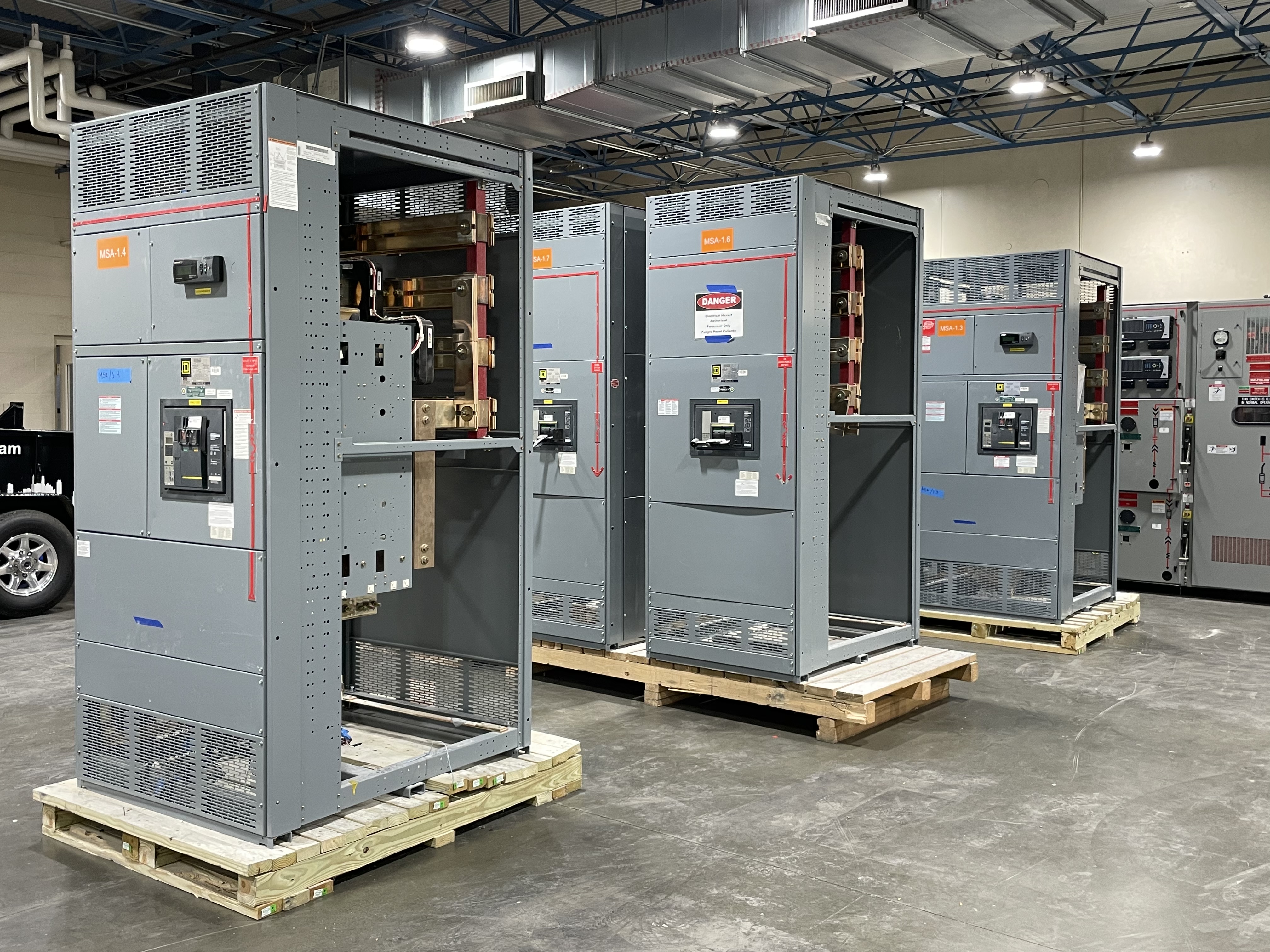
A practical way to sell retired electrical equipment
Electrical rooms often contain value that is easy to overlook during a replacement, consolidation or closure. A lineup may include medium-voltage or low-voltage switchgear, metal-enclosed sections, breakers, feeder sections, bus connections, protective devices, transfer equipment or associated distribution assemblies. We buy all voltage classes, and we consider equipment that is complete, partially dismantled, stored, obsolete, untested or awaiting decommissioning. The goal is not to make you prove that an assembly still operates. The goal is to review what exists, understand ownership and access, and make a purchase decision based on the information available.
A seller can begin with safe exterior photographs, nameplate information that is already visible, approximate section counts and a short description of where the equipment sits. If a label is faded or a model is unknown, say so rather than guessing. Useful details include whether the gear is installed or already disconnected, whether sections remain together, and whether loose breakers, relays, drawout units or spare parts belong with the lot. Do not remove covers, reach inside cabinets or approach energized equipment to gather information. Qualified personnel handle electrical work and determine what can be disconnected, moved or loaded.
Situations we can review
Data center decommissioning
When a data center is being decommissioned, the electrical inventory may be released in stages rather than all at once. A seller can identify each lineup or room, note which sections are available first, and separate equipment that must remain in service from equipment already released. We can review a phased sale without asking the seller to disturb live systems. Confidential operating information does not need to be included in an initial inquiry. Share equipment details and access requirements while omitting network, security or operational information that is not relevant to the purchase.
Power plant shutdowns
A shut-down power plant may have large assemblies, unusual configurations or equipment distributed across several areas. The most helpful starting point is an inventory organized by location and release status: available now, pending qualified disconnect, or held for another project. Include visible dimensions and approximate weights when known, but do not estimate by opening equipment or handling components. Our team can assess the loading approach and coordinate the right resources after the equipment and site conditions are understood.
Hospital and campus closures
Hospital closures can involve equipment that supported critical loads, emergency distribution or multiple buildings. Campus closures can involve separate electrical rooms, additions and later upgrades that do not share the same release date. In either case, preserve the distinction between equipment that is legally available to sell and equipment assigned to another owner, tenant or successor operation. A simple room-by-room list, photographs of accessible nameplates and the responsible site contact help prevent confusion. We do not need a seller to perform testing, and we do not instruct anyone to work around energized systems.
What affects the purchase review
Condition matters, but it is only one part of the review. A complete lineup with matching sections may be assessed differently from isolated cabinets or loose breakers. Make and model information can help, as can voltage class, ampere information, interrupting information and serial numbers when those details are already visible. Missing doors, bus sections, control power components or drawout devices should be disclosed. So should water exposure, fire exposure, impact, outdoor storage or an incomplete removal. Clear disclosure lets us decide what can be purchased without asking you to certify performance.
- List each major section or assembly and identify whether it is installed, disconnected or loose.
- Photograph exterior labels, nameplates and overall lineups from a safe location.
- Note approximate dimensions, access doors, floor level and any known weight information.
- Identify ownership, sale authority and any release, security or scheduling restrictions.
- Separate available equipment from items still required for operations or another project.
These details support a sensible quote, but they are not a seller testing requirement. We buy used, surplus and decommissioned equipment as-is for review, and we do not promise a price before the inventory and logistics are considered. An uncertain or incomplete record is still worth discussing when the seller clearly identifies what is known and what is not.
Full-service removal and freight
Removal planning is often the hardest part of selling installed switchgear. Our team handles crane service, rigging, qualified disconnects, loading, freight and hauling. We coordinate the sequence around the site’s approved access and release conditions rather than asking the seller to find separate crews. The seller does not have to dismantle cabinets, move sections to a dock or arrange a truck. After the sale is agreed, the seller’s practical responsibilities are to provide accurate access information, identify the authorized contact, approve the release and get paid.
Access information should be specific enough for planning: door and gate limitations, stairs or elevators, loading hours, overhead clearance, surface conditions, staging space and whether a crane setup needs prior approval. If equipment is on an upper level or behind other assets, mention that before scheduling. The information is for logistics, not a request for the seller to perform a rigging survey. Our qualified personnel determine the safe method for disconnecting and moving the equipment. Never open, touch or handle energized equipment to prepare a sale or pickup.
Payment and next steps
Once we review the available information and agree on the equipment being purchased, we pay upfront. There is no requirement that you first pay for seller testing, refurbishment or a separate freight arrangement. Send the basics you can safely document: the type of equipment, visible identification, approximate quantity, current status, location within the property and the earliest realistic release window. If the site is confidential, describe only what is necessary at first and discuss additional access details with the appropriate contact. We buy the equipment rather than asking you to list it, market it or wait for an end user.
For a Macon seller, the clearest transaction is one with defined ownership, an honest condition description and a workable release plan. Whether the equipment comes from a data center decommissioning, a shut-down power plant, a hospital closure, a campus closure or a general electrical upgrade, our full-service approach keeps the seller out of electrical handling and heavy transport. You identify what is available; qualified personnel manage the disconnects and move; we cover freight and hauling; and you receive payment upfront after the purchase is agreed.