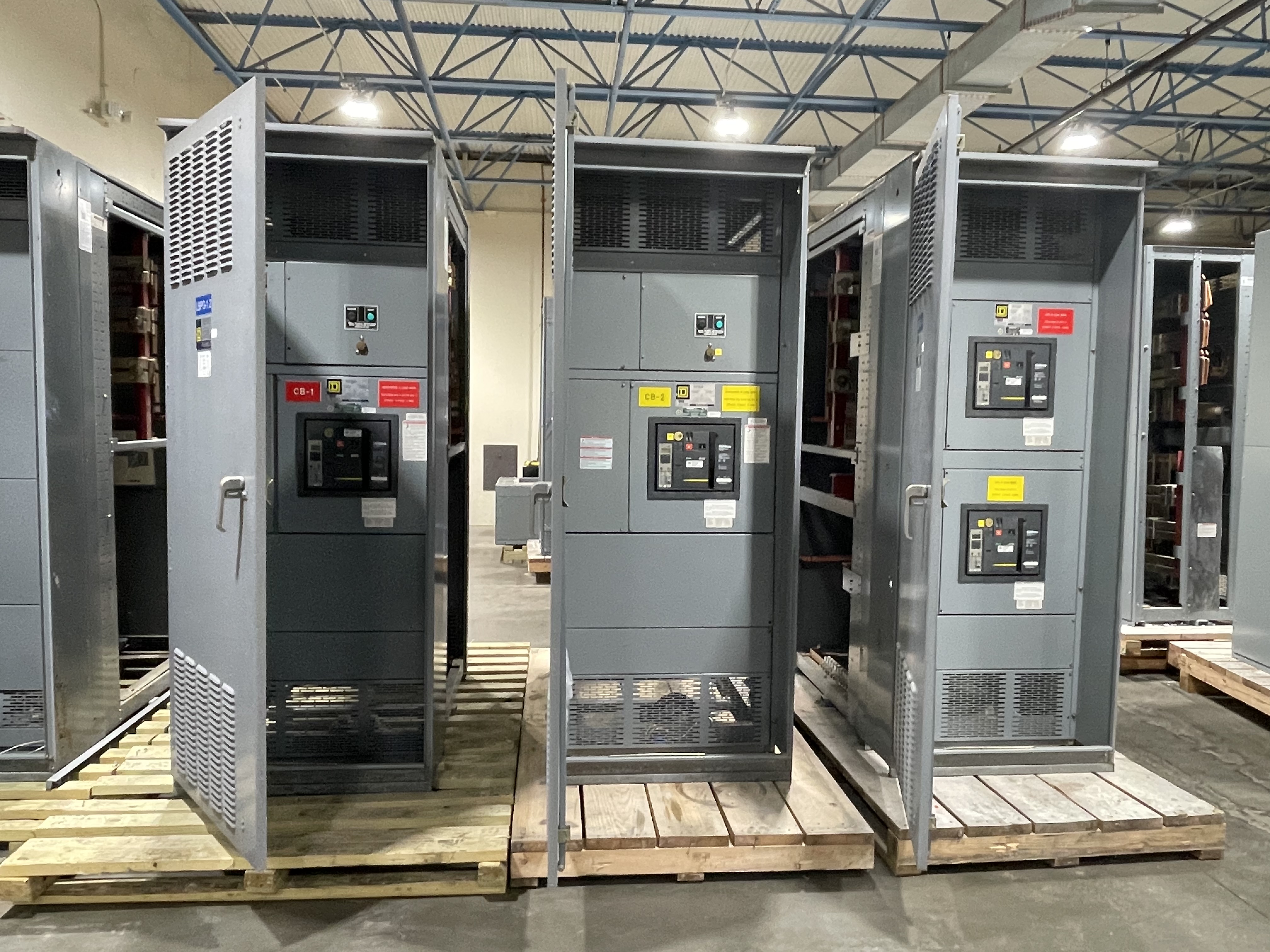
What makes a panelboard worth documenting
A panelboard is more than a stack of loose circuit breakers. Buyers need to understand the cabinet or enclosure, interior bus arrangement, main device, branch devices, neutral and ground provisions, trim, and any accompanying hardware. A complete assembly may be easier to identify and move than individual breakers, while a panelboard missing its trim or several branch devices should be described honestly as incomplete. Neither condition needs to be guessed at or repaired by the seller before requesting an offer.
Start with a clear exterior photograph of the front, the data label, and each section or cabinet. If the label is faded, photograph it anyway and provide the wording you can read. Useful details include the manufacturer, catalog or model number, serial number, main rating, phase and wire information, listed voltage, enclosure type, approximate dimensions, and quantity of sections. Do not infer a rating from appearance. A readable label, old schedule, purchase record, or removal inventory can be more useful than a confident estimate.
- Identify whether the item is a complete panelboard, a cabinet with devices removed, or a group of loose breakers.
- Record the number of sections and note whether trims, dead fronts, doors, covers, and mounting hardware are present.
- List visible breaker catalog numbers and quantities without changing settings or removing devices.
- Point out corrosion, impact, water exposure, paint damage, missing labels, or stored parts so the review starts with accurate expectations.
Panelboard assembly versus loose circuit breakers
A panelboard assembly and a breaker inventory should be separated in your description. Breakers can be associated with a particular interior, frame, bus, or system, and loose devices may not tell a buyer whether the original assembly is complete. Photograph breakers in place when they remain installed, then photograph loose devices as a separate group with their labels visible. Include the cabinet identification with the devices if you know they belong together, but do not combine uncertain parts into a single claimed lineup.
Schedules and drawings can help connect branch positions to the cabinet, although they are not a substitute for a qualified evaluation. If records are unavailable, say so. A partial panelboard, spare trim, or surplus breaker lot can still be reviewed when its condition and identity are clearly presented. The goal is not to make the equipment operational for a quote; it is to give the buyer enough information to assess what is actually being sold.
No seller testing required
We buy panelboards in used, surplus, and decommissioned condition and buy all voltage classes. You do not need to energize, megger, load-test, recondition, or open equipment to start a conversation. Do not remove covers, reach into cabinets, move breakers, or inspect internal conductors if doing so would expose you to electrical risk. Never handle energized equipment for a sale. Electrical isolation, disconnection, and any required work around the equipment are handled by qualified personnel under appropriate site procedures.
For equipment already removed and secured, exterior photographs and inventory notes are generally the best starting point. For equipment still installed, tell us that it remains in place and identify the access contact. Our team can coordinate the practical next step rather than asking a seller to improvise a removal.
Full-service pickup for heavy electrical equipment
Panelboards can be awkward even when they are not exceptionally large: doorways, stairs, narrow electrical rooms, raised floors, loading docks, and limited clearances all affect the removal plan. We handle crane and rigging coordination, qualified disconnects, loading, freight, and hauling. That means you do not need to rent lifting equipment, hire a carrier, dismantle the lineup, or stage it at a truck. Share the known access restrictions, floor or dock conditions, pickup window, and whether the unit is installed or already isolated. These details help the logistics team plan responsibly without asking you to handle electrical work.
For a decommissioned data center, a shut-down power plant, a hospital closure, or a campus closure, panelboards may be distributed across several rooms or buildings and released in phases. We can review a room-by-room list or several lots rather than requiring everything to be described as one uncertain group. A hospital closure may involve controlled access, multiple electrical rooms, and coordination with an owner or closure contractor. A campus closure may involve separate buildings, varied equipment ages, and different release dates. In both cases, identify the authorized seller and site contact, note which areas are accessible, and distinguish equipment ready for pickup from equipment awaiting qualified de-energization.
Information to include with a cash-offer request
A concise inventory makes the review more efficient without creating extra work for you. Send the location generally enough for freight planning, the number of panelboards, approximate dimensions and weights if known, photos of labels and exteriors, and a note about whether each item is installed, removed, stored indoors, or exposed to weather. Include the expected release date and any restrictions on trucks, dock appointments, escorts, or loading hours. If ownership is shared or a contractor controls the site, confirm who can authorize the sale.
- Manufacturer, model or catalog information visible on the nameplate.
- Voltage and main or bus ratings as labeled, including uncertainty where the label cannot be read.
- Section count, approximate dimensions, and whether doors, trims, breakers, and schedules remain.
- Condition notes such as missing components, corrosion, water exposure, or impact.
- Pickup access, release timing, and the contact authorized to coordinate entry.
We provide a cash offer for qualifying used, surplus, or decommissioned panelboards, pay upfront, and cover freight coordination. Pricing depends on the specific equipment and information available, so an honest description is more useful than a promised condition. Once the sale is agreed, our logistics team takes responsibility for the removal plan and transportation. You do not test the panelboard, operate it, arrange hauling, or handle energized equipment; you authorize access, release the equipment, and get paid.