Sell a motor control center without dismantling it yourself
A motor control center is more than a row of metal cabinets. Its value and removal plan can depend on the relationship between vertical sections, bus arrangement, plug-in or withdrawable buckets, starter units, feeder devices and the documents that identify them. That is why a useful first inventory does not require you to remove covers or separate components. Walk around the accessible exterior only when the area is safe, and record what the nameplates, lineup labels and existing paperwork already show.
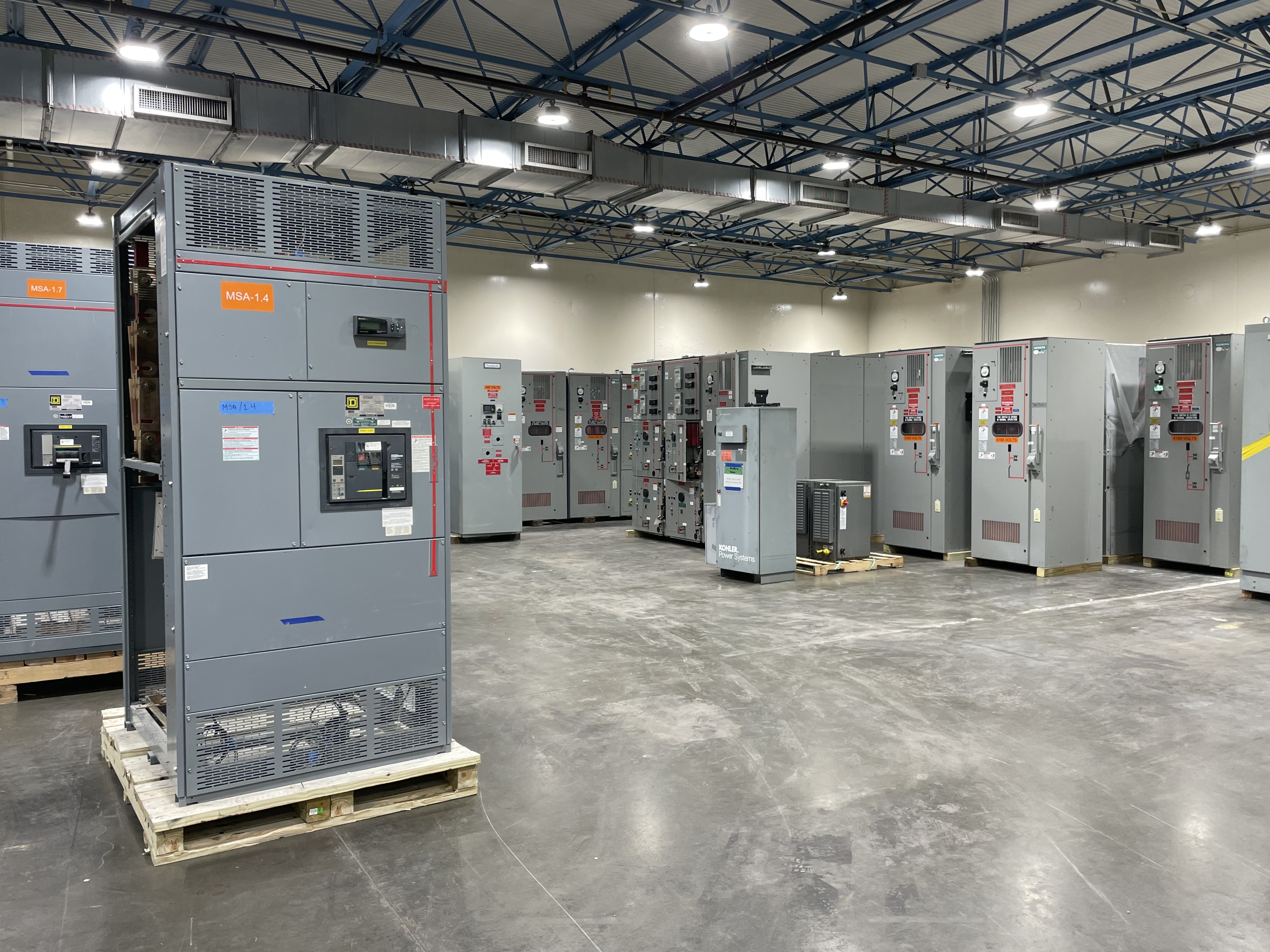
Photographs of each section can be especially helpful when a lineup contains cabinets of different ages. Include a full view of the lineup, a closer image of each section label, and clear images of bucket or starter-unit labels that are already visible. Note whether sections appear connected as one lineup or are stored separately. If a label is faded, say that it is unreadable rather than guessing at a manufacturer, model, voltage or rating. Unknown information can be reviewed; an inaccurate description can create avoidable confusion.
Details that help us review an MCC
- Manufacturer, series, catalog or identification numbers visible from the exterior
- Number of vertical sections and approximate dimensions of each section
- Visible bucket, starter, feeder or disconnect designations
- Whether units are installed, staged in storage, or already disconnected by qualified personnel
- Available drawings, schedules, bills of material, photographs or prior inventory lists
- Condition notes such as missing doors, bent enclosure areas, corrosion, water exposure or incomplete sections
These details are for identification and purchasing review, not a request for you to prove that the equipment operates. We do not require seller testing. Do not open, energize, probe, disconnect or handle equipment to obtain information for a quote. Electrical work and any condition verification needed for removal are handled by qualified personnel under an appropriate site safety process.
Complete lineups, buckets and starter units can be reviewed together
Sellers sometimes have a complete MCC lineup, while others have sections left after a replacement, buckets kept as spares, or starter units removed during a prior project. Describe the inventory as it exists. A partial lineup should not be presented as complete, and loose units should not be assumed to match a cabinet simply because they were stored in the same room. Keeping each item grouped with its existing labels and photographs helps establish what is included without asking anyone to reconfigure it.
If the equipment came from a decommissioned data center, a shut-down power plant, a manufacturing area, a hospital closure or a campus closure, the surrounding project may have several stakeholders. A hospital closure may involve clinical, facilities, compliance and property contacts who need a clear record of what is being released. A campus closure may involve multiple buildings, phased access dates, a central facilities group and separate building owners or contractors. In either case, identify the authorized seller and the person who can coordinate site access. We buy the electrical equipment itself; ownership, release authority and any property restrictions should be settled before pickup.
Full-service logistics from electrical room to destination
Moving an MCC is a logistics job as well as an electrical one. Sections can be heavy, tall and difficult to maneuver through a doorway or loading area. Our team handles the planning and execution of qualified disconnects, crane work, rigging, loading, freight and hauling. The plan can account for aisle width, floor transitions, overhead clearance, dock availability, truck approach, gate rules and the order in which sections must leave. You do not need to find a rigger, arrange a crane or load the equipment yourself.
For installed equipment, qualified personnel handle electrical work and coordinate the safe release of the lineup. For equipment that has already been disconnected, we still need an accurate description of its position and access conditions so the right handling plan can be prepared. A seller should not cut conductors, pull buckets, remove bus components or attempt to make an energized or uncertain assembly easier to move. Leave those tasks to qualified personnel. The seller's role is to provide authorized access, share known information, and stay clear of the work area during removal.
Access information prevents last-minute surprises
When requesting a review, explain whether the MCC is on a ground floor, in a basement, on an upper level, or behind other equipment. Mention stairs, narrow corridors, low doors, restricted receiving hours, security check-in, weight limits, elevators or a required release window. If a facility is closing, a scheduled sale or demolition phase may affect when the lineup can be collected. The equipment can be discussed separately from unrelated demolition work, but the available pickup window and site rules still matter to the freight plan.
- Share the general pickup location and the best site contact.
- Identify whether a dock, grade-level door or other loading route is available.
- Provide approximate section sizes and any known weight information without entering an unsafe area.
- Explain whether the lot is spread across rooms or buildings.
- Flag access deadlines, escorts, appointment rules and changes to the release schedule.
Payment for used, surplus or decommissioned MCC equipment
We buy used, surplus and decommissioned motor control centers rather than asking you to advertise, wait for an end user, or pay to stage the equipment for a buyer. We offer cash, pay upfront, and cover the freight associated with the agreed removal. The review is based on the information available, including the lineup configuration, visible identification, completeness, condition and logistics required to collect it. There is no need to promise that a section is operational when you do not know its history.
All voltage classes can be considered. A low-voltage MCC, a higher-voltage motor-control assembly, or equipment with uncertain documentation can be described accurately for review without a seller making a technical suitability claim. Voltage, enclosure details and ratings should come from existing labels or records, not from a risky inspection. We can discuss whether the proposed lot includes the main structure, buckets, starter units, spare sections or associated loose equipment.
What to send for a practical review
Start with a short description, exterior photographs and any records already on hand. Include the number of sections, whether the MCC is installed or stored, its general condition, and the timing you are working toward. If the equipment is tied to a data-center decommissioning, power-plant shutdown, hospital closure or campus closure, say so as project context rather than assuming every related asset is included. We can then discuss the equipment lot, payment and a removal plan that keeps electrical work and heavy handling with qualified personnel.
Once the purchase and access details are agreed, our team coordinates crane, rigging, disconnects, loading, freight and hauling. You do nothing beyond the seller-side authorization and site coordination required for lawful access, then get paid upfront. That full-service approach lets you clear the motor control center without testing it, dismantling it, or taking on the risk of moving electrical equipment yourself.