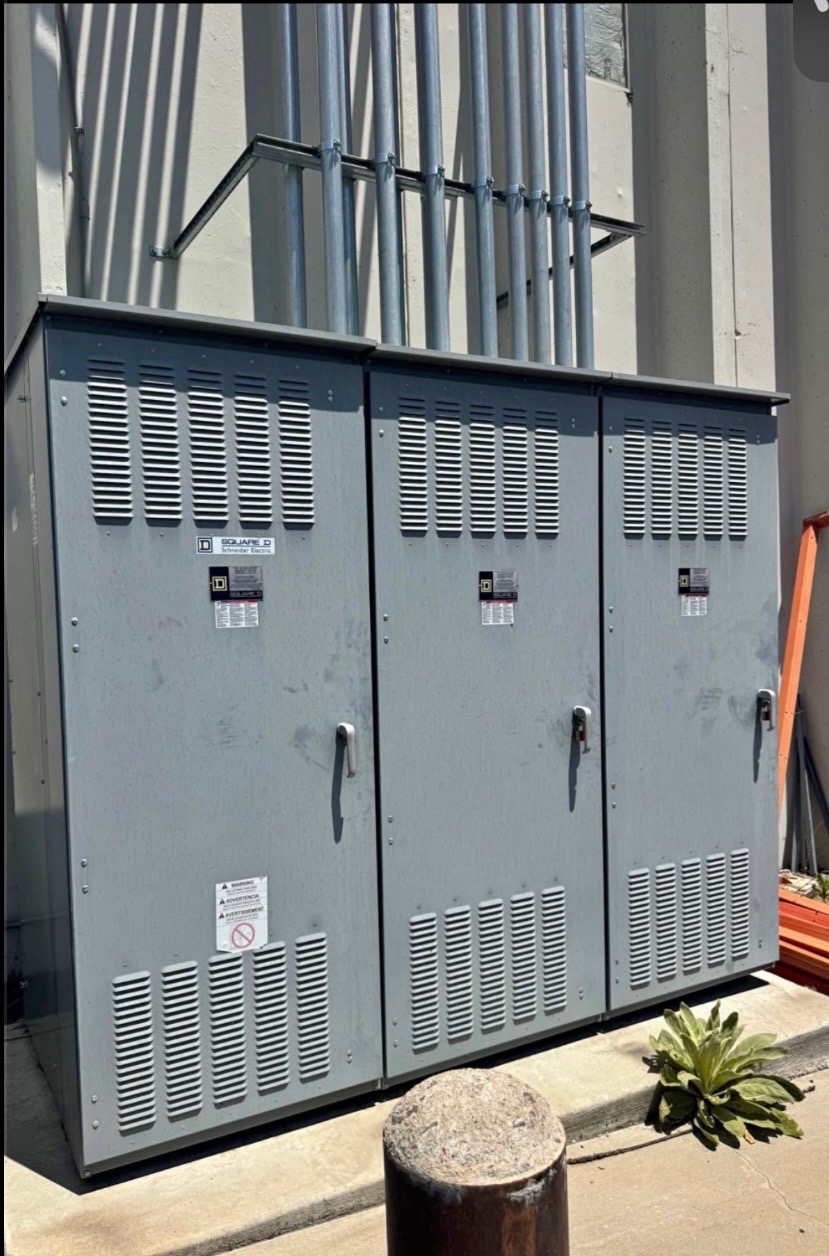
Mark the released boundary before describing the equipment
Start with the modernization scope and identify the exact lineup section being released. Record its position relative to adjacent sections, walls, and the lineup’s ends, using existing drawings or labels where available. Distinguish the released assembly from equipment that remains in service; do not treat a shared lineup as one saleable unit by default. For example, a project may retire one section but retain neighboring sections and their supporting components. A buyer needs a clear boundary description to assess the proposed inventory without assuming that everything in the same enclosure or row is included.
Separate retained connections from saleable components
List connections or components that cross the proposed boundary, such as bus connections, control wiring, or shared structures, only to the extent they are identified in project records. Note what is retained, what is released, and what remains unresolved. Do not assume a bus section can be separated or that a boundary corresponds to a particular breaker position. Those are configuration questions for qualified, authorized electrical personnel working under site rules. A useful inventory note might say that a particular section is excluded pending engineering review, rather than presenting an uncertain shared component as included.
Use records to describe ratings without guessing
Do not infer a voltage class from the building, the panel appearance, or the name of a modernization project. Share available equipment schedules, drawings, and exterior nameplate information that can be read safely from an authorized position. Identify each item’s assembly, breaker, bus, frame, and trip details separately where records provide them; these terms describe different things and should not be substituted for one another. Nominal voltage and other ratings should be transcribed from documentation, not estimated. The buyer considers equipment across all voltage classes, while the specific inventory and available information inform an individual assessment.
Make the inventory useful without testing equipment
A seller does not need to test the switchgear or prepare it for sale. A concise inventory can identify section labels, apparent boundaries, quantities, known exclusions, and the condition of records, while clearly marking unknowns. Photos should be limited to exterior views and exterior nameplates safely visible from authorized safe positions; do not approach, open, touch, or operate equipment to obtain images. If the lineup is energized or access is restricted, leave observation and any electrical work to qualified, authorized personnel following site rules. A clear “not verified” note is more useful than an unsupported condition claim.
Resolve ownership and scope before an offer
Confirm that the seller owns the proposed equipment or has authority to sell it, especially when the modernization involves a landlord, tenant, facilities contractor, or equipment owner. State whether breakers, accessories, documentation, or other items are included only when their status is confirmed. Also flag liens, project holdbacks, or items reserved for reuse if they affect the sale authority or boundary. Avoid describing a whole lineup as available when only a portion is released. These distinctions help the buyer assess the actual offer scope; acceptance, price, and other terms depend on the individual equipment and review.
Coordinate removal around the retained lineup
If a purchase is agreed, removal planning must respect the operating building and any retained sections. The buyer covers agreed crane, rigging, disconnects, loading, freight, and hauling services as applicable to that purchase; the seller is not asked to hire or pay a removal crew. Electrical disconnects and related electrical work must be performed by qualified, authorized personnel under site rules. Confirm access constraints, scheduling coordination, and the agreed removal boundary before work begins. No one should move or handle energized equipment. The purchase scope should make clear which released items are included and which retained assets must stay untouched.
Compare the offer with the project’s release plan
For a phased project, compare the proposed purchase scope with the current release plan rather than judging it only by the number of sections. A cash offer with upfront payment may simplify the transaction, but the seller should still verify that the offer names the intended inventory and excludes retained equipment. The buyer requires no seller testing, and assessment is individual; neither acceptance nor a particular outcome is assured. If Atlanta is the pickup locality, access and removal coordination can be considered with the agreed scope. Keep the sale decision aligned with documented boundaries and the building’s authorized work plan.