Separate storage history from performance claims
Unknown exposure duration is a recordkeeping gap, not proof that switchgear is either usable or unusable. Note the last known indoor location, when outdoor storage was first observed or reported, and any dates supported by records. Mark estimates as estimates and identify who supplied each detail. Avoid converting “stored outside for an unknown period” into a claim about weather damage, insulation condition, or operation. A buyer can assess an asset individually; the seller’s account should preserve uncertainty rather than offer a functionality grade unsupported by inspection or records.
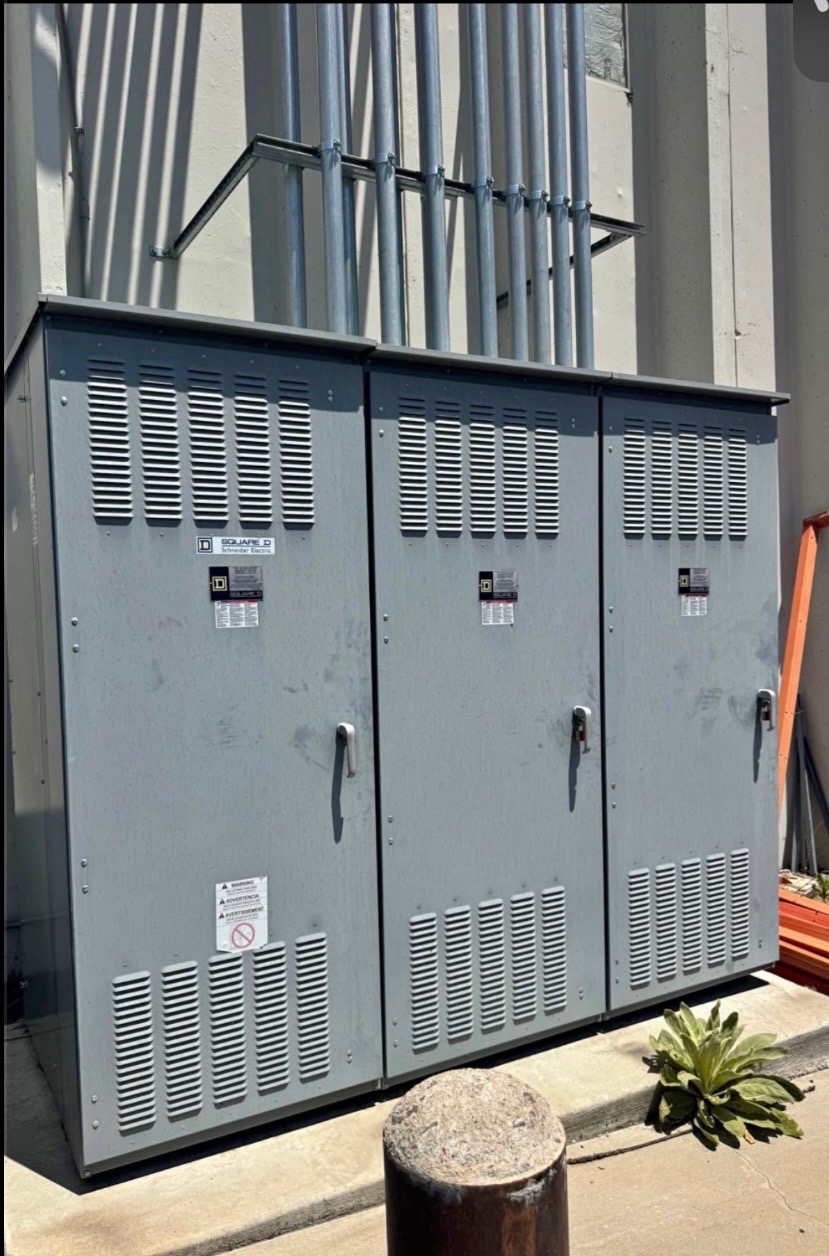
Describe only safely visible exterior condition
Document what can be observed from an authorized safe position: enclosure appearance, visible corrosion, dents, broken or missing exterior panels, and whether covers appear present. Do not open a cabinet, approach equipment that may be energized, or touch, test, disconnect, move, or handle it to improve the record. Photos should show only the exterior and exterior nameplates safely visible from an authorized safe position. Describe a mark as visible corrosion or staining, not as evidence of internal condition. If safe visibility is uncertain, leave the detail undocumented for qualified personnel to address under site rules.
Identify the assembly without guessing its ratings
Medium-voltage switchgear may be an assembly containing multiple sections and devices, so record the lineup or section identifiers visible from a safe position rather than treating every component as one interchangeable unit. Exterior nameplate information may help identify manufacturer, assembly designation, nominal voltage, and stated ratings, but transcribe only legible text and flag unreadable fields. Distinguish assembly ratings from an individual breaker’s frame or trip information where those details are safely visible. Do not infer a rating from enclosure size, color, or a nearby component; incomplete identification is better than a confident but unsupported specification.
Build a useful, bounded record
A concise inventory can state ownership or authority to sell, quantity of sections, known storage history, visible exterior observations, and what remains unknown. Include the basis for each statement: for example, “outdoors by June, year uncertain” differs from a dated storage log. Record whether nameplate text is directly readable or taken from an older document, and keep those sources distinct. If prior service or removal records exist, identify them as records, not proof of present condition. This gives an assessor context without asking the seller to test equipment or certify functionality.
Compare sale choices without self-testing
When exposure duration is unclear, owners may weigh an individual offer against retaining the gear while seeking better documentation. That choice can consider the cost and authority required to obtain records, the space occupied, and whether a sale assessment is worthwhile—not an assumed repair need or resale value. No seller testing or preparation is required for an assessment, and the buyer considers assets individually. The buyer purchases used, surplus, and decommissioned electrical equipment across all voltage classes, but that does not guarantee acceptance or a particular price. Any offer depends on the asset and agreed terms.
Confirm payment and removal responsibilities
For an agreed purchase, the buyer offers cash and pays upfront under the agreed transaction terms. The buyer covers applicable crane, rigging, disconnects, loading, freight, and hauling as part of that purchase; the seller is not expected to hire or pay a removal crew. Which services are needed depends on the equipment and site, so clarify scope before committing. Disconnecting and other electrical work must be performed by qualified, authorized personnel under site rules. Do not have staff operate, open, disconnect, or prepare the switchgear to facilitate pickup.
Plan an Alpharetta-area assessment carefully
Owners considering a sale in Alpharetta can share the inventory, safely visible exterior photos, and known storage timeline for an individual assessment and discuss whether pickup can be agreed. State access restrictions, site contacts, and any known loading or crane constraints without moving the gear to improve access. If the equipment came from a decommissioned data center or shut-down power plant, identify that origin only when accurate and authorized to disclose; it does not establish condition or guarantee a sale. Keep unresolved exposure questions explicit, and leave technical decisions and removal work to qualified authorized personnel and the agreed buyer-led plan.