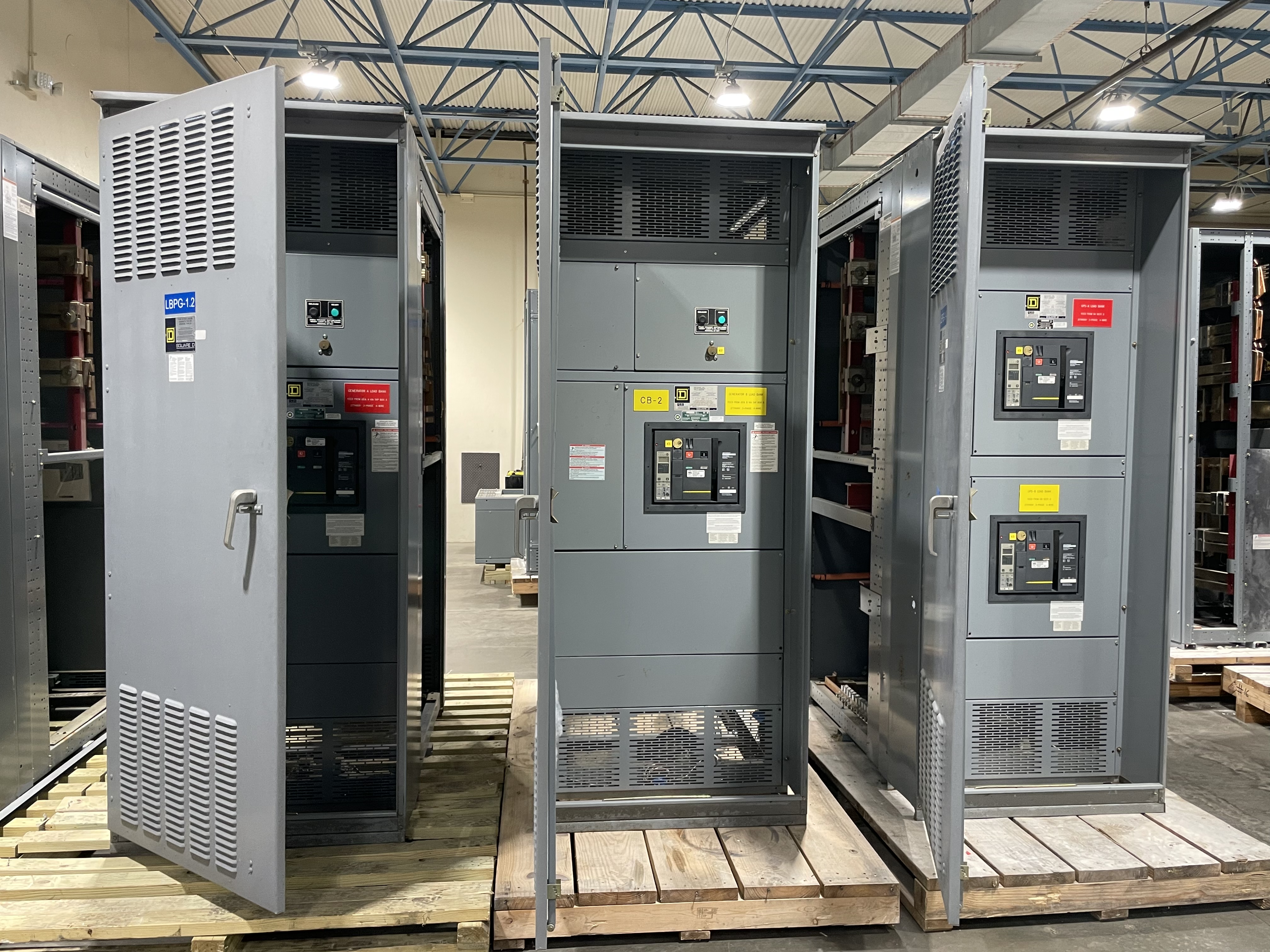
Start with the lineup’s documented footprint
Collect existing drawings, equipment schedules, or prior move records that identify each section’s width and the lineup’s overall arrangement. A single total width can obscure end sections, barriers, or projections, so note what the records actually measure and whether dimensions are verified or estimated. For equipment in Columbus, these details help us assess the surplus lineup against the room’s access constraints. Do not fabricate measurements or alter equipment to improve a quote. If records are incomplete, identify the uncertainty for assessment rather than treating an estimate as a confirmed fit.
Compare every opening along the route
Qualified, authorized personnel can confirm dimensions under site rules when needed; existing building records can help where access is restricted. The useful comparison is not just the room doorway: it may include corridor turns, thresholds, elevator or loading-bay openings, and changes in clearance along a proposed route. Share available clear opening dimensions and note known obstructions or unverified points; do not infer that a section can be tilted, dismantled, or maneuvered through a narrow opening. A buyer-led route review needs the documented section widths beside those constraints. Only qualified, authorized personnel may perform any electrical work, under the site’s rules.
Separate identification from electrical ratings
Existing schedules and exterior nameplates may help identify the equipment and its stated ratings. Keep nominal system voltage, switchgear assembly voltage, current or ampere rating, frame rating, trip rating, and interrupting rating distinct; none alone establishes compatibility or confirms what a buyer will accept. Share legible information already available, without opening cabinets or exposing internal components. Photographs should show only safely accessible exteriors and exterior labels or nameplates from positions authorized by the site. Never approach, touch, operate, or test energized or potentially energized gear to obtain details. No seller testing is required for an assessment.
Flag access uncertainties before discussing removal
Describe whether the room and route have known access restrictions, such as controlled entry, limited working hours, or an opening whose dimensions remain unconfirmed. These are planning questions, not reasons to assume removal is feasible. The buyer must review the route and required handling with the seller under the site’s access rules before agreeing on a purchase and logistics. Do not ask the seller to disconnect, stage, move, or prepare equipment. Any work involving electrical equipment is restricted to qualified authorized personnel following site rules; no one should handle gear that is energized or potentially energized.
Make the assessment useful without testing
A practical inquiry can include the lineup identification available from existing records, section count, documented widths, known doorway clearances, current access limitations, and safely obtained exterior photographs. State which details are documented, which are estimates, and which are unknown. No internal photographs, cabinet opening, testing, or seller fabrication is needed. The buyer independently assesses each asset and purchase proposal; an inquiry is not acceptance, and neither price nor timing is guaranteed. The business buys used, surplus, and decommissioned electrical equipment across all voltage classes, including equipment from decommissioned data centers and shut-down power plants.
Clarify payment and handover responsibilities
For an agreed purchase, the buyer makes a cash offer and pays upfront under the agreed terms. The buyer covers necessary crane, rigging, disconnects, loading, freight, and hauling as applicable to that purchase; the seller does not hire or pay a removal crew. Confirm which services are necessary and what access the site authorizes before finalizing arrangements. A narrow interior route may affect feasibility or logistics, and no general statement replaces an individual assessment. The purchase does not include unrelated demolition or hazardous-material remediation. Do not treat an initial discussion as a commitment to buy or remove a particular lineup.
Share information through a safe, authorized channel
Send only records and exterior images that the site permits you to share. Photograph nameplates or labels only when safely visible from a site-authorized position; do not open equipment, enter restricted areas, or approach gear to improve a picture. If safe access is not available, rely on existing documentation and mark the missing detail rather than asking anyone to obtain it. For a possible Columbus, Georgia, pickup, the buyer can assess the proposed inventory and route information before discussing an agreed handover. Site personnel retain control of access, and all electrical work must remain with qualified authorized personnel under site rules.