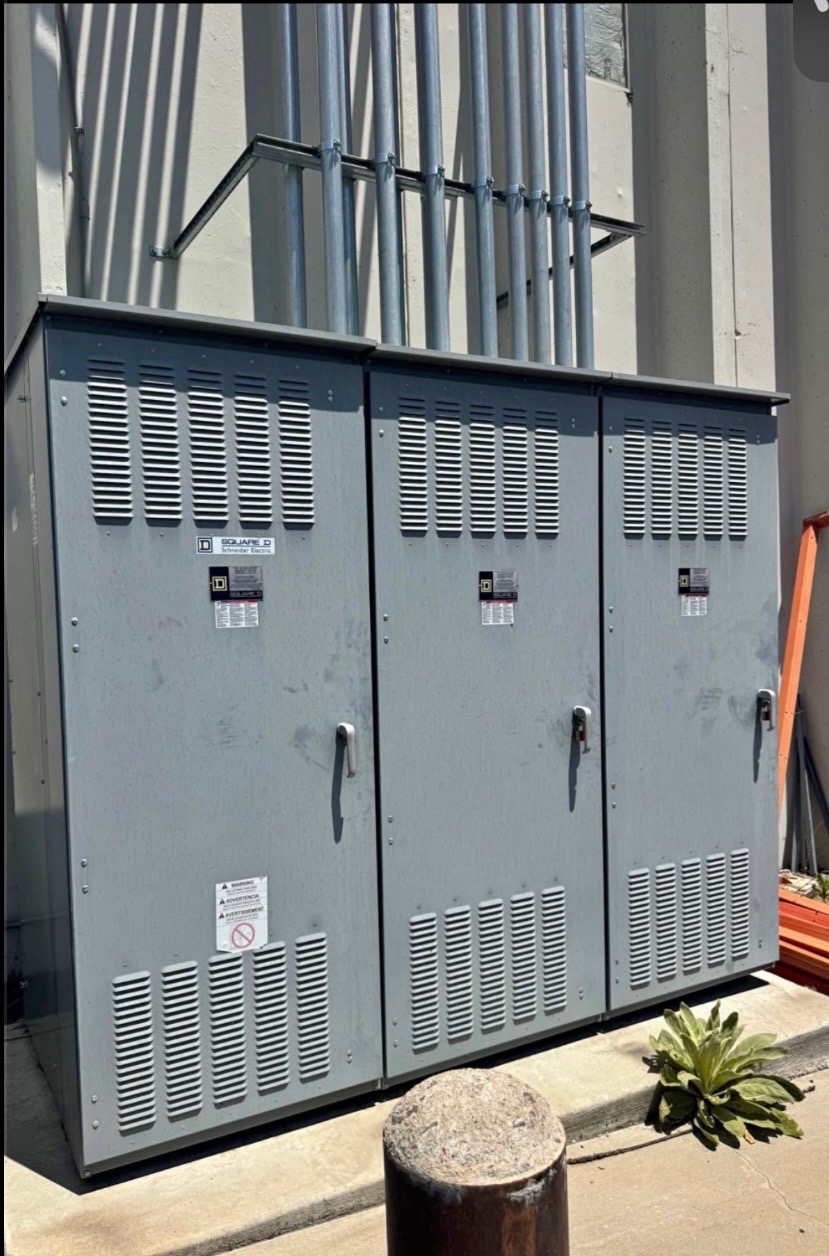
What makes an automatic transfer switch identifiable
An automatic transfer switch connects a load to one power source and changes to another source when its control system detects the configured transfer condition. For a buyer, the ATS is more than a cabinet with a familiar label. The nameplate and controller help establish what is actually being offered, while the mechanical transfer section, bypass-isolation features and accessories affect how the unit should be described.
Start with exterior photographs and a written inventory rather than opening the enclosure. Capture the manufacturer, model or catalog number, serial number, ampere rating, voltage, phase, frequency and number of poles when those details are visible. Note whether the unit is marked service entrance, bypass-isolation, delayed transition or closed transition. If a field is unreadable, say that it is unreadable. An accurate unknown is more useful than a guessed specification.
Nameplate and controller details
The controller can be a separate front-mounted module or part of the transfer-switch assembly. Record its model, display condition and any plainly visible option labels. A controller revision, communications card, battery-related accessory or remote annunciator may matter to the lot, but the seller does not need to prove that any feature works. Include loose accessories, wiring harnesses, manuals and spare parts in the inventory only when they are physically present and can be identified without disturbing the equipment.
- Photograph the full front, both sides if accessible, and the nameplate.
- List the ATS quantity and identify each unit by its own model or serial number.
- Describe visible dents, corrosion, missing covers, cut conductors or removed components.
- State whether the switch is installed, disconnected, crated, palletized or stored loose.
- Separate the transfer switch from a generator, distribution switchboard or other equipment that is not included.
No seller transfer testing is required
Automatic transfer switches are connected to power sources and loads, so testing is not a casual inspection task. We do not require the seller to energize the unit, simulate a source failure, operate the mechanism, remove covers or troubleshoot the controller. Never open or handle energized equipment for a quote. Any required electrical isolation, verification, disconnect or removal work is handled by qualified personnel under the site’s safety procedures.
A unit that has not been tested can still be reviewed for purchase. Tell us what is known from records and what is not known. Maintenance history, a decommissioning report, installation drawings or prior service notes can provide useful context, but missing records do not prevent an initial conversation. If the ATS was removed from service because of a replacement, closure or change in distribution design, describe that circumstance without presenting it as a guarantee of operating condition.
Automatic transfer switches from closures and major projects
When a data center is decommissioned, its ATS equipment may be staged in an electrical room, loading area or temporary storage location while other assets are being processed. A shut-down power plant can produce a different mix of transfer equipment, controls and spare assemblies. In either case, we can review a complete lineup, several individually tagged switches or a mixed lot. The source facility does not need to be identified publicly in the first message; equipment details and a clear description of ownership are the important starting points.
Hospital closures and campus closures also require careful separation of assets. A hospital may have transfer switches serving emergency or legally designated loads, while a campus may have multiple buildings with different release dates and electrical rooms. Do not assume that all equipment belongs in one lot or that a switch serving a critical system is available immediately. The authorized owner or project representative should identify what may be sold, what remains in place, and when each area can be released. We can coordinate around phased access without asking the seller to disturb an operating system.
Information that makes a quote practical
Send the location at a level appropriate for planning, the number of ATS units, photographs, visible nameplate data, approximate dimensions and an estimated weight if one is already documented. Mention stairs, low clearances, restricted doors, outdoor exposure, dock rules, escort requirements and any appointment windows. These details are not a request for the seller to calculate a rigging plan. They help our team determine the right equipment and freight approach.
Ownership and authority matter as much as identification. If a contractor, landlord, asset manager or closure team controls the equipment, identify the party authorized to accept an offer and release the ATS. Keep the offer tied to the specific units shown in the photographs. If cabinets, controllers, bypass sections or loose parts are missing, list them plainly so the purchase discussion reflects the actual lot.
Full-service pickup in Georgia
Our service is designed for sellers who do not want to coordinate several vendors. After the equipment and access plan are agreed, our team handles crane work when required, rigging, qualified electrical disconnects, loading, freight and hauling. We coordinate the pickup with the site contact and work within the available release window. The seller’s role is to provide authorization, accurate access information and a safe point of coordination; the seller does not need to find a crane, arrange a trailer or load the ATS.
Electrical work is performed by qualified personnel. A seller should not pull feeders, remove barriers, test live parts or attempt to make an installed automatic transfer switch safe for transport. If the equipment is already disconnected, tell us who performed that work and what documentation is available, but do not treat a disconnected appearance as proof that every hazard has been eliminated. Our personnel assess the condition and coordinate the appropriate handling steps.
Payment and the next step
We buy all voltage classes and consider used, surplus and decommissioned automatic transfer switches. The review is based on the equipment details, completeness, condition as described and the practical cost of recovery. We do not promise a guaranteed price before reviewing the lot, but we do provide a cash offer when the information supports one. If accepted, we pay upfront as agreed rather than asking the seller to fund removal or freight first.
To begin, send the ATS nameplate photographs, controller information, quantity, status and approximate location. Include the intended release date and any known access restrictions. We can then discuss the equipment without requiring seller testing and determine how our qualified logistics team can manage disconnects, rigging, loading and hauling from the site.