Start with safe, useful information
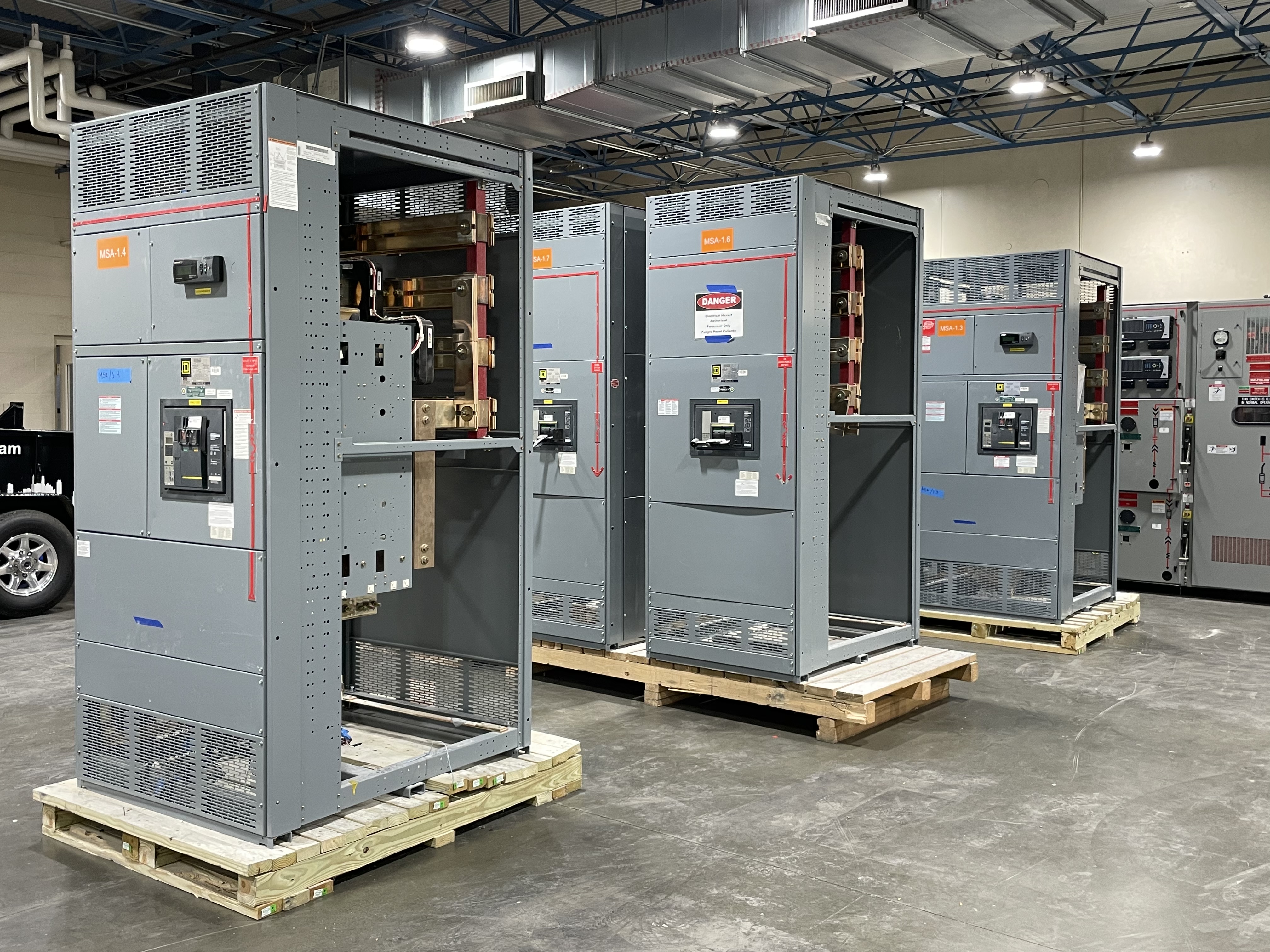
Missing records are common when a facility changes owners, closes, or replaces a distribution system. That does not automatically make a circuit breaker unreviewable. A seller can send exterior photographs of the front, side, rear if already accessible, nameplate, handle or mechanism, and any storage tag without opening a cabinet or touching conductors. Include a simple count and note which pieces appear to be individual breakers, drawout units, molded-case breakers, air breakers, or parts associated with a larger lineup.
Do not estimate a rating from appearance. Share the exact marking when it is legible, and identify a value as unknown when it is not. Useful details may include manufacturer, type or catalog number, frame size, interrupting rating, poles, voltage marking, trip unit label, serial number, and accessories visible without disassembly. Photos of the surrounding enclosure can also show whether the breaker belongs to a switchgear section, switchboard, motor-control assembly, or spare-parts inventory. We can review incomplete information and ask focused follow-up questions.
Separate loose inventory from installed equipment
A loose breaker in a storeroom is a different logistical item from a breaker still mounted in a lineup. For loose equipment, describe packaging, pallet condition, approximate dimensions, and whether accessories are kept with it. For installed equipment, do not remove covers, rack out a drawout device, operate a handle, or perform a test for the purpose of requesting an offer. Electrical isolation, verification, and disconnect work belong with qualified personnel following the site’s safety procedures.
A practical inventory can use one line per item or section:
- Location or room reference, if the seller is authorized to share it.
- Exterior label and nameplate photographs taken from a safe position.
- Quantity, approximate dimensions, and an honest condition note.
- Whether the item is installed, removed, stored, incomplete, or of uncertain status.
- Available drawings, purchase records, or tags, without delaying the first review while searching for perfect documentation.
This approach is useful when an electrical room has been cleared in stages. It also helps distinguish a complete breaker inventory from loose trip units, mechanisms, cell parts, hardware, or accessories that may have been separated during a replacement.
One buyer for several closure situations
We buy circuit breakers removed from decommissioned data centers and shut-down power plants, as well as equipment released through hospital and campus closures. A hospital closure may involve multiple buildings, controlled access, and an ownership or facilities team that must approve release. A campus closure may involve separate electrical rooms, phased building access, and equipment divided between academic, residential, laboratory, or utility areas. The seller does not need to assume that every breaker is alike; grouping equipment by building, room, lineup, or release date gives us a clearer basis for review.
For a data-center decommissioning, tell us whether breakers are loose spares, part of distribution gear, or still associated with a lineup. For a shut-down power plant, identify equipment by available exterior labels and note whether access is restricted. These descriptions are for planning the purchase and removal. They are not a request for the seller to enter a hazardous area, open energized equipment, or make an electrical determination.
All voltage classes, with no seller testing
We buy circuit breakers across all voltage classes. Voltage, current, frame, interrupting capacity, construction, and accessories can affect how an item is evaluated, but a seller does not need to produce a test report before contacting us. We do not require seller testing. Share existing documentation if it is already available, and say when records or operating history are absent. A transparent condition note is more useful than a confident assumption about functionality.
We buy used, surplus, and decommissioned equipment rather than asking a seller to prepare it for resale. That means an older, incomplete, removed, or untested inventory can still be described for consideration. Any decision about live electrical systems, disconnection, de-energization, lifting points, or access must be handled by qualified personnel. Never open or handle energized equipment to gather information for this page or for an offer.
Full-service removal and freight coordination
After the equipment and ownership details are reviewed, we coordinate the removal plan. Our team handles qualified electrical disconnects, crane planning, rigging, loading, freight, and hauling. We account for practical constraints such as doorway dimensions, dock or ground-level access, overhead clearance, lift distance, parking, delivery restrictions, and the sequence in which a lineup must leave the building. A seller should identify known site rules and the person authorized to release equipment; the seller does not need to arrange a crane or find a separate hauler.
The seller’s role is intentionally limited: provide the information available, confirm authority to sell, help coordinate access, and receive payment. We offer cash and pay upfront as agreed for the transaction. Freight is covered as part of the arranged removal, with details confirmed against the actual equipment and site conditions. Because no two rooms or access routes are identical, accurate photographs and honest constraints help avoid an unsuitable loading plan.
Request a review without complete records
When contacting us about Clinch County circuit breakers, send the clearest exterior images available, a rough count, the equipment status, and any deadline or access restriction that is already known. Do not delay because a serial number is faded or a drawing cannot be found. Do not energize, test, dismantle, or open equipment for our review. We can start with the information you can safely collect, clarify what matters, and coordinate qualified personnel for the electrical and heavy-removal work. The result is a straightforward path from an uncertain inventory to a cash offer and an organized pickup.