Start with the disposition decision
Before seeking an assessment, identify which switchgear or related assemblies may be available and whether the public entity has authority to dispose of them. A list drawn from an asset register, project inventory, or existing one-line documentation can establish scope without anyone approaching equipment. Note known ownership restrictions, retention requirements, planned shutdown milestones, and whether the asset is part of a larger system that must remain in service. Do not treat a possible purchase as permission to remove equipment. The buyer evaluates each proposed asset individually and may decline items that do not fit the purchase.
Use records, not seller testing
Useful existing material may include equipment schedules, drawings, prior maintenance records, and exterior nameplate details already documented by authorized personnel. Keep recorded values distinct: nominal system voltage, assembly voltage, continuous-current rating, device frame, trip rating, and interrupting rating describe different things. Do not infer one from another or assume a recorded value establishes compatibility or condition. No seller testing is required to request an assessment, and the seller need not measure, stage, fabricate, or prepare equipment. Where records are missing or inconsistent, identify that uncertainty rather than filling gaps with estimates.
Make uncertainty explicit
Records may not settle whether components are complete, whether accessories remain with an assembly, or whether a listed rating applies to the precise equipment offered. A buyer can consider available descriptions and documentation, but should not be presented as certifying condition or suitability for reuse. Report exclusions plainly, such as equipment that must remain, items owned by another party, or components whose disposition is not authorized. A potential purchase is not a commitment to accept every item in a room, building, or project. Any scope, offer, and acceptance require individual assessment and agreement.
Share exterior information safely
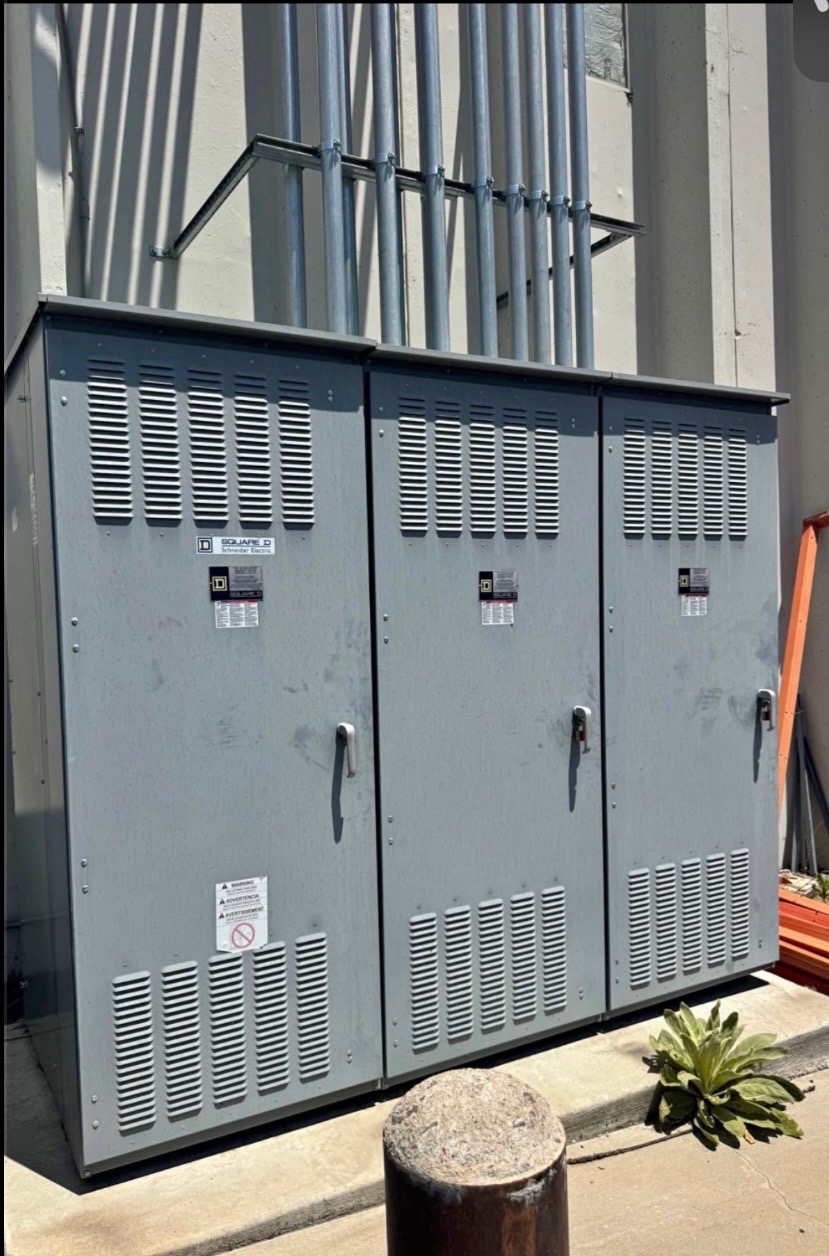
If images are useful, provide photographs only of safely accessible equipment exteriors and exterior labels or nameplates, taken from site-authorized safe positions. Never open a cabinet or provide internal photographs. Do not approach, touch, operate, test, disconnect, remove, or move equipment that is energized or potentially energized. Electrical work, including any later isolation or disconnection, must be performed only by qualified, authorized personnel under applicable site rules. If an exterior label cannot be viewed safely, rely on existing records or leave that detail unknown; a purchase inquiry does not justify entering a restricted area.
Agree the handover before scheduling
For an agreed purchase, the buyer covers necessary crane, rigging, disconnects, loading, freight, and hauling, as defined in the purchase arrangement. The seller does not hire or pay a crew for that removal. Confirm scope, access authorization, work windows, site safety procedures, responsible contacts, and the point at which custody transfers before work is scheduled. The buyer’s coverage concerns the agreed equipment and necessary handover logistics; it does not promise building demolition, unrelated site work, or hazardous-material remediation. No one should begin disconnection or handling until authorized site personnel approve the plan.
Consider the payment terms accurately
The buyer makes cash offers and pays upfront for purchases that are agreed. That is a payment approach, not a guaranteed offer, acceptance, amount, or schedule. Each opportunity is assessed on its own information and terms; do not assume a target price or payment date before both parties agree. A public facility may also need internal approvals, procurement review, records retention, or other disposition steps. Establish who can approve the sale and what documentation is required, then put accepted scope and payment terms in the agreement rather than relying on a preliminary conversation.
Relevant equipment is not limited by voltage class
The buyer considers used, surplus, and decommissioned electrical equipment across all voltage classes, including equipment offered from decommissioned data centers and shut-down power plants. Those categories describe purchase scope; they do not establish that a particular Chatham County asset exists or will be accepted. For a county facility assessment, present the available inventory and records, distinguish known facts from unknowns, and identify any exclusions. A clear, authorized scope helps the parties decide whether an individual purchase is practical while keeping electrical safety, public-asset accountability, and removal responsibilities explicit.