Establish who can authorize a sale
Equipment used by a tenant is not necessarily tenant-owned. Review purchase records, lease exhibits, asset schedules, financing or lien information, and later amendments to establish ownership and who may release each item. The landlord, tenant, lender, or another party may need to approve a sale or removal. Where records conflict, pause the asset decision until the parties clarify authority in writing. A buyer can assess equipment for possible purchase, but an assessment is not proof of title, permission to remove, or acceptance of any particular asset.
Separate tenant assets from shared distribution
Trace each proposed item’s role using existing one-line diagrams, panel schedules, asset tags, and facilities documentation where available. Tenant-dedicated distribution may be distinct from building equipment, but a tenant’s load can still rely on shared switchboards, busways, transformers, transfer equipment, or monitoring and control systems. Avoid treating physical proximity or a tenant label as proof that an asset can be isolated from other users. Record uncertain boundaries for the owner’s facilities team to resolve. Shared-service equipment should remain outside a proposed sale unless the authorized owner confirms release and operational separation.
Plan around lease handback duties
Compare the proposed sale with the lease’s surrender terms, restoration obligations, utility arrangements, and any agreed condition for return of the space. A removable asset may still be subject to a handback requirement, or removal may need landlord approval and coordination with other occupants. Set out which party controls access, the permitted work window, required notices, and who confirms completion of the agreed scope. A purchase assessment does not settle lease disputes or cover general demolition, tenant improvements, or hazardous-material remediation. Resolve those obligations separately before scheduling any removal.
Use existing records and mark unknowns
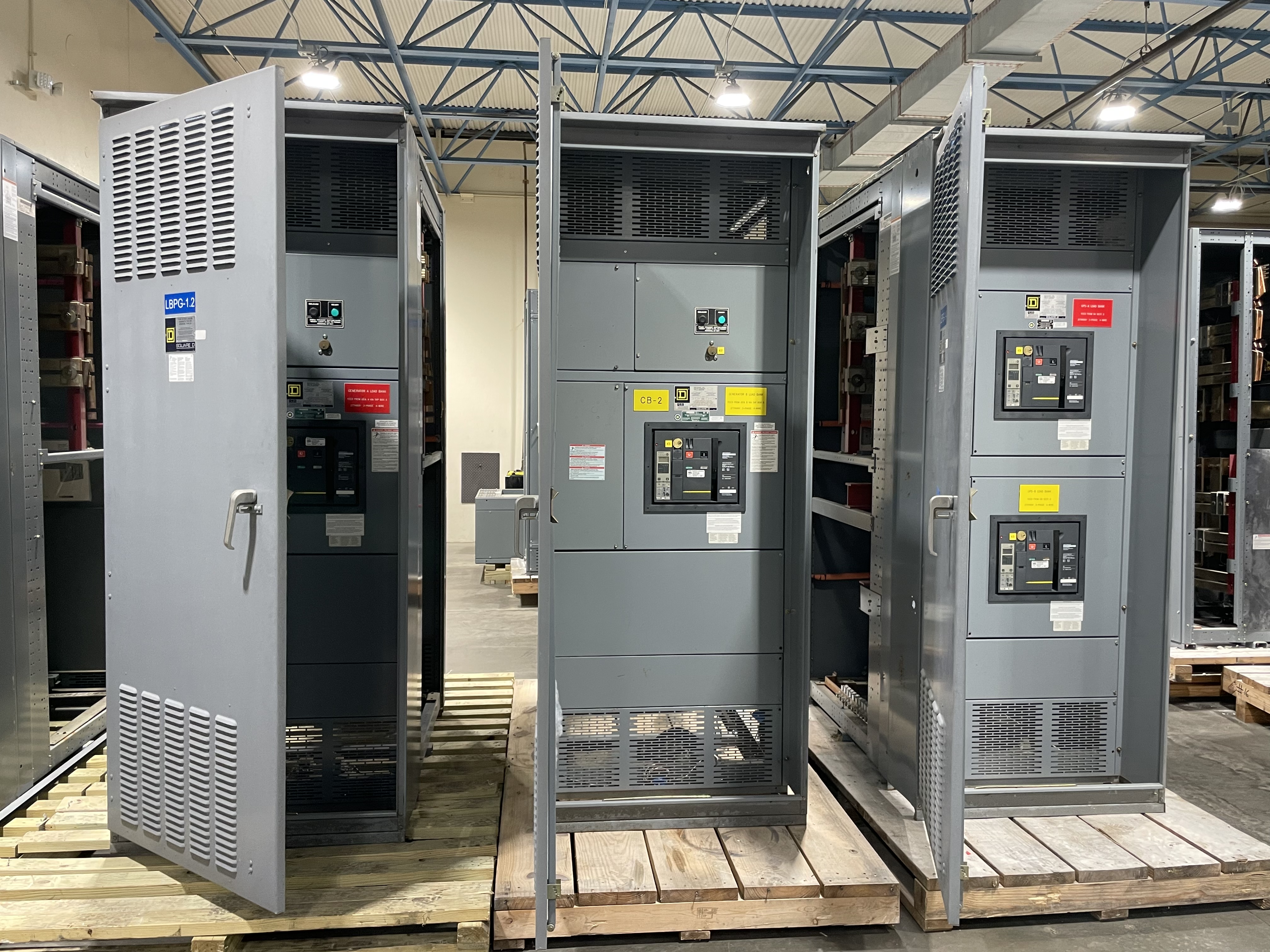
For an initial review, share available asset lists, ownership schedules, drawings, maintenance records, and exterior photographs taken only from site-authorized safe positions. Photos should show safely accessible equipment exteriors and exterior labels or nameplates; do not open cabinets or photograph interiors. Do not test, measure, stage, or prepare equipment for a request. Existing records may identify nominal system voltage, assembly voltage, continuous current, device frame, trip setting, or interrupting rating, but these are distinct values and should not be inferred from one another. Mark missing or unverified details plainly.
Keep safety and operating continuity in control
Never approach, touch, open, operate, test, disconnect, remove, or move equipment that is energized or may be energized. Site owners and authorized operators determine access, isolation, work permits, switching, and any required outage coordination. All electrical work must be performed by qualified, authorized personnel under site rules; a seller need not test equipment to seek a purchase assessment. Shared services require particular care because another tenant or building system may depend on them. If safe access or service boundaries are uncertain, keep the area undisturbed and ask the responsible site authority to direct next steps.
Agree on removal scope before handover
For equipment purchased by agreement, the buyer pays for applicable rigging and crane support, disconnects, loading, hauling and freight. The seller does not hire or pay a removal crew. Before work is scheduled, confirm the released assets, access route, site rules, responsible contacts, work window, and any conditions for protecting remaining services and the premises. Electrical disconnects and other electrical work remain subject to site authorization and qualified personnel. Removal planning applies to the purchased equipment only; it is not a promise to demolish surrounding infrastructure or remediate hazardous materials.
Understand the offer and its limits
After reviewing the information and release conditions, the buyer may make a cash offer and pays upfront for an agreed purchase, according to the terms accepted by both parties. Each asset and transaction is assessed individually; an offer, acceptance, price, or schedule is not guaranteed. The buyer considers used and surplus electrical equipment across all voltage classes, including equipment from decommissioned data centers and shut-down power plants. A list, photograph, or record does not commit either party to a transaction. Confirm ownership, exclusions, site access, and removal scope in the agreement before handover.
DECOMMISSIONING / THE COMPLETE SERVICE
From shut-down site to paid seller.
We buy electrical switchgear from decommissioned data centers and shut-down power plants. We handle all rigging and logistics: crane, rigging, disconnects, loading, freight and hauling are on us. Qualified personnel handle electrical disconnects and isolation according to site safety procedures. The seller does nothing but get paid.
We make cash offers, pay upfront, require no testing from the seller, and buy all voltage classes. Share the site and equipment details you know; photos are helpful only when they can be taken safely. Never open or touch energized equipment or disturb a live installation.