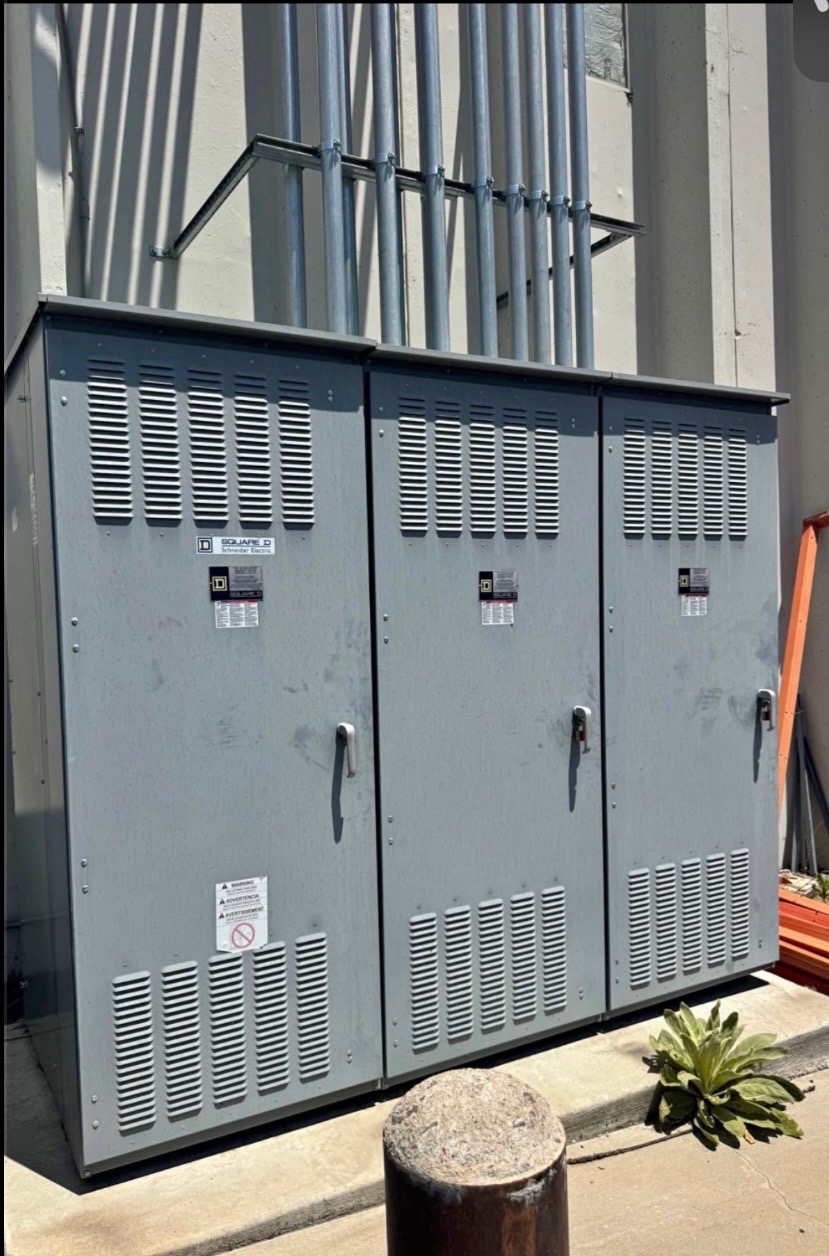
Define the sale boundary before planning removal
Start with an equipment schedule that distinguishes sale assets from infrastructure retained by the facility. A power distribution unit, transformer, switchboard or individual breaker may be included, while raised-floor panels, support pedestals, cable pathways, grounding conductors or building-connected distribution remain excluded. These boundaries matter because a device that looks separate may still be connected to systems the owner intends to preserve. Identify each item by its exterior label or nameplate, if safely visible from an authorized position, and note its room or equipment-row identifier. Ask who owns each asset and who can authorize its sale. Do not ask sellers to open enclosures, move equipment or expose concealed labels to settle a scope question.
Map the route without disturbing the floor
A viable removal route is facility-approved, not merely the shortest path to an exit. Ask the site contact to identify permitted corridors, doors, elevators, staging areas and any restrictions on work hours or shared spaces. Include turns, thresholds and transitions between raised-floor and solid-floor areas; a route that fits on a plan may still be unsuitable for a particular load or handling method. Sellers need not lift floor panels, inspect beneath the floor or arrange access themselves. If route details depend on concealed conditions, have authorized facility personnel determine what information can safely be provided. Document the approved path and access limits before agreeing on removal scope, while leaving final work methods to qualified crews.
Confirm floor-loading limits and handling assumptions
Raised-floor capacity can constrain where equipment may be staged and how removal is sequenced. Do not infer a safe load from a panel’s appearance, equipment footprint or a neighboring installation. Ask the facility’s authorized contact for applicable floor-loading limits, designated travel paths and any restrictions on concentrated or rolling loads. Share known exterior dimensions and approximate weights only when supported by records or a qualified assessment; distinguish documented figures from estimates. A heavy cabinet may require a route or handling plan different from a smaller breaker enclosure, even if both are sale assets. The buyer can assess crane, rigging and loading needs for an agreed purchase, but site approval and qualified execution remain essential.
Describe equipment accurately, not just by voltage
Inventory descriptions should separate assembly identity from the components and ratings that affect valuation. A switchboard’s frame, installed breaker, trip unit, bus arrangement, nominal voltage and equipment ratings are distinct details; one visible label does not establish every characteristic. Record manufacturer and catalog information only when legible and safely visible, and flag missing or uncertain details rather than guessing. The buyer considers used, surplus and decommissioned equipment across all voltage classes, but acceptance and offers depend on individual assessment. No seller testing is required, and sellers should not energize, open or manipulate equipment to obtain more information. Existing drawings or asset records can help, provided they correspond to the equipment offered and may be shared lawfully.
Assign removal responsibility and payment terms clearly
For an agreed purchase, the buyer covers applicable disconnects, crane, rigging, loading, freight and hauling; the seller is not expected to hire or pay a removal crew. Electrical disconnects and any other electrical work must be performed by qualified, authorized personnel under facility rules. Clarify in writing which listed assets are included, which infrastructure stays, the facility’s access conditions and the approved route. If the buyer makes a cash offer and the purchase proceeds, payment is upfront. Those terms do not guarantee an offer, acceptance or a particular schedule: each asset group and removal arrangement is assessed individually. Also confirm who grants site access and what approvals are required before work can be scheduled.
Close the inventory decision with safe documentation
A useful decision file can include an itemized inventory, ownership or sale authority, available records, safely visible exterior nameplate information, stated exclusions, route approval and facility-provided loading limits. Photos should show only equipment exteriors and exterior nameplates that are safely visible from authorized safe positions; never approach, touch, operate, open, test, disconnect or move equipment for a photograph. If a label cannot be viewed safely, record it as unavailable. This level of documentation helps distinguish a complete distribution assembly from selected components and retained infrastructure without asking sellers to prepare equipment. Submit the information for individual review, then reconcile any scope or access questions with authorized facility personnel before an agreed removal proceeds.
DECOMMISSIONING / THE COMPLETE SERVICE
From shut-down site to paid seller.
We buy electrical switchgear from decommissioned data centers and shut-down power plants. We handle all rigging and logistics: crane, rigging, disconnects, loading, freight and hauling are on us. Qualified personnel handle electrical disconnects and isolation according to site safety procedures. The seller does nothing but get paid.
We make cash offers, pay upfront, require no testing from the seller, and buy all voltage classes. Share the site and equipment details you know; photos are helpful only when they can be taken safely. Never open or touch energized equipment or disturb a live installation.