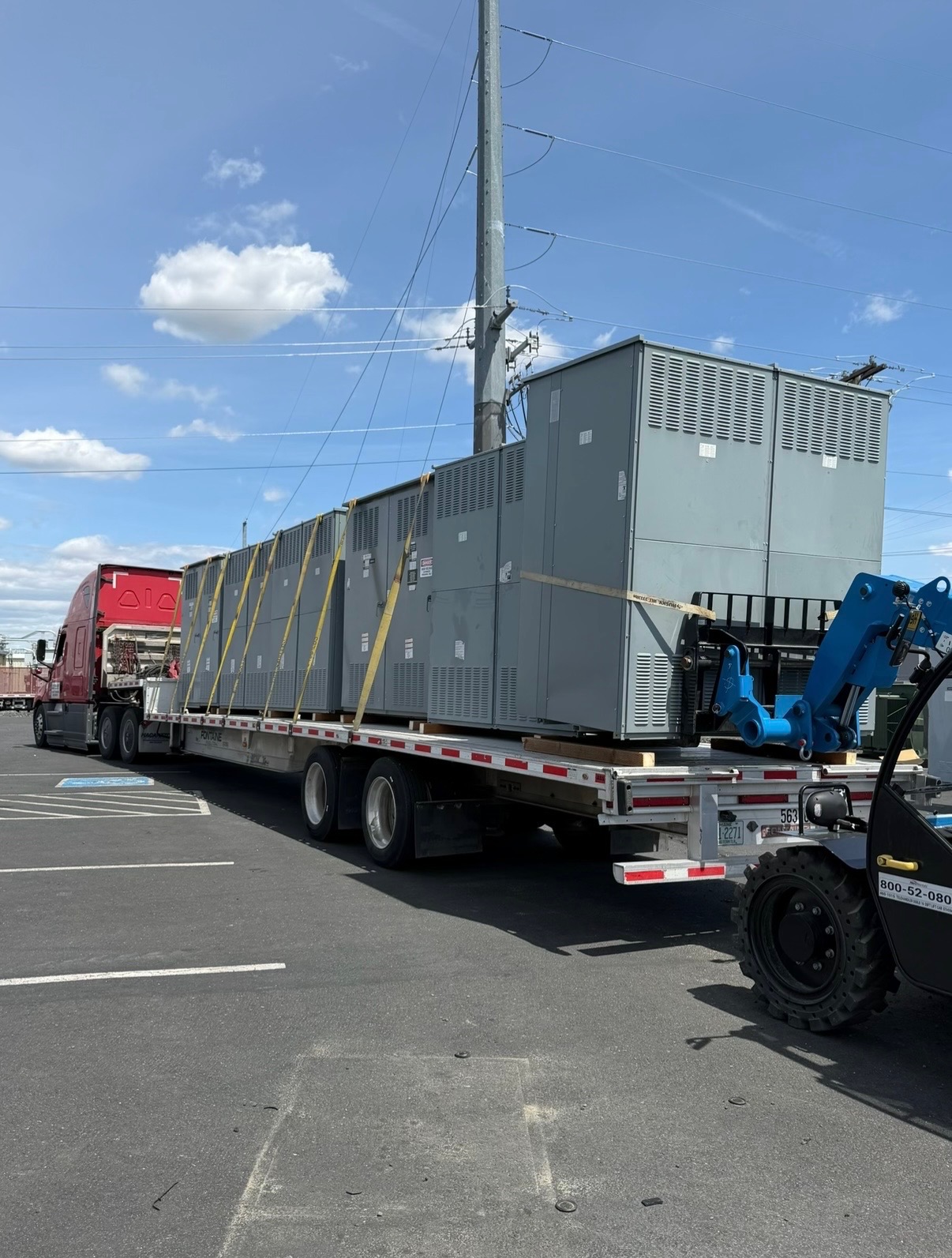
What a unit substation includes
A unit substation is normally a coordinated assembly rather than a single loose cabinet. The inventory may include a transformer, primary switchgear or fused section, secondary switchboard, bus connections, metering compartments and related transition pieces. Some assemblies are arranged as a lineup; others have been separated into transportable sections. That distinction matters when describing what is available, because a transformer without its matching primary or secondary equipment is a different lot from a complete assembly.
Start with an exterior inventory, not a hands-on inspection. Useful details include the manufacturer and model shown on nameplates, transformer kVA, primary and secondary voltage labels, phase, frequency, impedance if listed, enclosure type, approximate dimensions, section count and visible serial numbers. If a value is unreadable, mark it unknown rather than guessing. Wide photographs of the lineup, close photographs of each nameplate and a simple room or storage layout usually give our team enough context to begin a review.
Information that helps us evaluate the equipment
Condition should be described honestly and specifically. Tell us whether the unit substation is installed, already disconnected, stored indoors, stored outdoors, crated or partly dismantled. Note missing doors, removed breakers, damaged insulators, water exposure, corrosion, incomplete bus sections or accessories that were separated during an upgrade. Age by itself does not establish value, and a clean exterior does not prove operating condition. We buy equipment based on the available facts and do not require the seller to establish suitability for a future installation.
- Photograph every visible nameplate without removing covers.
- List each transformer and switchgear section separately when serial numbers or ratings differ.
- Identify loose breakers, relays, fuses, bus links and shipping hardware as separate items.
- Explain which pieces belong together and which items are missing or uncertain.
- Provide approximate weight or dimensions only when those figures are available from records or labels.
Ownership and release planning
Before a purchase moves forward, the seller should confirm ownership and authority to release the equipment. A facility owner, electrical contractor, asset manager, lender, landlord or liquidator may have different rights. For a decommissioned data center or shut-down power plant, the unit substation may appear in a larger asset list, so identify the specific transformer and switchgear sections included in the sale. Keep demolition, lease and project records separate from the equipment description, and tell us if another party controls the release date.
Hospital and campus closures can involve several buildings, departments and approval steps. A hospital seller may need to distinguish a central utility unit substation from equipment serving an individual wing. A campus seller may have assemblies in separate electrical rooms with different shutdown or access windows. We can review a staged release, a complete lot or multiple lots; the important starting point is a clear list tied to a building or storage location. Do not delay a conversation while trying to make every record perfect.
Safety stays with qualified personnel
Never open, test, disconnect or handle energized electrical equipment for the purpose of requesting an offer. Do not remove panels, pull fuses or enter restricted electrical areas to obtain a photograph. Your site’s qualified electrical personnel must control de-energization, isolation and any required site procedures. We do not instruct sellers to perform electrical work. Once the equipment is safe to access and the sale is authorized, our qualified personnel coordinate the physical removal work with the site contact.
Full-service removal and transportation
Our service is designed for sellers who do not want to source several contractors for a heavy electrical assembly. We handle the disconnects through qualified personnel, then arrange the crane, rigging, skidding, loading, freight and hauling needed to move the unit substation. Tell us about door widths, turning areas, overhead obstructions, floor or dock access, restricted delivery hours, stairs, elevators and whether a truck can reach the loading point. These details help the logistics team choose an appropriate removal plan rather than asking the seller to estimate a truck or lifting method.
Equipment that is already on a trailer or in a warehouse still needs an accurate description of its current position and loading conditions. Equipment that remains installed can be reviewed for a coordinated removal window. In either case, the seller does not need to provide a crane, disconnect crew or freight carrier. Our team manages those arrangements and communicates the pickup plan with the authorized site contact. Scheduling depends on safe access and coordination, so provide the earliest realistic release date rather than promising a date on behalf of the facility.
Payment and the next step
We offer cash for qualifying used, surplus and decommissioned unit substations and pay upfront under the agreed purchase arrangements. There is no requirement for seller testing. Send the visible nameplate information, photographs, quantity, location, ownership contact and release conditions for review. Include all voltage classes; a higher or lower rating is not a reason to discard an inquiry. After we understand the assembly and access requirements, we can discuss the offer and the logistics plan together. You can then compare the cash payment and removal service with the cost and effort of keeping retired equipment in place, without taking on unnecessary electrical or transportation work yourself.