Start with the door-change plans
For a planned door replacement, review existing drawings or renovation documents for the room entrance, corridor turns, thresholds, and any change in opening dimensions. These records can indicate whether an assembly’s documented outline may matter to a future removal route. They do not establish that equipment can pass through the route: drawing revisions, trim, door hardware, temporary barriers, and actual conditions may differ. Do not remove doors, alter the opening, or stage equipment for an assessment. Share available plan excerpts through the site’s authorized process, with sensitive information omitted where required.
Separate route questions from equipment ratings
Plans and nameplates can contain several electrical values that answer different questions. Nominal system voltage is not automatically the assembly’s rated voltage; continuous-current rating is not the device frame or trip rating; interrupting rating is a separate value. Record only what existing documents or safely visible exterior labels actually show, and preserve the labels’ context rather than interpreting a number as proof of fit or condition. Unknown, obscured, or conflicting values can remain unknown for initial review. No seller testing, measuring, cabinet opening, or internal photography is required.
Give a useful exterior record safely
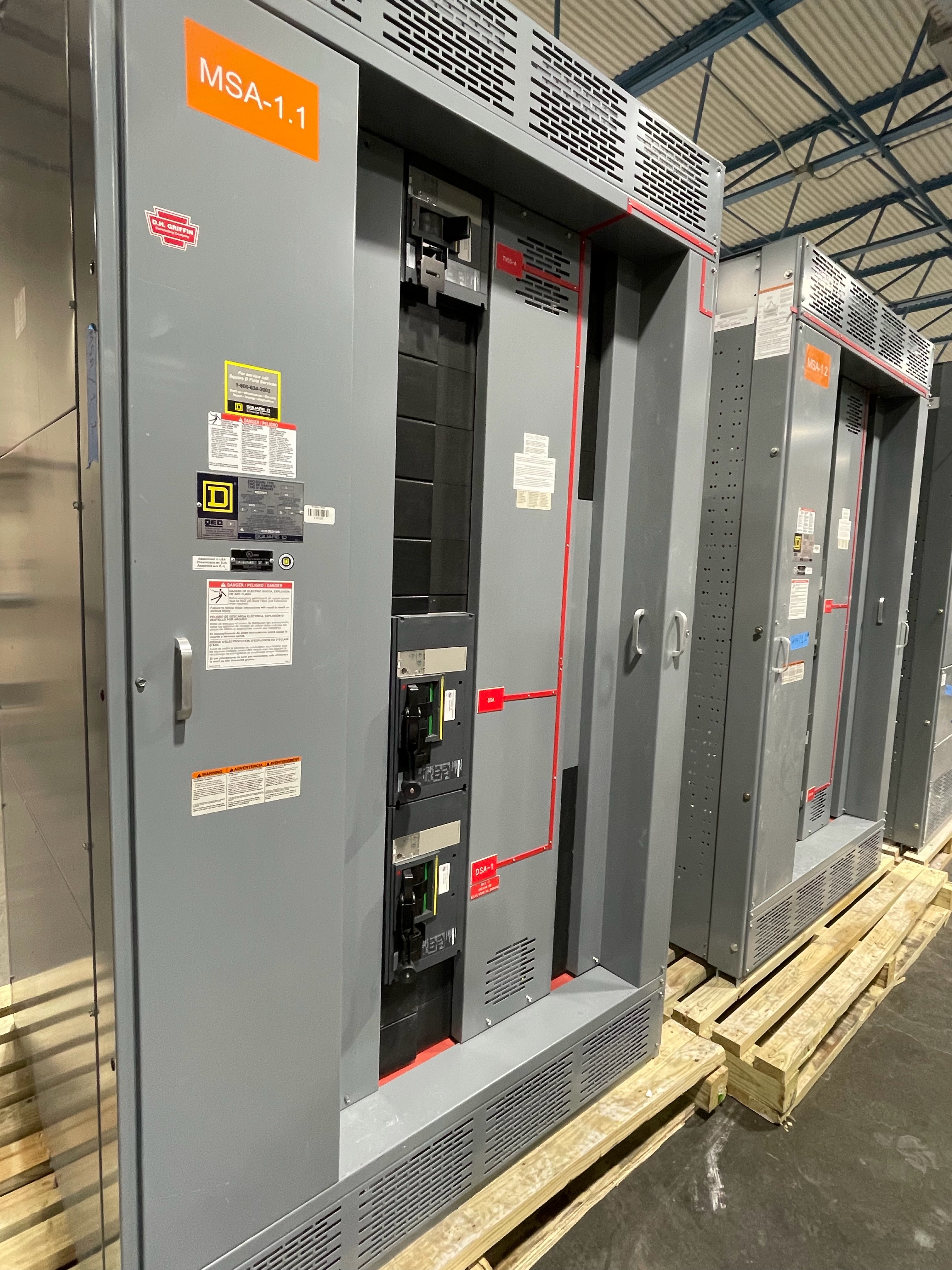
If permitted by site rules, photographs can help show the room entrance and safely accessible switchgear exteriors, including exterior nameplates, from site-authorized safe positions. Do not approach equipment to improve a picture, touch it, open a cabinet, or photograph its interior. Never operate, test, disconnect, remove, or move energized or potentially energized equipment. If a view is not safely accessible, omit it and note that the image is unavailable. Any electrical work or determination about electrical status must be handled only by qualified, authorized personnel under the site’s rules.
Identify route unknowns without promising removal
A plan-based discussion can flag questions such as doorway width, turning space, floor-level transitions, overhead obstructions, and whether the proposed door work changes access. Those observations are screening information, not a verified rigging plan, engineering review, or confirmation that an assembly is removable. Existing equipment layout may also change before a project proceeds. Avoid directing a seller or building staff to measure near equipment, clear a path, dismantle trim, or prepare a load. The buyer can consider available records and known conditions when deciding whether to make an offer.
Understand the assessment and payment terms
We make cash offers and pay upfront for purchases that are agreed. Each asset, available record, access condition, and proposed scope is assessed individually; neither an offer nor its timing is guaranteed. An initial review may lead to questions, a revised scope, or no offer. There is no requirement for seller testing or seller preparation to request an assessment. A possible purchase can include used, surplus, or decommissioned equipment of any voltage class, but that broad scope does not mean every particular switchgear assembly will be accepted.
Confirm removal scope before acceptance
For an agreed purchase, the buyer covers necessary crane, rigging, disconnects, loading, freight, and hauling as set out in the agreed scope. The seller does not hire or pay a removal crew. Confirm responsibilities, access permissions, scheduling, and any site-specific handover conditions before work is arranged; no removal date is guaranteed. Electrical work must be performed only by qualified, authorized personnel under site rules. A purchase agreement for equipment is not a commitment to perform unrelated demolition, door construction, or hazardous-material remediation.
Prepare a concise request from Early County
A useful inquiry can identify the equipment generally, its known status, the records available, and whether door or route plans are relevant. Include only information authorized for sharing, and label uncertain details rather than filling gaps with assumptions. Mention that the room entrance is being changed if that affects access planning, but do not create access or move anything for photographs. This approach lets the buyer assess the opportunity using existing information while keeping site control with the owner and authorized personnel. Acceptance, scope, price, and timing remain subject to individual review and agreement.