Why access conditions affect a purchase
Large electrical assemblies can require cranes, rigging and transport arrangements suited to the equipment and site. The feasible setup may depend on travel paths, turning clearance, overhead restrictions, ground support, nearby structures and the sequence of removal. A clear-looking paved area does not establish that it can support a particular crane or load. We consider access information as part of an individual purchase assessment, alongside equipment condition, ownership, documentation and removal scope. We buy used, surplus and decommissioned electrical equipment across all voltage classes, including equipment from decommissioned data centers and shut-down power plants. An assessment is not a promise to accept any particular asset or site condition.
Use existing site records, not seller estimates
Useful information may already exist in site plans, civil or structural drawings, utility maps, access rules, prior lift plans, pavement records or contractor documentation. If available, records can help qualified planners identify questions about buried services, slab limits, route restrictions and permitted staging areas. Their age, scope and assumptions matter: a drawing may not reflect later changes or establish current capacity. Do not make measurements, calculations, test surfaces or prepare a route for us. A seller can describe known restrictions and share existing records through an authorized contact. Professional verification is a task for qualified personnel engaged under site procedures, not a task for the seller.
Professional verification resolves uncertainty
Riggers and crane professionals need to evaluate actual equipment, lift configuration, crane setup and site conditions before deciding whether a proposed operation is feasible. They may need qualified engineering review where records are incomplete, conflicting or silent about relevant loads. We do not assign ground-bearing values, crane capacities, equipment weights or required clearances without supported project information. Nor should a seller infer that a past lift or a nearby setup proves a new one is acceptable. Any review must account for the specific plan and applicable site controls. All electrical work, including any authorized disconnection, must be performed only by qualified, authorized personnel under site rules; sellers should not undertake electrical work for an inquiry.
Separate equipment data from removal assumptions
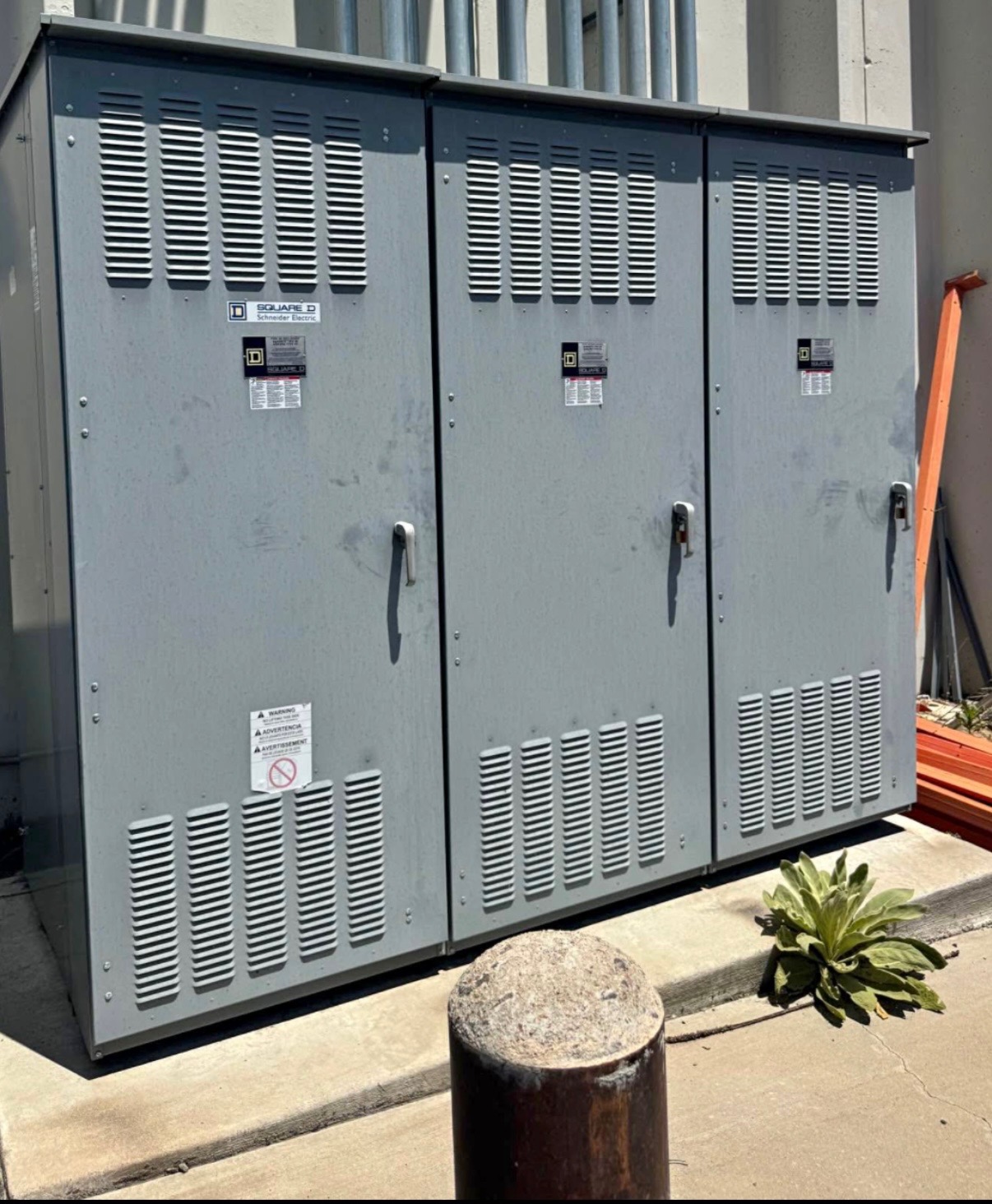
Existing equipment schedules, drawings, nameplates and inventory records can help identify assets, but they do not alone establish rigging weight, lifting points, access feasibility or electrical status. If ratings are documented, keep distinctions intact: nominal system voltage, assembly voltage and continuous current are not interchangeable with a device’s frame, trip or interrupting rating. Do not infer compatibility or operating condition from a label. For an initial review, photographs may show only safely accessible equipment exteriors and exterior labels or nameplates, taken from site-authorized safe positions. Never open a cabinet or photograph inside it. Do not approach, touch, operate, test, disconnect, remove or move energized or potentially energized equipment.
Agree scope before coordinating removal
If a purchase is agreed, the buyer covers necessary crane, rigging, disconnects, loading, freight and hauling within the agreed scope; the seller does not hire or pay a removal crew. The parties should confirm site access authorization, work boundaries, scheduling contacts, documentation and any required coordination with site personnel before work begins. This arrangement does not include unrelated demolition, building alterations or hazardous-material remediation. Do not treat an informal access discussion as approval for a lift or electrical work. The buyer makes cash offers and pays upfront for agreed purchases, with offer and acceptance assessed individually. Neither an offer, acceptance nor removal timing is guaranteed until the specific arrangement is confirmed.
Share constraints and preserve safe handover
For a purchase assessment, an authorized seller contact can identify known access limits, site rules, available records and the person responsible for coordinating contractor entry. Mention uncertainties rather than estimating ground capacity or promising that a route is clear. Keep equipment undisturbed, and leave any inspection, electrical isolation, disconnection, lifting and movement to qualified, authorized personnel under site rules. If equipment may be energized, do not approach it to obtain photographs or information; use existing records and authorized site channels instead. We assess surplus assets from a range of settings, including data centers and shut-down power plants; each facility’s layout and access restrictions require their own review. Each proposed purchase and logistics plan remains subject to individual review.