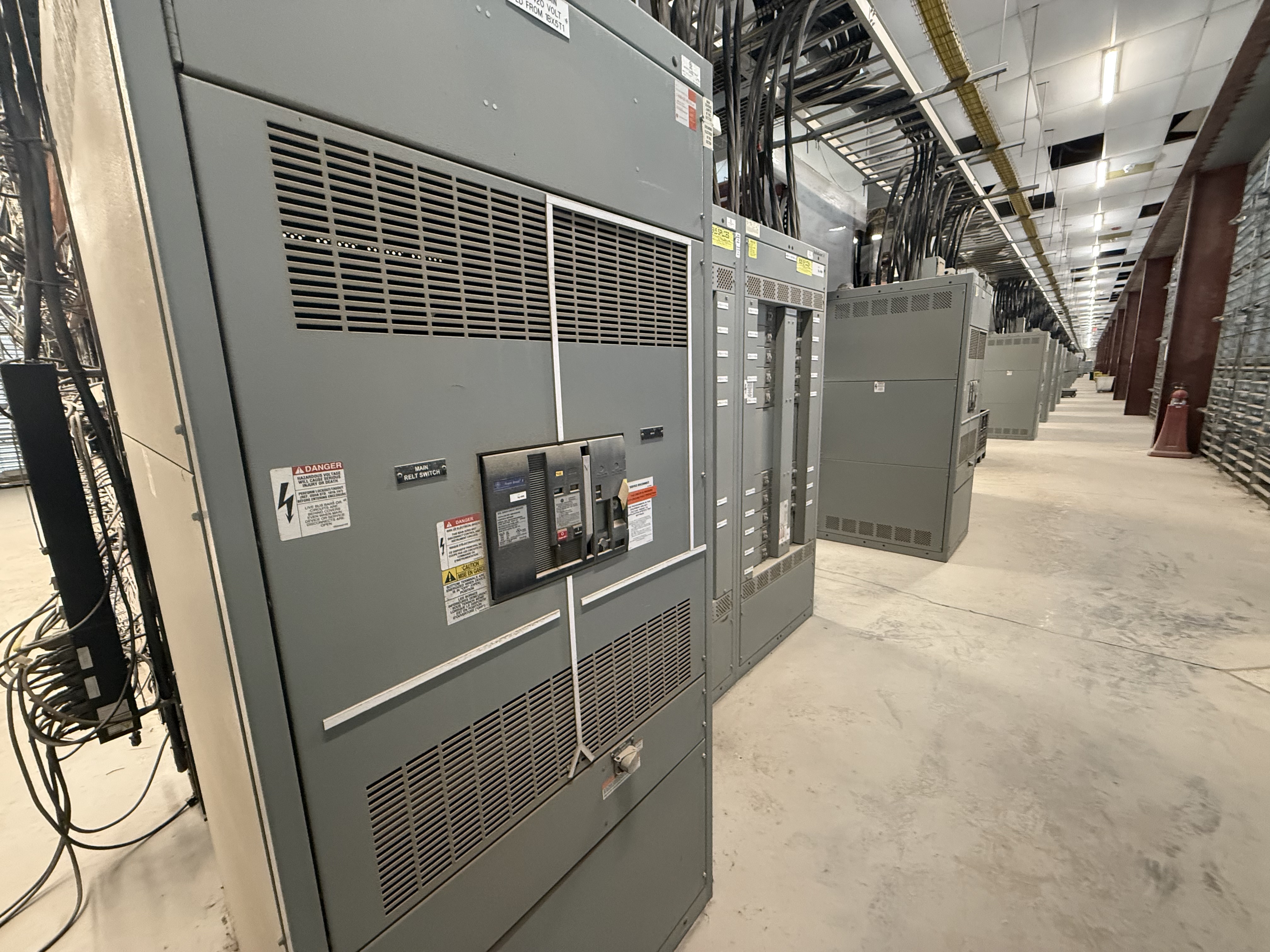
Start with the closure boundary
Clarify which distribution assets are included in the closure sale and which must remain for building services, another tenant, or a staged shutdown. A mezzanine lineup may serve loads beyond the area being cleared, so ownership and operating responsibility should be established before any removal discussion. Existing asset lists, single-line diagrams, panel schedules, and decommissioning documents can help identify scope without requiring the seller to inspect equipment. Describe known access restrictions and planned site handover dates, but do not treat an inventory entry as proof that an asset is safe or available for removal.
Records help; missing data does not require testing
Share records already held by the site, such as exterior nameplate details, equipment schedules, drawings, maintenance files, and photographs taken from authorized safe positions. Keep distinct the nominal system voltage, assembly voltage, continuous-current value, device frame and trip ratings, and interrupting rating; one value cannot stand in for another. If a record is absent, mark it unknown rather than estimating or arranging seller testing. Exterior photographs may show safely accessible equipment faces and exterior labels only. Do not open a cabinet or take interior images, particularly where equipment may be energized.
Elevated access changes removal planning
Mezzanine access can constrain equipment dimensions, rigging paths, lift positioning, and the route from the platform to the loading area. Existing access plans, approved building drawings, and site logistics documents may help a professional team assess those limits. Sellers should not measure, stage, move, or prepare equipment for assessment. Any proposed work must be planned by qualified professionals with site authorization and coordinated with the facility’s safety and shutdown controls. If the route or equipment condition cannot be established safely, that uncertainty belongs in the review; it is not a reason for an unqualified person to investigate.
Structural limits are a go-or-no-go input
Documented mezzanine load limits and any applicable restrictions on concentrated loads, rolling loads, or lift placement matter when professionals plan equipment handling. Use existing structural records or direction from the party responsible for the building; do not infer capacity from appearance or old equipment placement. A buyer’s review does not certify a platform or authorize a lift plan. If limits are unavailable, unclear, or exclude a proposed method, the plan may need further review by responsible qualified parties before a purchase and removal scope can be agreed. No one should move equipment to test a route or load.
Agree on scope, cash and removal responsibilities
Each offer is assessed individually; neither price nor schedule is guaranteed. For an agreed purchase, the buyer makes a cash offer and pays upfront under the agreed terms. The buyer covers necessary crane service, rigging, electrical disconnect work, loading, freight, and hauling included in that purchase plan, so the seller does not hire or pay a removal crew. The agreement should identify the assets, access assumptions, handover point, and any conditions affecting removal. It does not automatically include building demolition, unrelated plant clearance, or hazardous-material investigation or remediation.
Keep every electrical task under site control
Only qualified, authorized personnel may perform electrical work, and they must follow site rules and the facility’s isolation, permit, and coordination procedures. Never approach, touch, open, operate, test, disconnect, remove, or move equipment that is energized or could be energized. A seller need not conduct tests or take measurements to request a purchase assessment. Removal methods, lifting decisions, and work sequencing belong to the authorized professional team after the site establishes applicable controls; an offer or purchase discussion is not permission to begin work or a substitute for the facility’s safety process.
Make handover information usable
A concise handover can include the asset list, available records, known exclusions, access hours, authorized contact, and documented structural restrictions. Identify information that is uncertain rather than presenting it as verified. Share exterior photographs only when the equipment is safely accessible and the site permits photography; keep personnel at authorized safe positions and never open enclosures for a picture. Before any agreed collection, the parties should confirm the scope and site coordination arrangements with the responsible professionals. The buyer’s removal obligations apply to the agreed purchase, not to unrelated equipment or work outside that scope.
DECOMMISSIONING / THE COMPLETE SERVICE
From shut-down site to paid seller.
We buy electrical switchgear from decommissioned data centers and shut-down power plants. We handle all rigging and logistics: crane, rigging, disconnects, loading, freight and hauling are on us. Qualified personnel handle electrical disconnects and isolation according to site safety procedures. The seller does nothing but get paid.
We make cash offers, pay upfront, require no testing from the seller, and buy all voltage classes. Share the site and equipment details you know; photos are helpful only when they can be taken safely. Never open or touch energized equipment or disturb a live installation.