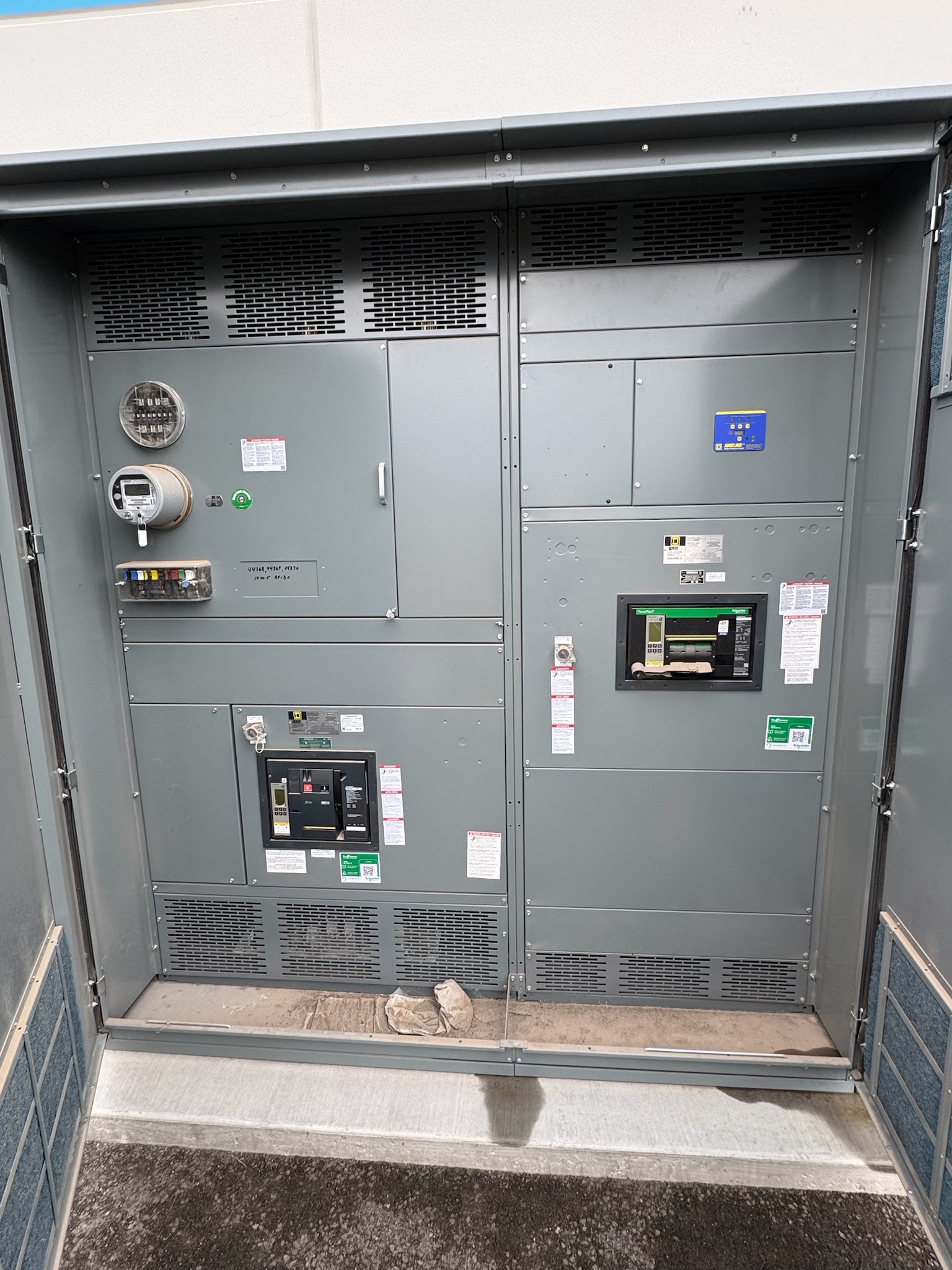
Define the equipment boundary before discussing removal
A possible purchase scope may include an identifiable transformer and associated unit-substation switchgear, subject to individual assessment. It does not automatically extend to the plant’s distribution network, building wiring, cable trays, bus duct, foundations, utility-owned equipment, control systems or other facility infrastructure. Clarify ownership and the physical boundary using existing drawings, asset registers and equipment identifiers; do not infer that connected components are included. A transformer and switchgear may be considered separately if ownership, condition records or removal requirements differ. An assessment is not a commitment to accept any particular asset, and equipment left outside an agreed scope remains the seller’s responsibility to address through its own site plans.
Use existing records; do not arrange seller testing
Useful records can include nameplate transcriptions, one-line diagrams, equipment schedules, prior maintenance files and decommissioning documents, when already available. These may help identify an asset and expose gaps, but drawings can be outdated and labels may not establish present condition or complete configuration. No seller testing is required to request an assessment. Do not operate, open, inspect internally, touch, test, disconnect or move equipment that is energized or potentially energized. Any electrical work, including isolation or disconnection, must be performed only by qualified, authorized personnel under site rules. The buyer can consider the records and safely supplied information available; a seller need not commission tests, measurements or fabrication to seek a purchase review.
Keep voltage and device ratings distinct
When existing records support them, report rating values with their exact labels and context. Nominal system voltage, assembly voltage and continuous-current rating describe different things; device frame, trip and interrupting ratings are also separate values. Do not derive one from another, assume that a transformer voltage establishes a switchgear rating, or treat similar-looking equipment as compatible. A photograph of an exterior nameplate may help resolve identification only if it can be taken from a site-authorized safe position without approaching a hazard. Unknown, illegible or conflicting values should remain unknown pending records or qualified review. The buyer assesses equipment across all voltage classes, but that broad scope does not imply acceptance, compatibility or any particular technical specification.
Plan for condition uncertainty and explicit exclusions
Closure records may describe a unit as idle, decommissioned or available without resolving its internal condition, completeness or remaining serviceability. A purchase assessment should distinguish documented facts from assumptions and identify missing accessories, controls or records where known. Do not infer that a transformer or switchgear is reusable simply because it is intact externally. The scope also excludes unrelated demolition, building clearance and hazardous-material remediation; these are not promised as part of an equipment purchase. No oil handling, environmental cleanup or remediation claim should be inferred from a possible transformer assessment. If such work is relevant to the facility, it requires separate planning by the responsible parties and qualified providers under applicable site requirements.
Agree the handover and removal responsibilities
For an agreed purchase, the buyer covers the necessary crane, rigging, disconnects, loading, freight and hauling as set out in the agreement. The seller does not hire or pay a removal crew for that agreed equipment scope. Before handover, document which units are included, access and scheduling conditions, responsibility for site authorization, and any constraints that could affect removal. Qualified, authorized personnel must perform electrical work under site rules; no one should approach, touch, open, operate, test, disconnect, remove, lift or move energized or potentially energized equipment. The buyer’s removal arrangements do not authorize work outside the agreed boundary or replace required site controls, shutdown procedures or approvals.
Request an assessment with safe, available information
To start, provide equipment identifiers, the facility’s general location, the proposed asset boundary and any existing records that can be shared. Photos should be limited to safely accessible equipment exteriors and exterior labels or nameplates, taken only from site-authorized safe positions; never open a cabinet or photograph its interior. Do not approach equipment to obtain a better image. The buyer considers opportunities across voltage classes, including equipment from decommissioned data centers and shut-down power plants, as well as industrial closures. It makes cash offers and pays upfront for agreed purchases. Each offer and acceptance is individually assessed, with no guaranteed price or timing; sharing information does not guarantee an offer or acceptance.
DECOMMISSIONING / THE COMPLETE SERVICE
From shut-down site to paid seller.
We buy electrical switchgear from decommissioned data centers and shut-down power plants. We handle all rigging and logistics: crane, rigging, disconnects, loading, freight and hauling are on us. Qualified personnel handle electrical disconnects and isolation according to site safety procedures. The seller does nothing but get paid.
We make cash offers, pay upfront, require no testing from the seller, and buy all voltage classes. Share the site and equipment details you know; photos are helpful only when they can be taken safely. Never open or touch energized equipment or disturb a live installation.