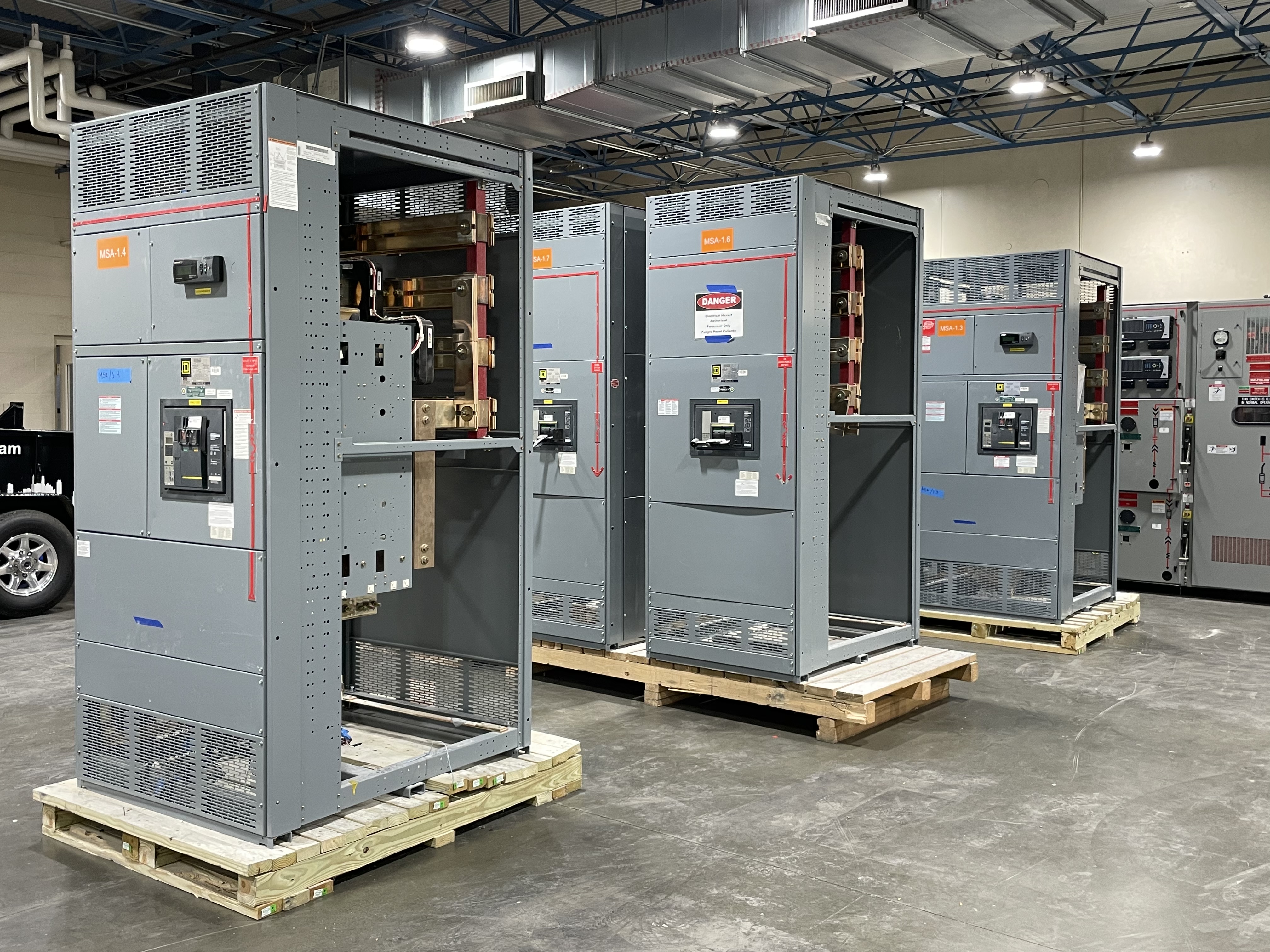
Separate switchboard assets from the demolition scope
Mark the proposed sale boundary section by section, rather than describing the entire electrical room as one lot. A lineup may include switchboard sections, feeder conductors, a service entrance assembly, and adjacent plant-owned raceways or controls. Those items need not share the same owner or sale status. If demolition contractors are removing walls, platforms, or connected process equipment, document which party is responsible for each boundary and when access transfers. Ask for a written scope drawing or annotated inventory that distinguishes equipment offered for purchase from building infrastructure and work outside the buyer’s removal scope.
Confirm ownership and service entrance responsibility
Before seeking an offer, establish that the seller owns each offered component or has authority to sell it. Service entrance equipment can involve utility interfaces or other ownership arrangements; do not assume that location inside the plant proves ownership. Ask the facility’s asset or property representative to identify the boundary and record any exclusions in writing. For example, a seller might offer a switchboard lineup while retaining upstream service components or feeder sections. Resolve that distinction before scheduling removal, and have the relevant authorized parties determine whether any external approvals or coordination are required.
Identify sections and feeders precisely
A useful inventory connects each physical section to its role without guessing at compatibility. Record visible section labels, feeder identifiers, manufacturer markings, and legible nameplate information where safely accessible. Distinguish the switchboard assembly from individual breakers: a breaker’s frame and trip information do not by themselves describe the complete assembly or establish its ratings. Note whether feeders are included, excluded, or still connected, and identify known alterations or missing components. If labels conflict with drawings, document the discrepancy rather than treating either source as conclusive; technical interpretation belongs to qualified personnel.
Describe condition without seller testing
Disclose what the facility already knows: prior service history if documented, visible damage, corrosion, water exposure, missing covers, or incomplete sections. Separate direct observations from assumptions and identify the source and date of records where available. No seller testing is required, and an owner should not energize, open, touch, or test equipment to improve an offer. Safe photographs may show exterior nameplates and accessible exterior condition only, taken from authorized safe positions. If a detail cannot be viewed safely, say so; an individual assessment can account for known limits without asking the seller to create new evidence.
Set a safe access and disconnect sequence
Access is not permission to handle electrical equipment. Before removal, qualified authorized electrical personnel must plan and perform the required electrical disconnect under site rules and applicable controls. The buyer’s removal plan should begin only after the responsible parties establish that equipment is available for the agreed work; sellers should not disconnect, move, or prepare it themselves. Ask who controls the work area, what access restrictions apply, and how the disconnect status and handoff will be communicated. If demolition sequencing could affect the lineup or feeders, coordinate boundaries and timing among the facility, electrical personnel, demolition contractor, and buyer.
Coordinate buyer-led removal with plant demolition
Clarify what buyer-led removal includes and what remains with the facility’s demolition contractor. For an accepted lot, the buyer covers the agreed disconnects, crane, rigging, loading, freight, and hauling; those arrangements do not mean the buyer undertakes unrelated demolition or hazardous-material remediation. Compare schedules by considering access windows, lifting constraints identified by the site, and whether adjacent structures or retained feeders limit the removal area. Ask which party protects retained assets and clears the approved route. Put responsibility for permits, site escorts, and work-area control in the scope rather than relying on assumptions about a contractor’s general role.
Request an offer with a decision-ready record
Provide the inventory, ownership confirmation, boundary drawing, known-condition notes, safe exterior photos, and anticipated access sequence for an individual review. The buyer considers surplus and decommissioned equipment across all voltage classes, but acceptance and offer terms depend on the specific assets and circumstances. If an offer is made, it is a cash offer with payment upfront; confirm the transaction and handoff details before work is scheduled. There is no need for seller testing or preparation. Keep the sale decision distinct from plant closure milestones so demolition proceeds only within the facility’s authorized scope.
DECOMMISSIONING / THE COMPLETE SERVICE
From shut-down site to paid seller.
We buy electrical switchgear from decommissioned data centers and shut-down power plants. We handle all rigging and logistics: crane, rigging, disconnects, loading, freight and hauling are on us. Qualified personnel handle electrical disconnects and isolation according to site safety procedures. The seller does nothing but get paid.
We make cash offers, pay upfront, require no testing from the seller, and buy all voltage classes. Share the site and equipment details you know; photos are helpful only when they can be taken safely. Never open or touch energized equipment or disturb a live installation.