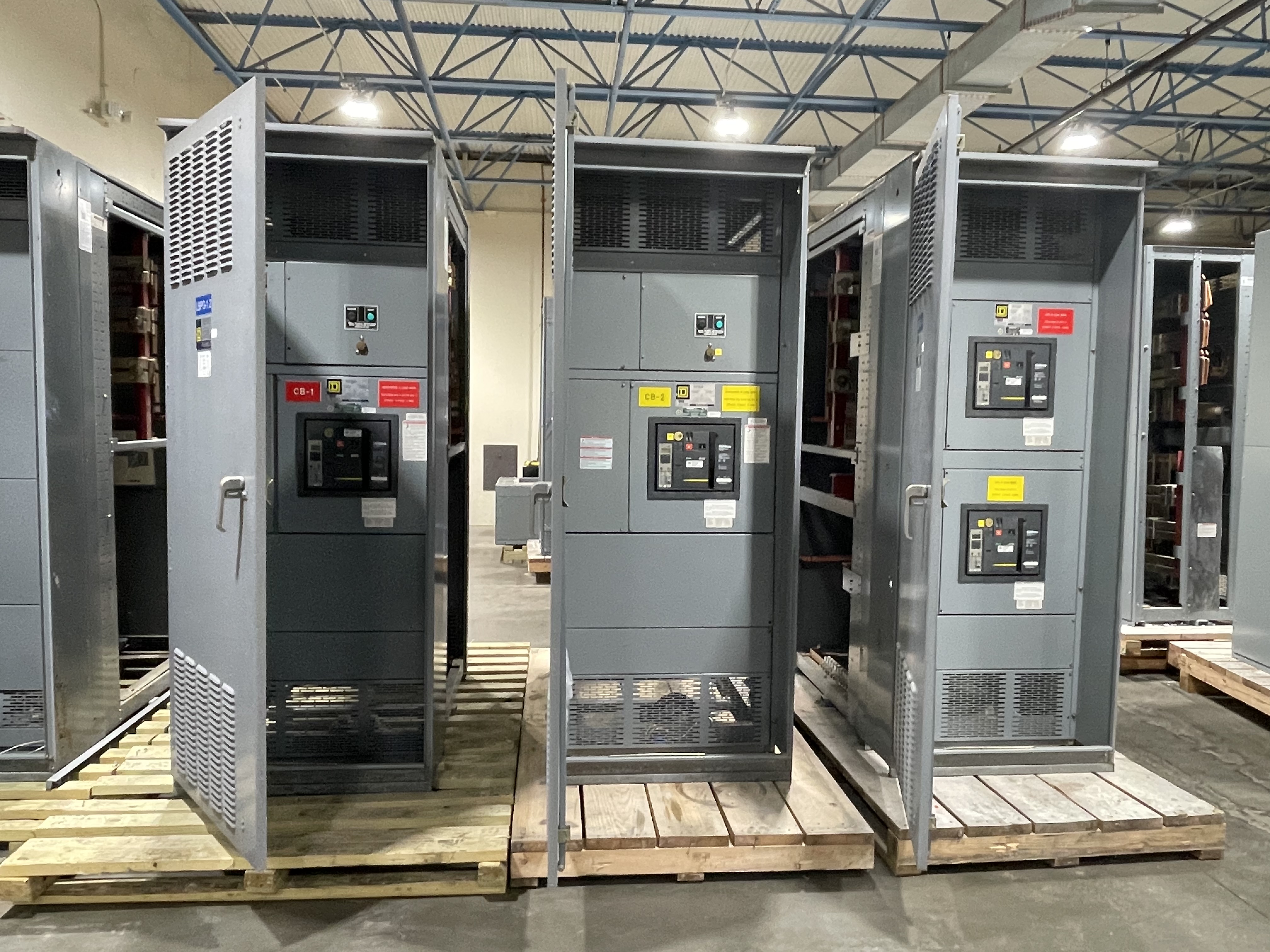
Establish who owns each component
A service entrance can span utility facilities, customer-owned distribution, metering arrangements, and equipment governed by separate agreements. Before requesting an assessment, ask the asset owner, closure lead, or authorized representative to identify what the customer may release and whether another party’s written approval is needed. A one-line diagram, asset register, purchase records, or service documents may help clarify boundaries; gaps should be reported rather than guessed at. The buyer independently reviews each proposed asset and makes no assumption that ownership of one assembly includes adjacent equipment, conductors, or utility interface components.
Confirm release authority and site control
Plant closure decisions may involve an owner, landlord, insolvency representative, operations team, utility, and demolition contractor. Identify who can approve a sale, who controls access, and who may authorize work in the electrical area. If equipment remains subject to a lease, lien, utility agreement, environmental hold, or active site permit, resolve the relevant restriction before scheduling removal. A buyer can consider customer-owned equipment from across all voltage classes, but any offer depends on asset review and valid authority to transfer it. No particular item is automatically accepted, and each offer and acceptance is assessed individually.
Use existing records, and mark uncertainty
Useful records can include equipment schedules, drawings, maintenance files, prior invoices, and exterior nameplate information already documented by the site. Report what the records actually show and flag missing, illegible, or conflicting entries. Keep nominal system voltage distinct from assembly voltage, continuous-current rating, device frame, trip setting, and interrupting rating; one value cannot establish another or prove compatibility. Sellers are not asked to test, measure, open cabinets, or prepare equipment for valuation. If a safely accessible exterior label is available, an authorized person may share its details or a photograph from a site-approved safe position.
Describe condition without unsafe inspection
For an initial review, summarize known service status, whether the equipment is believed to be complete, visible exterior damage, and any documented changes or removal restrictions. Do not operate, approach, touch, open, test, disconnect, remove, or move equipment that is energized or may be energized. Electrical work and any required isolation must be handled only by qualified, authorized personnel under site rules. Photos should show only safely accessible exteriors and exterior labels or nameplates, taken from a site-authorized safe position; never photograph interiors or open a cabinet. No seller testing, staging, or preparation is required.
Weigh sale value against closure constraints
Keeping service entrance assets may support another approved use, while selling them may suit a site that has no authorized reuse plan. Compare those options against ownership certainty, release timing, known completeness, access limits, and the cost and coordination of safe removal. A buyer makes cash offers and pays upfront for agreed purchases; payment terms and timing are confirmed for the individual transaction, not guaranteed in advance. The buyer purchases equipment from decommissioned data centers and shut-down power plants as well as other eligible sources, but source or equipment category alone does not determine acceptance or value.
Agree the work boundary before release
For an agreed purchase, the buyer covers necessary crane, rigging, disconnects, loading, freight, and hauling as defined in the transaction plan. The seller does not hire or pay a removal crew. Before work is scheduled, document access approval, work windows, site escorts, safety permits, utility coordination where applicable, and who controls each electrical boundary. All electrical work must be performed by qualified, authorized personnel under site rules; the buyer covers necessary disconnects, and removal scope does not transfer site authority or authorize work outside the agreement. The purchase does not include unrelated demolition or hazardous-material remediation.
Plan handover around site authority
Set a release sequence that matches closure milestones and permits: confirm the approved asset list, transfer authority, agreed scope, access conditions, and payment arrangements before mobilization. The site remains responsible for deciding when an area is safe and available, while the buyer coordinates its contracted removal logistics after agreement. If access, ownership, condition records, or release dates change, pause and reassess rather than improvising. An assessment is not a commitment to buy every listed asset, and no price or schedule is guaranteed. Clear boundaries help avoid disputes over retained equipment and utility-controlled property during handover.
DECOMMISSIONING / THE COMPLETE SERVICE
From shut-down site to paid seller.
We buy electrical switchgear from decommissioned data centers and shut-down power plants. We handle all rigging and logistics: crane, rigging, disconnects, loading, freight and hauling are on us. Qualified personnel handle electrical disconnects and isolation according to site safety procedures. The seller does nothing but get paid.
We make cash offers, pay upfront, require no testing from the seller, and buy all voltage classes. Share the site and equipment details you know; photos are helpful only when they can be taken safely. Never open or touch energized equipment or disturb a live installation.